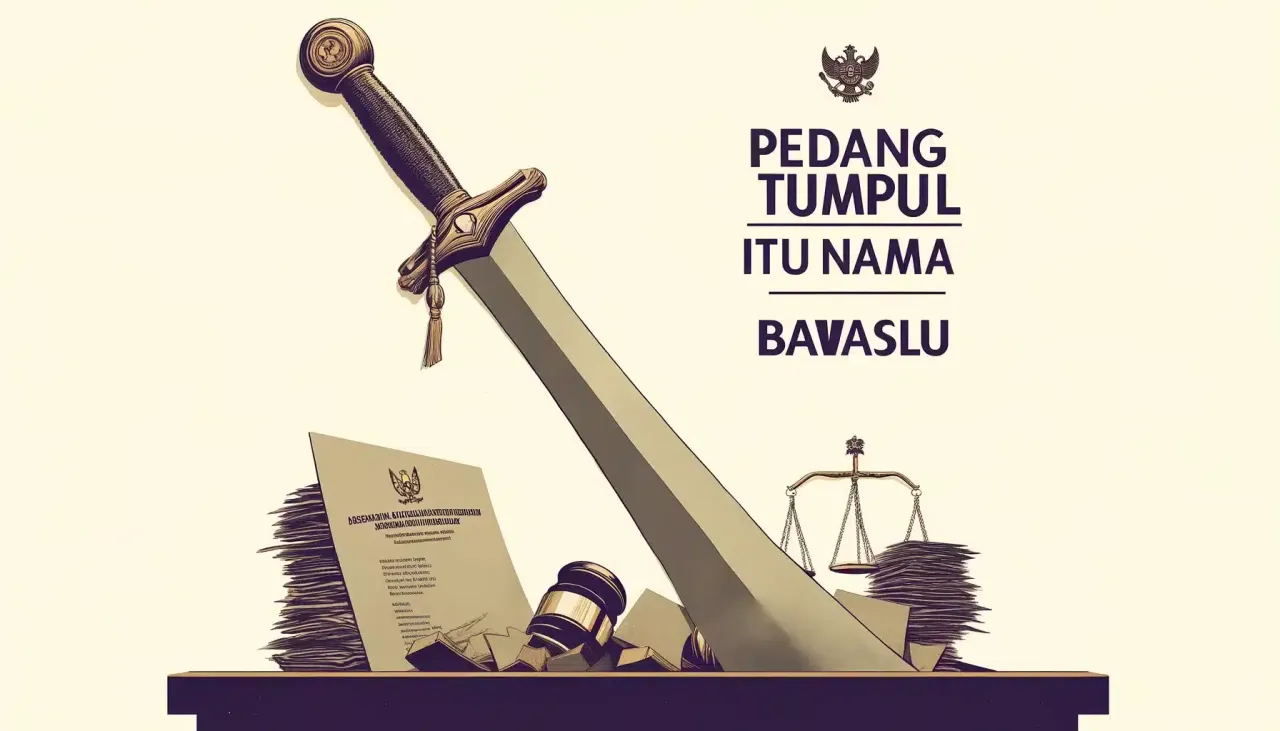
Literasi Hukum - Pemilu sebagai pilar demokrasi Indonesia diawasi oleh Bawaslu untuk memastikan integritas dan transparansi. Namun, tantangan dan hambatan sering membuat Bawaslu dianggap sebagai 'pedang tumpul' dalam menindak pelanggaran. Artikel ini menjelaskan pentingnya penguatan regulasi dan kewenangan Bawaslu untuk efektivitas pengawasan pemilu, mencerminkan kebutuhan mendesak akan reformasi dalam pengawasan pemilu demi menjaga integritas demokrasi.
Peran Strategis Badan Pengawas Pemilu dalam Mewujudkan kedaulatan-rakyat" class="lhi-dict-link" title="Kamus hukum: Kedaulatan rakyat">Kedaulatan Rakyat
Pemilihan Umum (Pemilu) merupakan pesta demokrasi sebagaimana istilah tersebut dipopulerkan oleh Presiden kedua indonesia, Soeharto pada rapat nasional persiapan Pemilu tahun 1982. Pemilu sendiri merupakan mekanisme krusial pada demokrasi yang memungkinkan masyarakat sebagai pemilih untuk dapat memberikan mandat kepada calon pemimpin dan arah kebijakan yang dipilih.


Di Indonesia, Komisi Pemilihan Umum (KPU) merupakan lembaga negara yang berperan sebagai regulator dan pelaksana Pemilu yang mencakup Pemilihan Presiden dan Wakil Presiden, Anggota Legislatif di pelbagai tingkatan mulai dari DPRD Kota/Kabupaten, DPRD Provinsi, DPD RI dan DPR RI, serta Kepala Daerah dan Wakil Kepala Daerah.
Dalam menjalankan tugas dan wewenangnya dalam mempersiapkan hingga melaksanakan Pemilu, KPU diawasi oleh Badan Pengawas Pemilu. Bawaslu sendiri merupakan lembaga pengawas pemilu yang lahir pada 8 April 2008 sebagai amanat Undang-Undang No. 22 Tahun 2007 tentang Penyelenggara Pemilu sebagaimana diubah melalui Undang-Undang No.15 Tahun 2011 Jo. Undang-Undang No. 7 Tahun 2017 tentang Pemilihan Umum.
Kewenangan Bawaslu
Sebagai lembaga independen yang beperan sebagai pengawas penyelenggaraan pemilihan umum di Indonesia. Bawaslu memilik peran yang sangat krusial yang terefleksi pada berbagai instrumen mulai dari penyusunan standar tata pelaksanaan pengawasan penyelenggaraan pemilu hingga pencegahan dan penindakan atas pelanggaran Pemilu dan sengketa proses Pemilu.
Oleh sebabnya itu, sudah selayaknya Bawaslu memiliki netralitas yang bebas dari intervensi baik dari masyarakat, partai politik maupun pemerintah. Selain itu UU pada Pasal 93 dan 95 Undang-Undang No. 7 Tahun 2017 tentang Pemilihan Umum telah mengamanatkan bahwa bahwa Bawaslu berwenang untuk mengawasi penyelenggaraan Pemilu, mencegah politik uang, mengawasi netralitas ASN dan TNI-Polri, menerima dan menindaklanjuti laporan dugaan pelanggaran Pemilu, sampai memeriksa, mengkaji, dan memutus pelanggaran, administrasi Pemilu dan pelanggaran politik uang.
Hal ini diperkuat Pasal 94 ayat (2) Undang-Undang No. 7 Tahun 2017 tentang Pemilihan Umum yang menegaskan bahwa dalam menindak pelanggaran Pemilu, Bawaslu bertugas untuk :
- menerima, memeriksa, dan mengkaji dugaaan pelanggaran pemilu;
- menginvestigasi dugaan pelanggaran pemilu;
- menentukan dugaan pelanggaran administrasi pemilu, dugaan pelanggaran kode etik penyelenggara dan/atau dugaan tindak pidana pemilu; dan
- memutus pelanggaran administrasi pemilu.










Komentar
0Bagikan perspektif Anda secara sopan, relevan, dan fokus pada isi artikel. Komentar tampil setelah moderasi.
Ikut berdiskusi