Decisions that Conflict with the Hierarchy of Laws and Regulations
The issuance of Minister of Home Affairs Decree Number 300.2.2-2138 of 2025 is considered a hasty step because it is only based on the results of regional determination by each governor on the results of the verification of the National Toponym Standardization Team in 2009. Whereas in Article 48 paragraph (2) of Law Number 23 of 2014 concerning Regional Government (hereinafter referred to as UUPD) it has been regulated that changes in regional boundaries must be determined by law. The Decree of the Minister of Home Affairs clearly contradicts Article 48 paragraph (2) of the UUPD and triggers negative reactions from the public, especially the people of Aceh and North Sumatra. Although the dispute occurred between fellow provinces under the Unitary State of the Republic of Indonesia, its resolution should not be carried out in a hurry because in accordance with the provisions in Article 18 paragraph (2) of the 1945 Constitution, Indonesia recognizes regional autonomy in the management of territory by the government and people of their respective regions.
Rejection of the Acehnese People and Dispute Resolution
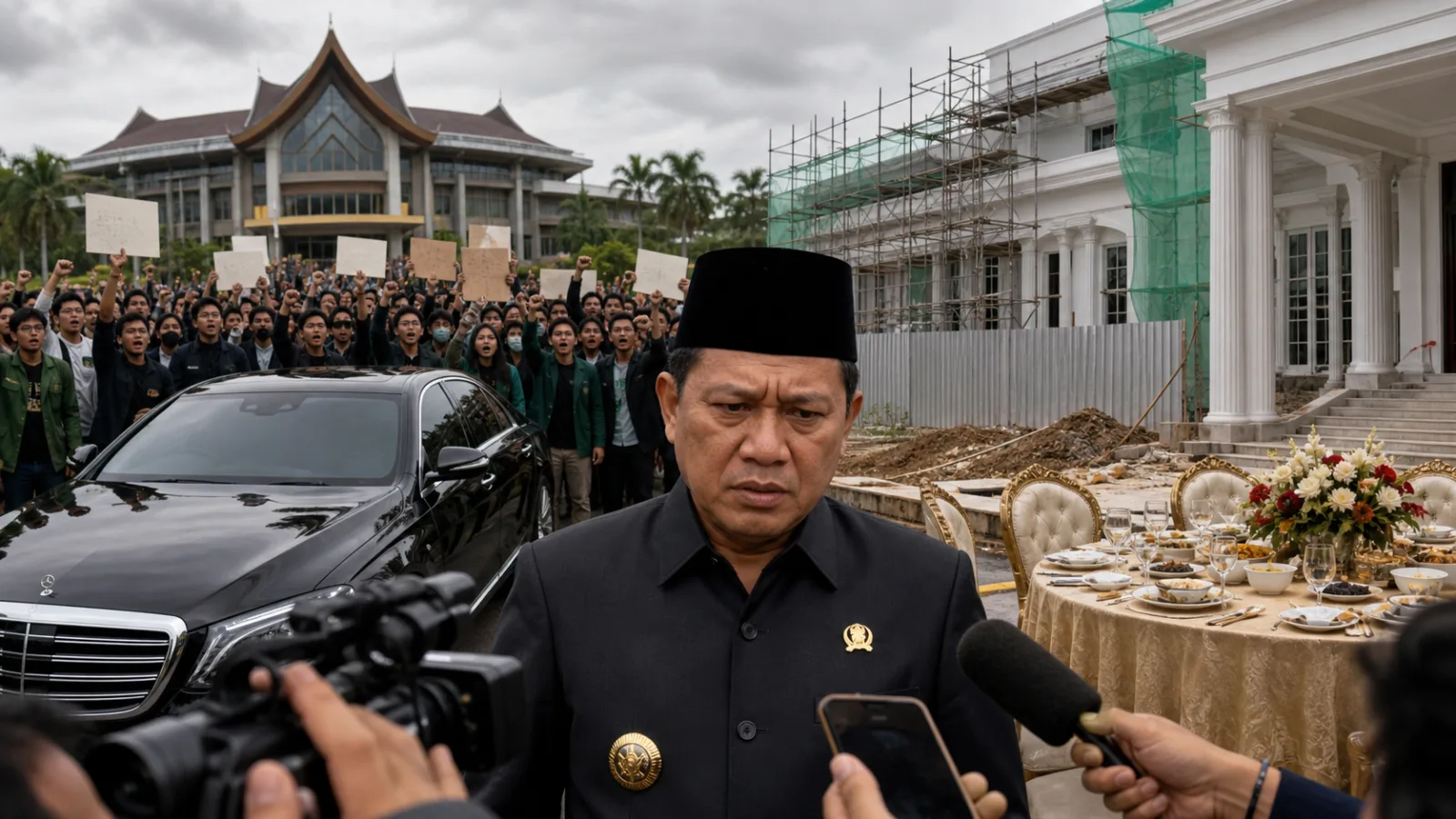
The ownership dispute of these four islands can finally be resolved after the discovery of a legitimate legal basis in the form of the original file of the Decree of the Minister of Home Affairs of the Republic of Indonesia Number 111 of 1992 concerning the Affirmation of Regional Boundaries Between the Provincial Level of Region I of North Sumatra and the Provincial Special Region of Aceh (hereinafter referred to as Kepmendagri 111/1992). Kepmendagri 111/1992 ratified the joint agreement between the Province of Aceh and the Province of North Sumatra regarding the boundaries of the two provinces, where the ownership of the four islands was determined by referring to the 1972 TNI Air Force topographic map which included the four islands as part of Aceh. The Minister of Home Affairs, Tito Karnavian, has also issued Decree of the Minister of Home Affairs Number 300.2.2-2430 of 2025 which evaluates the previous decision while restoring the ownership status of the four islands to the Province of Aceh. Although it is complete, the reaction of the people and government of Aceh cannot be underestimated. Students and the people of Aceh joined together to reject the transfer of ownership status of the four islands in a demonstration entitled "Aceh Movement Against" in front of the Aceh Governor's Office on Monday, June 12, 2025. In the action, the demonstrators also carried banners reading "Referendum" while waving the Crescent Star flag which is identical to the Free Aceh Movement, an armed movement that existed from 1976 to 2005 to separate Aceh from the Unitary State of the Republic of Indonesia. The "Referendum" banner and the Crescent Star flag in the action became a stern warning from the people of Aceh to the central government not to repeat the old wounds of the Acehnese people and to continue to respect Aceh's special autonomy.
The Long History of the Dynamics of RI-Aceh Relations
To understand this movement, it is necessary to review it from the aspect of the political history of the Acehnese people. The relationship between the Acehnese people and the central government has experienced very long ups and downs. In 1946, the people of Aceh helped the republican troops and contributed their income to buy the Dakota RI-001 Seulawah aircraft when facing Dutch military aggression. The donation was received by President Sukarno by visiting Aceh in June 1948 and promising the formation of the province of Aceh complete with its special autonomy. But the harmonious relationship slowly began to tense when President Sukarno ratified Law Number 10 of 1948 which merged Aceh into the province of North Sumatra. The people of Aceh did not just remain silent and joined DI/TII who wanted the formation of the Islamic State of Indonesia (NII). In the end, the conflict with DI/TII in Aceh could be resolved peacefully through negotiations and the enactment of Law Number 24 of 1956 concerning the Establishment of the Autonomous Region of the Province of Aceh and Changes to the Regulations for the Establishment of the Province of North Sumatra which formed the special autonomous region of the province of Nanggroe Aceh Darussalam.
Although the conflict with DI/TII in Aceh could be resolved through peaceful negotiations, the formation of the special autonomous province of Nanggroe Aceh Darussalam turned out to be not enough to guarantee peace between the central government and the people of Aceh. When Indonesia was led by President Soeharto, the people of Aceh felt neglected because the natural resources in Tanah Rencong were mostly enjoyed by the central government rather than by the people of Aceh. Due to the disappointment of the Acehnese people, Wali Nanggroe Aceh VIII Hasan Di Tiro in December 1976 founded the Free Aceh Movement (GAM) with the aim of separating Aceh from the Unitary State of the Republic of Indonesia. GAM is a movement that should not be underestimated. For approximately 28 years, GAM can be said to have been very successful as the spearhead for the people of Aceh in voicing their disappointment with the injustice of the central government by fostering a sense of "Acehnese Nationalism". This conflict was finally resolved peacefully in the era of President Susilo Bambang Yudhoyono who realized that the people of Aceh only demanded justice and prosperity for the natural resources of Aceh managed by the Indonesian government. The peace between GAM and the Government of the Republic of Indonesia which was stated in the Helsinki Memorandum of Understanding (MoU) 2005 was based on the spirit of actively involving the voices of the Acehnese people about the future of their region. Peace in Aceh was finally achieved after GAM laid down all its weapons and Indonesia granted broader special autonomy to Aceh.
Let's Maintain and Guard Aceh's Peace Together
The long journey of the dynamics of relations between the central government and the people of Aceh should always be remembered as part of the great history of the Indonesian nation and become a deep lesson for all parties. On the one hand, the people of Aceh have expressed their willingness and loyalty to Indonesia twice in official peace, namely after the DI/TII conflict and after the GAM-RI conflict. Peace in Aceh will not be achieved without the active participation of the Acehnese people. So it is fitting that in maintaining peace in Aceh, the Indonesian government must also prove its determination to comply with the contents of the Helsinki MoU which has now been stated more firmly in Law Number 11 of 2006 concerning Aceh Governance, accompanied by an active role in building Aceh and involving input from the people of Aceh in matters of their region, including regarding its territorial boundaries. By actively involving the participation of the Acehnese people, the Indonesian government will not only be able to maintain and improve the harmonious relationship between the central government and the people of Aceh, but also encourage the central government to fulfill transparency, accuracy, and public interest in carrying out its obligations.






















Comments
0Share your perspective politely, stay relevant, and focus on the article. Comments appear after moderation.
Join the discussion
Write a clear, polite response that stays on topic.
No comments yet. Be the first to discuss.
Comments will appear after moderation.