

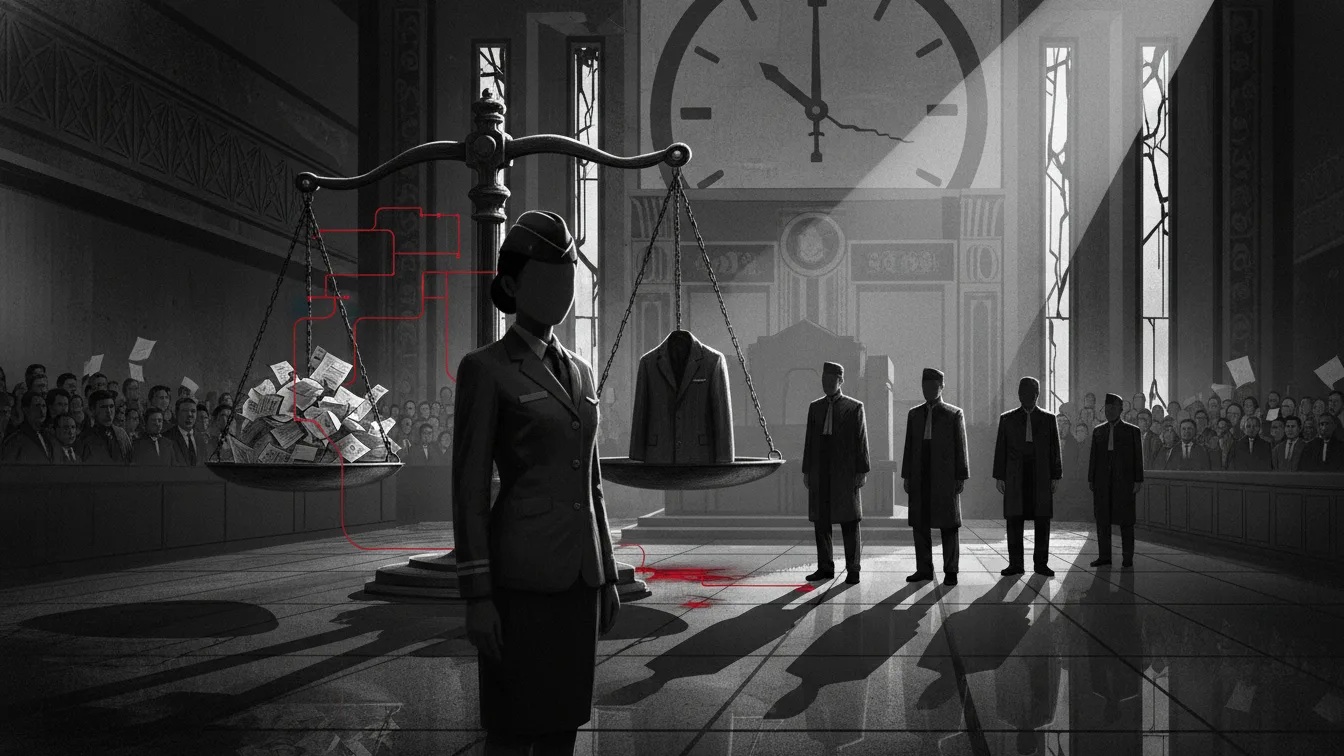
Legal Literacy - In this all-transparent digital era, the legitimacy of a state of law (rechtsstaat) is no longer solely determined by how neatly the codification of laws is arranged in the archive cabinet, but by how responsive law enforcement officials are in responding to the cries for justice from their citizens without having to be shouted at first. However, today's reality presents a brutal irony: the judge's gavel and the investigator's badge seem to lose their power if they are not accompanied by a "knock" from social media algorithms. The No Viral No Justice phenomenon is no longer just street satire or netizens' jokes, but has metamorphosed into the clearest indicator of paralysis or systemic paralysis in our law enforcement system. In a healthy state of law, virality should only be a nuisance (noise). However, in a sick state of law, virality actually becomes a life support (life support). When justice has to be "fished" with algorithms in order for the authorities to move, we are actually witnessing a slow but sure erosion of the concept of a monopoly of justice that should be firmly held by the state.
The Rule of Law and Algorithmic Discretion in the No Viral No Justice Phenomenon
Theoretically, the state holds a monopoly on the use of legitimate physical violence (das monopol der legitimen physischen gewaltsamkeit) and a monopoly in resolving disputes of justice, as argued by Max Weber in Politics as a Vocation (Weber, 1919). Citizens relinquish their right to take the law into their own hands through a social contract in the hope that the state will provide legal certainty. However, today's phenomenon signifies the state's default on that contract. The public no longer sees law enforcement institutions as a representation of "Just Queen", but rather as a rigid bureaucracy that can only be melted by the heat of mass anger in cyberspace. This anxiety has given rise to a new legal anomaly that I call Algorithmic Discretion or Algorithmic Discretion. If in positive law such as Article 18 paragraph (1) of Law No. 2 of 2002 concerning the Police, discretion is given to officers to act in the "public interest", then Algorithmic Discretion is a deviation where discretion is used not based on legal considerations or conscience, but based on the intensity of digital mass pressure. Operationally, Algorithmic Discretion is a form of illegal discretion that is unwritten, works secretly in the psychological space of investigators, and is dangerous because it cannot be tested or corrected through pre-trial mechanisms or any procedural law.





















Comments
0Share your perspective politely, stay relevant, and focus on the article. Comments appear after moderation.
Join the discussion
Write a clear, polite response that stays on topic.
No comments yet. Be the first to discuss.
Comments will appear after moderation.