
Legal Literacy - At a time when the climate crisis has forced thousands of people to lose their homes, living spaces, and even social identities, policies are instead presented in a cold language, namely management. This contrast feels so bitter when we see the reality on the ground. The tragedy of Tropical Cyclone Seroja in NTT in 2021, for example, which killed at least 181 people, and Cyclone Senyar in Sumatra at the end of 2025, which claimed more than 1,100 lives, are proof that this crisis is not just statistics, but a threat to life. However, instead of responding with the urgency of justice, the draft Bill on Climate Change Management (PPI) is trapped in a dry administrative labyrinth.
The Problem of the Terminology "Management" that Covers Up the Crisis
The use of the terminology "management" in the title of this Bill indicates the absence of a crisis paradigm in the eyes of the state. Climate change is positioned only as a technical environmental issue, not a multidimensional crisis that threatens people's safety and human rights.


In Article 3 of the draft, the objectives stated are only to "prevent the impact of environmental damage" and "realize sustainable development". There is no explicit mention of a national emergency that requires immediate action. In fact, a crisis that is only "managed" without recognizing its emergency is a crisis that is being prepared to continue to occur.
Absence of Victims and Structure
One of the fundamental flaws in this Bill is the disappearance of humans as subjects who must be protected. The law should have partiality, but in this draft, the mechanism of loss and damage, both economic and non-economic such as the loss of culture and biodiversity, is not regulated at all.
The government seems to assume that the massive impact has not yet occurred. In fact, residents in Bedono Village, Demak, have lost their hamlets due to rising sea levels, and residents of Pari Island continue to struggle with tidal floods that damage their water sources and economy. This Bill regulates climate change systemically, but neglects to regulate the fate of the humans who are destroyed by it.
Who Pays?
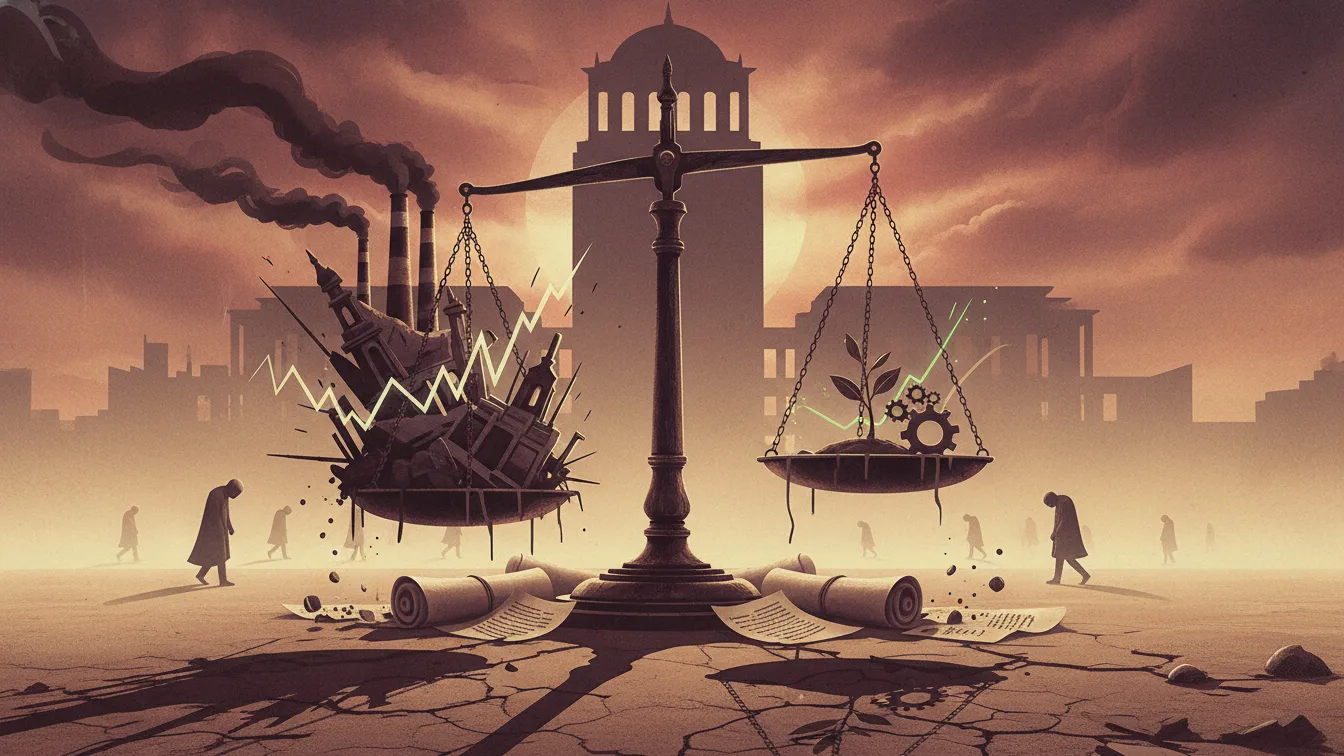
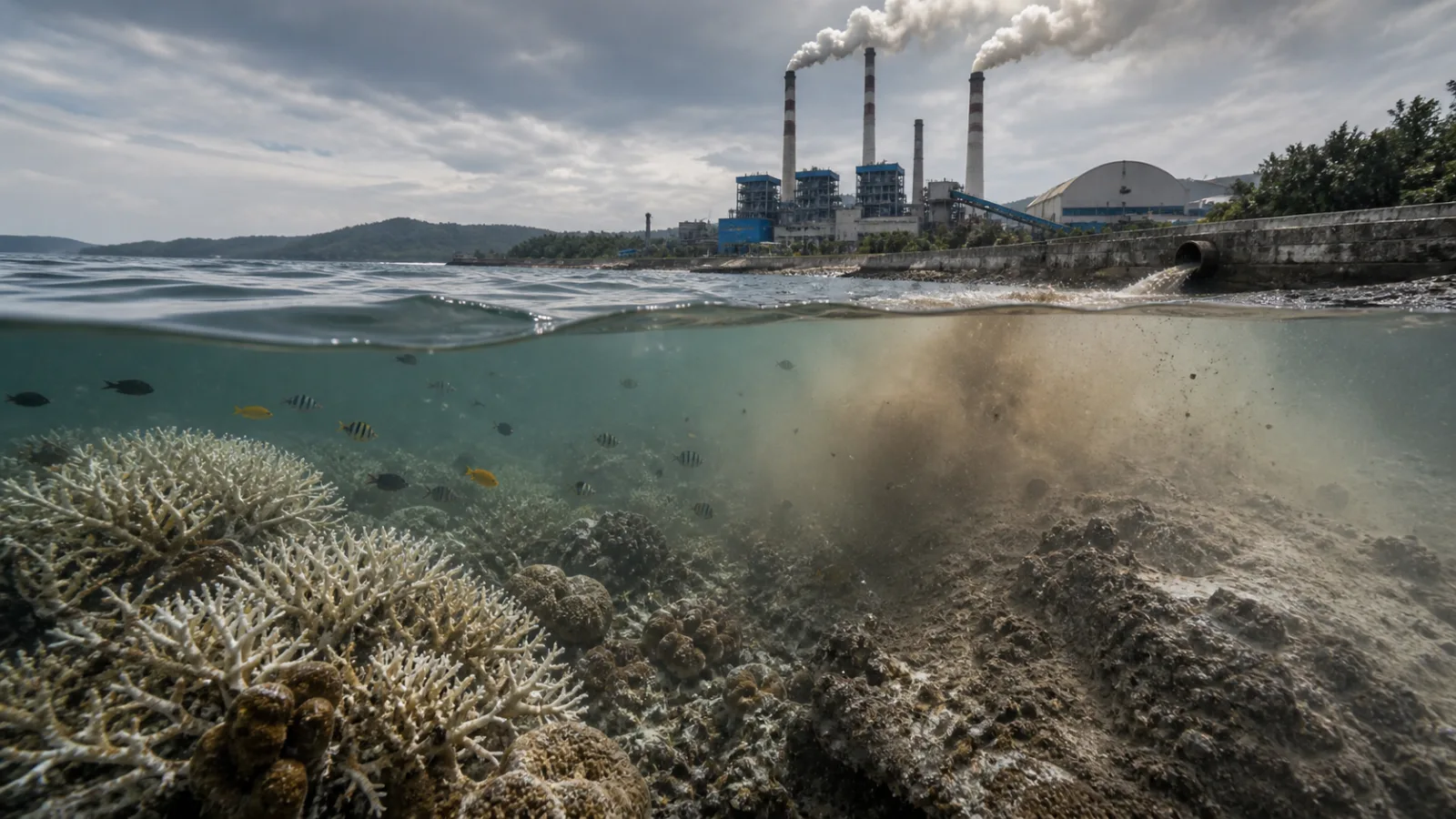
The Climate Change Bill fails to place large emission-producing corporations as the main actors causing the crisis. There is no obligation for corporations to be responsible for their historical emissions, pay compensation for damage and loss, and bear the adaptation costs of affected communities.
The existing sanctions are only administrative and are left to derivative regulations without any guarantee of a deterrent effect. This is a real form of "privatizing profits and socializing losses", that is, when corporations enjoy profits from the extractive industry, while ordinary people bear the costs of the disaster.
Reducing the Crisis to a Market Mechanism
Instead of encouraging a drastic reduction in emissions, this Bill actually reduces climate control to merely a matter of Carbon Economic Value (CEV) and carbon trading. This approach turns the ecological crisis into a market transaction.
The carbon trading scheme risks becoming a "false solution" that allows large polluters to continue emitting as long as they can buy "permits" to pollute. In this logic, polluting is no longer seen as a violation of ethics and law, but as something that can be paid for with money.
Substantively, the Climate Change Bill is not yet adequate as a foundation for climate justice, because it focuses more on the regulative, coordinative, and facilitative functions of market mechanisms. Public participation is also passively limited, only as advisors or social supervisors, without active involvement in every stage of decision-making.
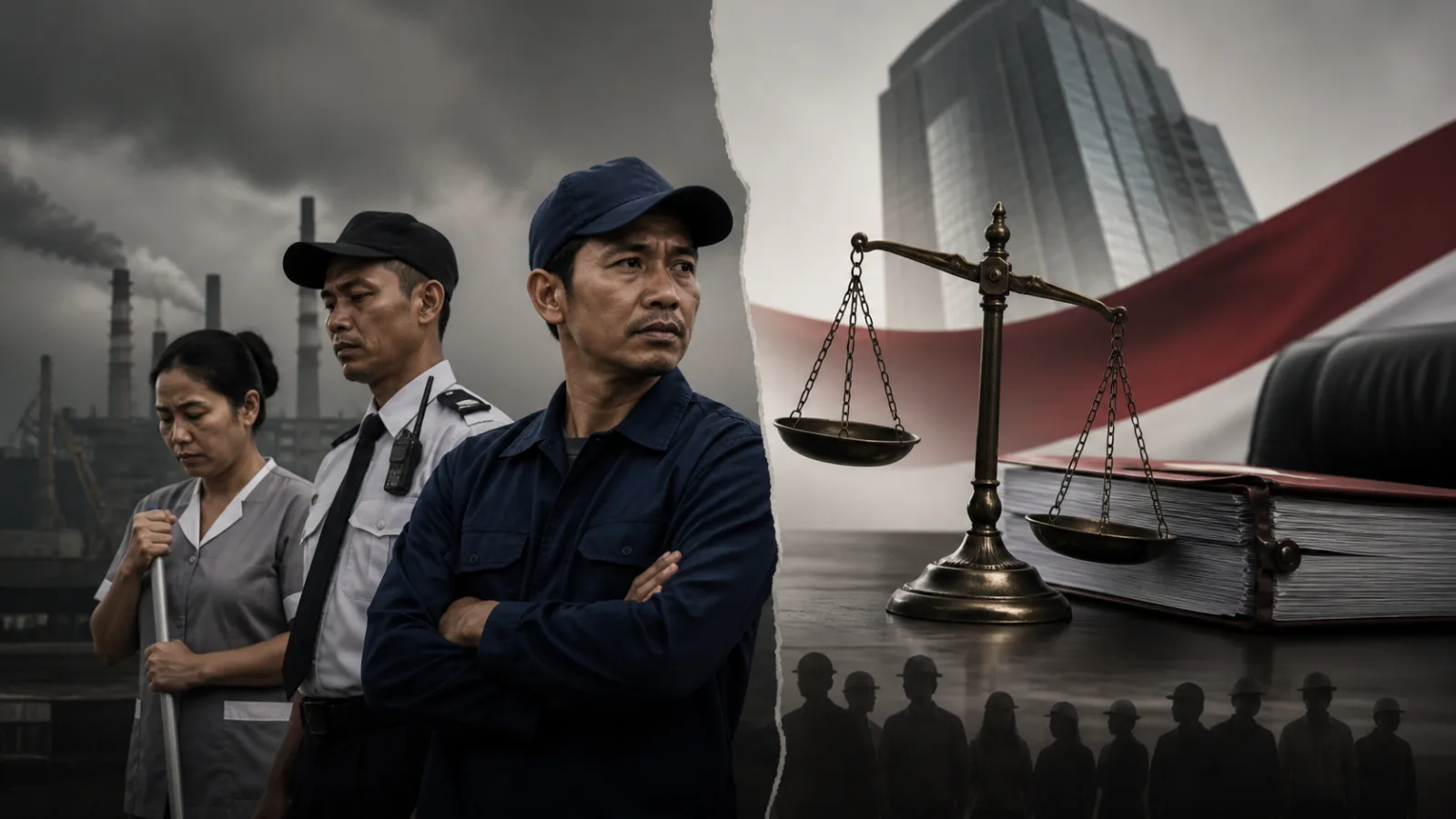
This shows that this Bill is positioned more as a tool for legitimizing government policies than as an instrument of protection for vulnerable citizens.
If a climate change law does not begin with the recognition of victims and real accountability from climate destroyers, then it is not an instrument of justice, but merely an administrative framework for managing a crisis that continues to be allowed to happen. Fundamental change is absolutely necessary so that the law is truly on the side of the people's safety, not on market interests.




















Comments
0Share your perspective politely, stay relevant, and focus on the article. Comments appear after moderation.
Join the discussion
Write a clear, polite response that stays on topic.
No comments yet. Be the first to discuss.
Comments will appear after moderation.