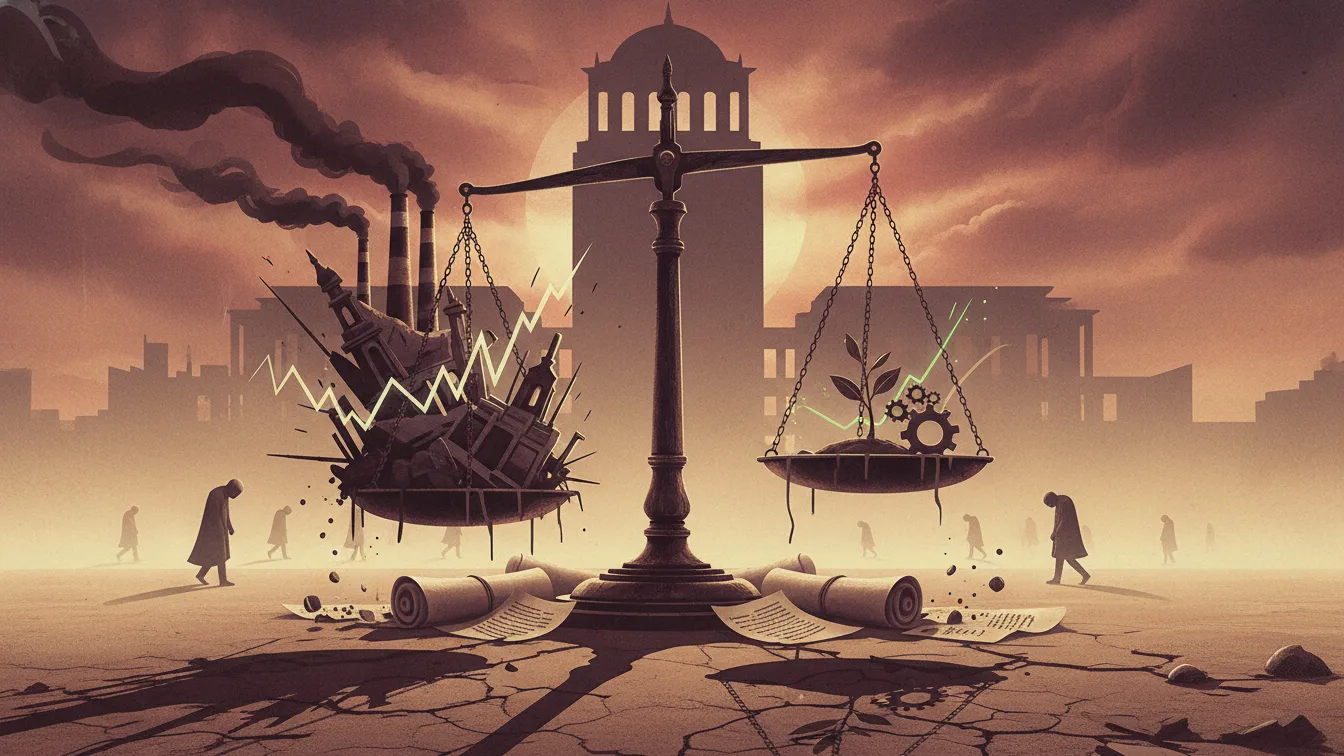
Legal Literacy - Is environmental damage something that must be accepted as a reasonable cost of development? Or are our policies normalizing environmental destruction in the name of economic growth? This question becomes increasingly urgent to answer as development ambitions continue to be spurred, while ecological carrying capacity is increasingly under pressure.
At this point Environmental Kuznets Curve (EKC) becomes relevant to read, not just as an economic model, but also as a way of viewing the country's understanding of the meaning of progress. The EKC starts from the assumption that in the early stages of growth, an increase in per capita income is usually accompanied by an increase in environmental damage. After passing a certain point, economic growth is considered to encourage cleaner technology, greater public awareness, and ultimately improved environmental quality. In other words, damage is positioned as an initial phase that will later be corrected by itself.


As an academic hypothesis, the idea is still debatable. A more serious problem arises when this logic shifts from a scientific description to a policy justification. When the assumption of "damage first, recover later" is translated into permits, strategic projects, and investment priorities, environmental damage is no longer treated as a condition that must be prevented from the outset. Instead, it risks being accepted as a stage considered normal in the journey towards progress.















Comments
0Share your perspective politely, stay relevant, and focus on the article. Comments appear after moderation.
Join the discussion
Write a clear, polite response that stays on topic.
No comments yet. Be the first to discuss.
Comments will appear after moderation.