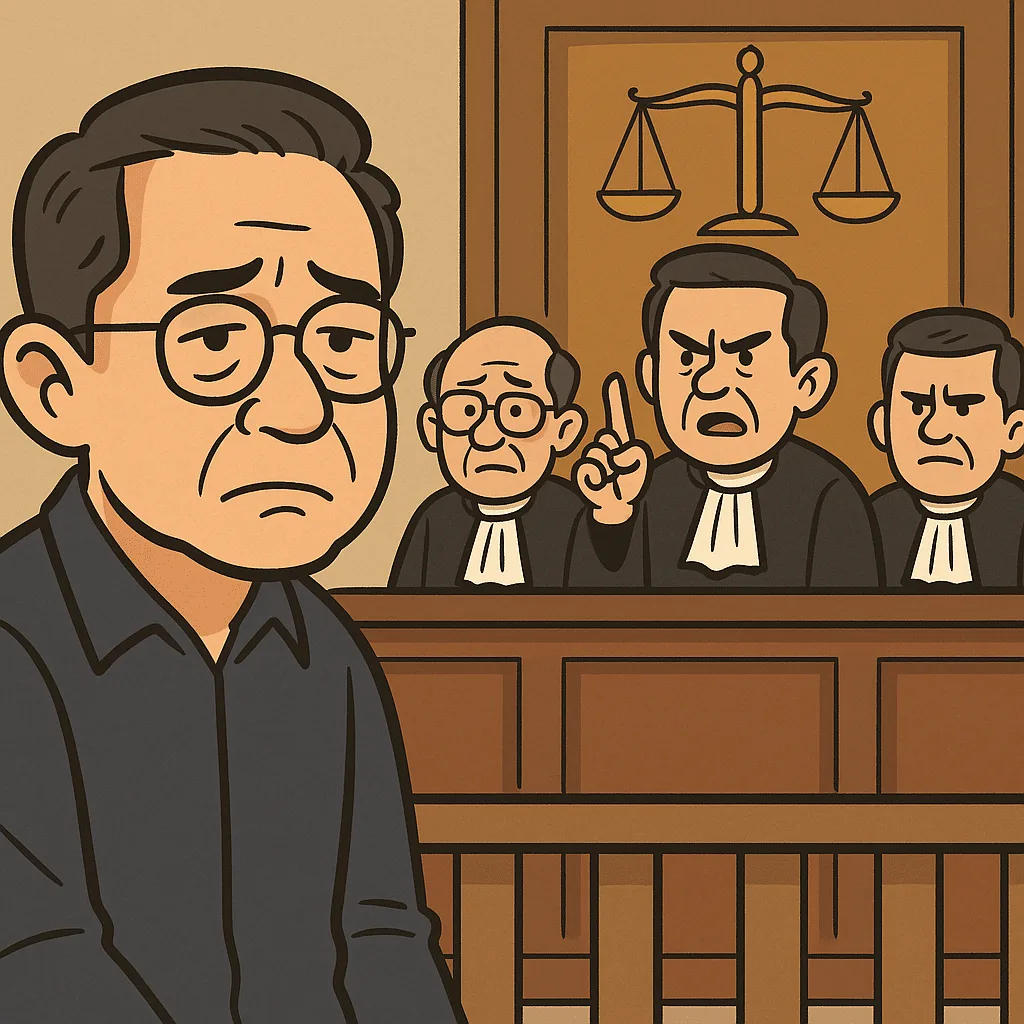
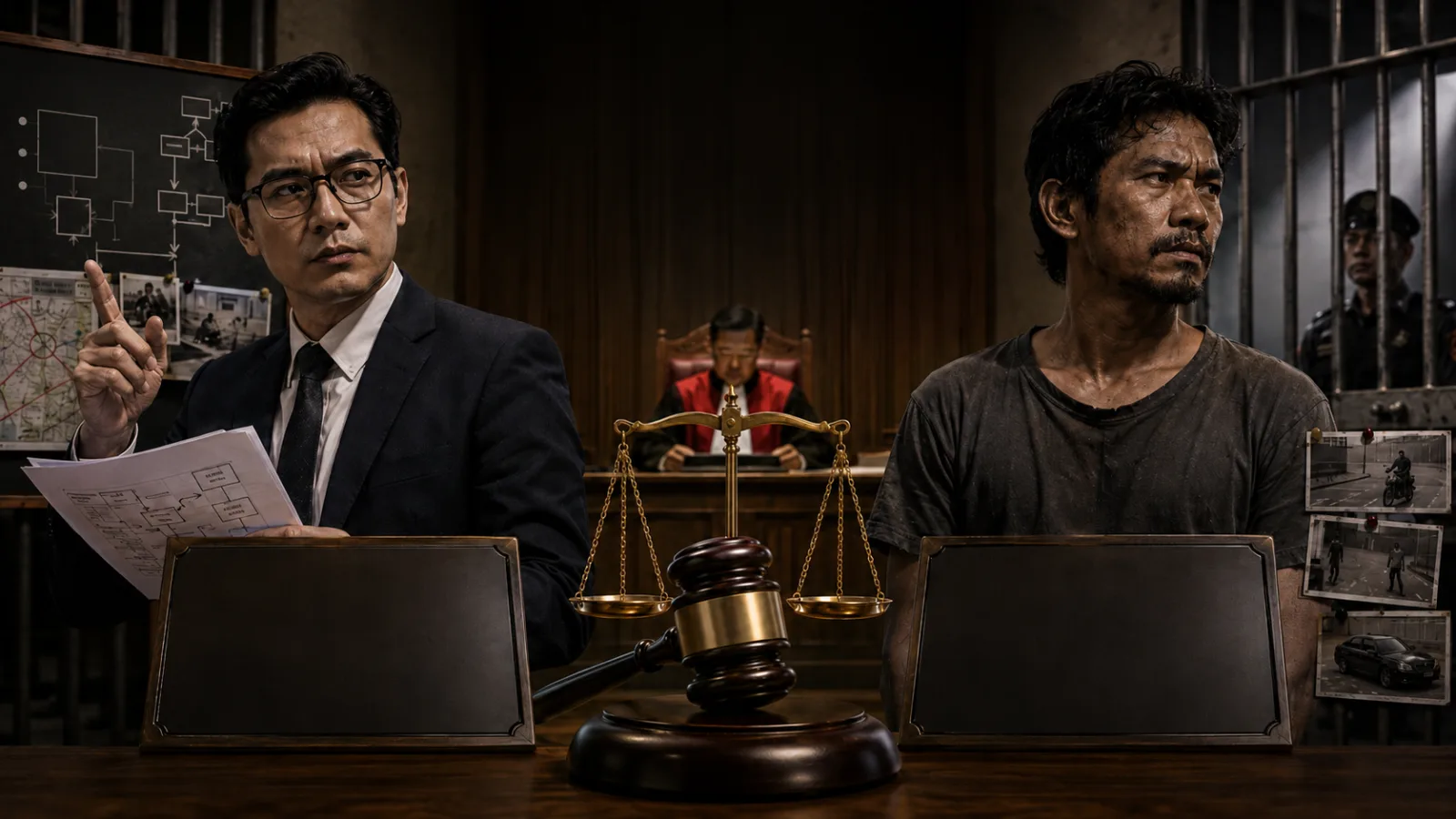
Legal Literacy - From all the complexities of the law that occur in Indonesia, a case has emerged that has attracted public attention, namely the verdict against the former Minister of Trade of the Republic of Indonesia, Thomas Trikasih Lembong or Tom Lembong, regarding alleged corruption in sugar imports. Why is this case interesting to follow? Because the Judge stated that Tom Lembong was not proven to be legally involved in enjoying the money from the alleged corruption. However, the Judge still sentenced Tom Lembong to 4.6 years in prison and a fine of Rp. 750 million on the grounds of enriching other parties, both individuals and corporations. Also, the case that ensnared Tom is more thick with its political atmosphere, because the tempus or time of the incident was very long ago, between 2015-2016 when he was Minister of Trade. However, of all the aggravating reasons from the Judge addressed to Tom Lembong, there is one reason that is very intriguing, namely “Pro Capitalist Economy and Against Pancasila Economy”. Something that is abstract and sets a bad precedent for economic actors in Indonesia.
Knowing Capitalism and Pancasila Economy as an Economic System
Capitalism as an economic system can be understood as a form of control of production carried out by the private sector with the main aim of obtaining the greatest possible profit. In this case, capitalism is influenced by a free market system or free trade which affects product sales based on the mechanism of supply and demand. Meanwhile, the Pancasila economy itself is an economic thought or understanding that originates from the noble values of Pancasila with the main characteristic that the results of production or the economy are entirely based on meeting the needs of the community itself or in the sense of realizing an independent economy. However, in the indictment and verdict handed down to Tom Lembong, it becomes confusing to use this reason as punishment. Because, both capitalism and Pancasila democracy are the result of abstract thinking and cannot be realized in a real way in a policy. Let's say this, does Indonesia so far have a philosophy or guide in the implementation of economic activities? There is none, even if there is, it usually cannot be brought to life in a broad policy framework like a country, but only lives in a certain community. For example, the Ciptagelar indigenous community in Sukabumi, West Java has a way of managing natural resources, in this case rice, which is able to meet the village's food needs for the next 95 years by carrying out traditional rice planting techniques, then the harvest will be stored in leuit to meet the needs of the village community and is not traded so that there is no shortage of stock food.


The Irony of the Judge's Verdict
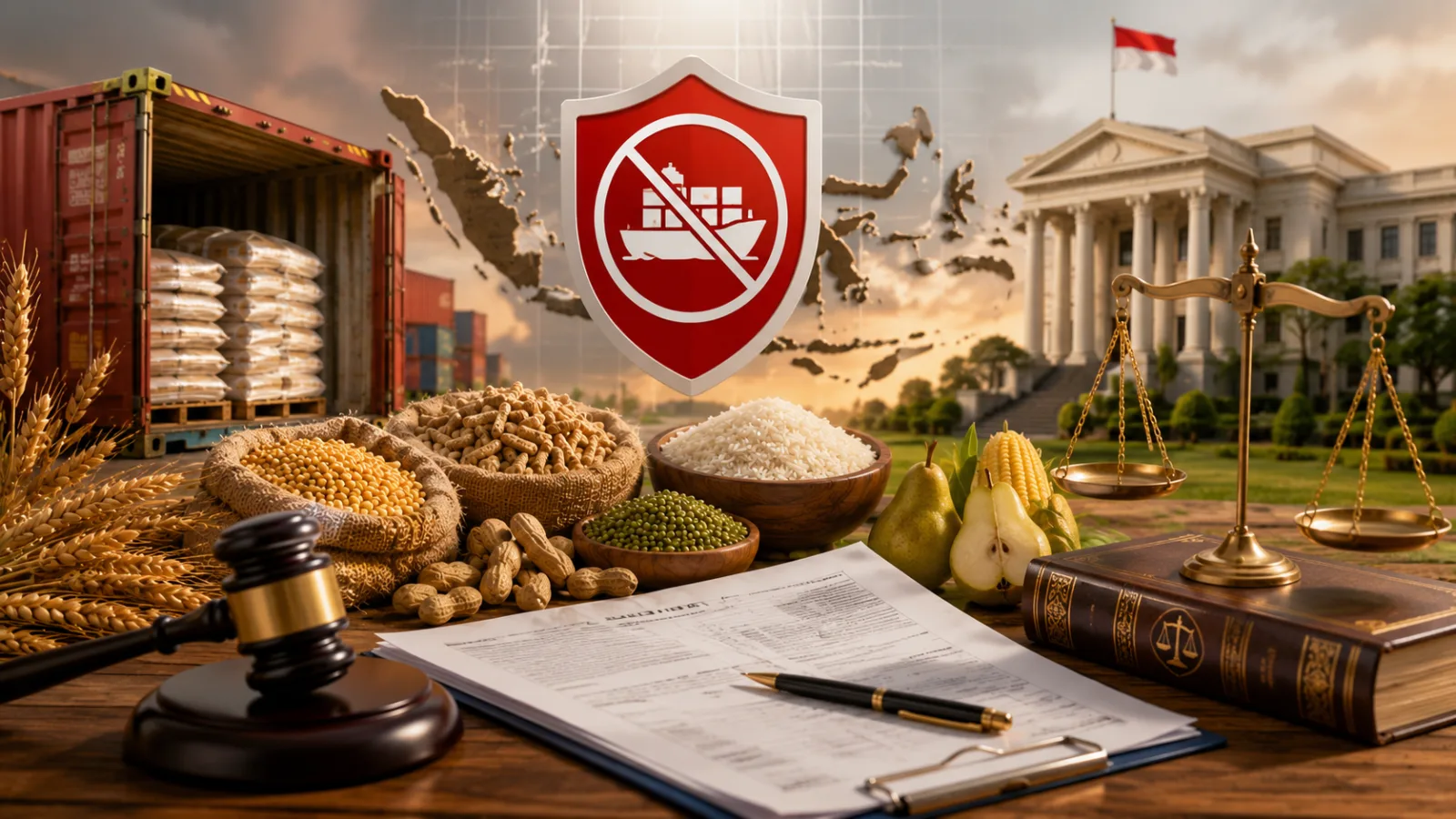
Returning to the facts revealed in court, it was mentioned that President Joko Widodo at that time ordered Tom Lembong as Minister of Trade to import sugar as a response to the deficit or lack of domestic sugar supply. So, in this case, Tom Lembong issued Permendag No 117/M.DAG/PER/12/2015 concerning provisions for sugar imports. In this case, Tom Lembong finally issued a policy to fulfill industrial sugar by importing two types of sugar, namely raw sugar (raw sugar) and refined crystal sugar (refined sugar). As for the Minister of Trade Regulation, it is also mentioned that sugar imports for the second category do not have to go through state-owned enterprises, but can appoint private companies that already have API-P (Producer Importer Identification Number) because the type of sugar imported is not white crystal sugar (plantation white sugar). Import permits for white crystal sugar are specifically for state-owned enterprises because the sugar is intended to meet household needs. However, coarse and refined sugar are traded exclusively for industry, not for the general public. Therefore, it is questionable why the Judge sentenced Tom Lembong to corruption charges when there were no articles or rules violated, and there was no strong and valid evidence of fund flows or profits from the sugar import licensing process to private companies that benefited Tom personally. It sets a very bad precedent for economic actors if simply granting import access to private companies is considered a form of corruption and accused of being capitalist and contrary to the Pancasila economy. In fact, the Indonesian economic system does not operate on the basis of the Pancasila economy, and does not even have any characteristics at all. It is strange for a Judge to accuse someone on such considerations, because we have not finished defining what the Pancasila economy is and how it is practiced so that it can put people in jail.
Prabowo and the US Capitalist Reciprocal Tariff Policy
The Panel of Judges also seems to need to indict President Prabowo, because trade off between Indonesia and the United States regarding trade tariff policies is very detrimental to Indonesia. In terms of tariffs, they have indeed decreased from the previous 34% to 19%, but there is a high price to be paid by the Government, including an agreement to apply a 0% tariff to US goods entering Indonesia, which will broadly result in the competitiveness of US product prices against Indonesian products, which is certainly dangerous for domestic producers. This policy also broadly illustrates that the Pancasila economy does not apply in Indonesia, which is very contradictory to the verdict that aggravated Tom's indictment, namely being pro-capitalist economy and contrary to the Pancasila economy. Meanwhile, state policy actually applies in this way.
Of course, there needs to be a thorough legal correction to the verdict or indictment against Tom Lembong, not only to the final result, but also to the process and the Judge who handled the case, because it raises big questions and without wise consideration in making the verdict. Law should be present not only as a tool of punishment, but as a tool to obtain justice. In a country, the executive and legislative branches may be corrupt, but the judiciary must not be, because the judiciary is the last resort for the people to seek justice. If in a country, the law cannot be the supreme commander, then in reality the law is dead and what is being shown is just a comedy show.












Comments
0Share your perspective politely, stay relevant, and focus on the article. Comments appear after moderation.
Join the discussion
Write a clear, polite response that stays on topic.
No comments yet. Be the first to discuss.
Comments will appear after moderation.