

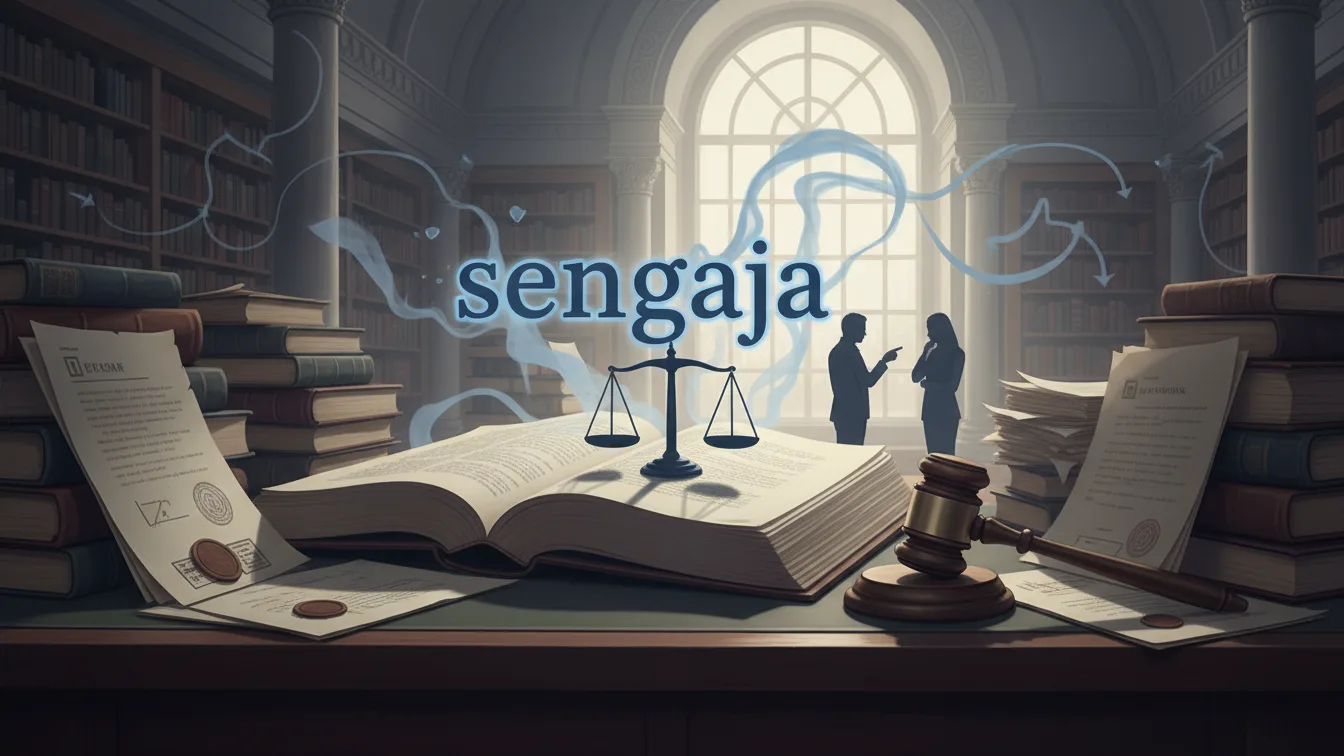
Legal Literacy — Learn the significance of legal principles and their role in the legal system. This course also includes a detailed analysis of the Principles of Criminal Law, including the principles of legality, territory, protection, universality, and active nationality, with a special focus on the new Criminal Code.
Understanding Legal Principles
Legal principles are the basic rules or abstract ideas that form the foundation for various regulations within a legal system. According to the Great Dictionary of the Indonesian Language (KBBI), "principle" is a base, foundation, or guideline akin to a sturdy stone foundation for a house. Legal principles can also be understood as truths that serve as the basis or core for thinking, opining, etc. G. W. Paton defines a principle as a broadly formulated idea that is the basis for legal rules or norms. Legal principles are generally not set out in concrete regulations or articles; instead, they underpin and give context to specific regulations and are generally broad or abstract. Therefore, legal principles are crucial in determining the foundation and principles that govern a legal system.


The Role of Legal Principles in the Legal System
Legal principles play a crucial role in the legal system because they are the basic rules or abstract principles that form the foundation for various regulations within the system. They create the framework for law-making, interpretation, and application. Legal principles also help ensure justice, legal certainty, and consistency in legal decision-making. They influence the development of the law and guide the creation of new legal norms. Additionally, legal principles are used to resolve conflicts within the legal system and address discrepancies between legal norms.






















Comments
0Share your perspective politely, stay relevant, and focus on the article. Comments appear after moderation.
Join the discussion
Write a clear, polite response that stays on topic.
No comments yet. Be the first to discuss.
Comments will appear after moderation.