

2. Court
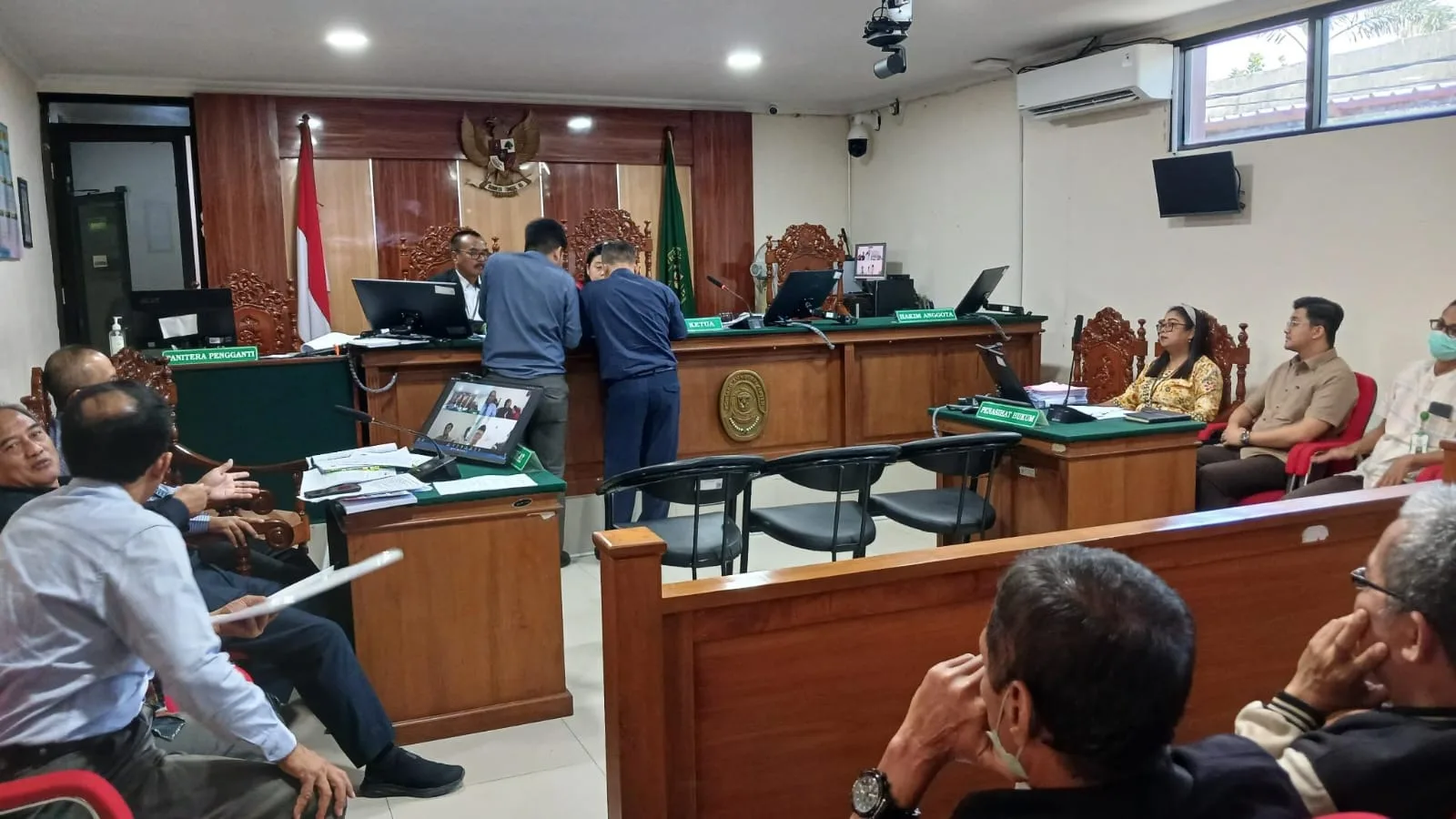
Foreign nationals accused of committing criminal acts will be tried in Indonesian courts. In this process, they are entitled to legal assistance and interpreters if needed. The Indonesian court must ensure that the foreign national understands all charges and ongoing judicial processes. This procedure is regulated in the Criminal Procedure Code:
- Article 54 of the Criminal Procedure Code: States that a suspect or defendant has the right to legal assistance from one or more legal advisors during the time and at every level of examination, according to the procedures specified in this law.
- Article 177 of the Criminal Procedure Code: States that if the suspect or defendant or witness does not understand Indonesian, the court is obliged to provide a sworn interpreter.
3. Punishment
If found guilty, foreign nationals can be sentenced according to the laws in force in Indonesia. This punishment can be in the form of imprisonment, fines, or other punishments depending on the type of criminal act committed. Indonesia is known to have strict laws, especially against narcotics crimes.


Special Cases Involving Foreign Citizens
1. Narcotics Crimes
Indonesia has very strict laws regarding narcotics crimes. Foreign nationals who are proven to be involved in narcotics crimes, such as smuggling, trafficking, or drug use, can face severe penalties, including the death penalty. The legal basis for narcotics crimes is regulated in Law Number 35 of 2009 concerning Narcotics:
- Article 111 of the Narcotics Law: States that anyone who without right or against the law plants, cultivates, possesses, stores, controls, or provides narcotics of group I in the form of plants, shall be punished with imprisonment for a minimum of 4 years and a maximum of 12 years and a fine of at least Rp800,000,000.00 and a maximum of Rp8,000,000,000.00.
- Article 113 of the Narcotics Law: States that anyone who without right or against the law offers for sale, sells, buys, receives, mediates in buying and selling, exchanges, or hands over narcotics of group I, shall be punished with imprisonment for a minimum of 5 years and a maximum of 20 years and a fine of at least Rp1,000,000,000.00 and a maximum of Rp10,000,000,000.00.
2. Cyber Crime
With technological advancements, cybercrime has become a serious issue. Foreign nationals involved in illegal activities such as hacking, online fraud, or distribution of illegal content can be prosecuted in Indonesia. The Indonesian government has developed a legal framework to address cybercrime and protect national interests. The legal basis for cybercrime is regulated in Law Number 19 of 2016 concerning Electronic Information and Transactions (UU ITE):
- Article 27 of the ITE Law: States that anyone who intentionally and without right distributes and/or transmits and/or makes accessible electronic information and/or electronic documents that contain elements that violate decency, gambling, defamation and/or libel, extortion and/or threats, shall be punished with imprisonment for a maximum of 6 years and/or a maximum fine of Rp1,000,000,000.00.
- Article 28 of the ITE Law: States that anyone who intentionally and without right disseminates false and misleading news that results in consumer losses in electronic transactions shall be punished with imprisonment for a maximum of 6 years and/or a maximum fine of Rp1,000,000,000.00.
3. Other Crimes
In addition to narcotics and cybercrime, there are various other types of criminal acts that may involve foreign nationals, such as theft, fraud, and violence. Foreign nationals involved in these types of crimes will be processed in accordance with Indonesian criminal law and may face the same penalties as Indonesian citizens. The legal basis for these crimes is regulated in the Criminal Code (KUHP):
- Article 362 of the Criminal Code: States that anyone who takes an item, wholly or partly belonging to another person, with the intention of unlawfully possessing it, shall be punished for theft, with imprisonment for a maximum of five years or a fine of a maximum of sixty rupiah.
- Article 378 of the Criminal Code: States that anyone who, with the intention of benefiting themselves or another person unlawfully, either by using a false name or false dignity, either by trickery or a series of lies, induces another person to hand over an item, or to give credit or to eliminate a debt, shall be punished for fraud, with imprisonment for a maximum of four years.

Protection of Rights for Foreign Citizens
1. Human Rights
Indonesia guarantees human rights for all people within its territory, including foreign nationals. This includes the right to legal protection, the right not to be tortured or treated inhumanely, and the right to a fair trial. This protection is regulated in Law Number 39 of 1999 concerning Human Rights:
- Article 3 of the Human Rights Law: States that everyone is entitled to the protection of human rights and fundamental freedoms, without discrimination.
- Article 17 of the Human Rights Law: States that everyone, without discrimination, has the right to obtain justice by submitting applications, complaints, and lawsuits in criminal, civil, and administrative cases.
2. Consular Assistance
Foreign nationals detained in Indonesia are entitled to consular assistance from the embassy or consulate of their country of origin. The embassy can provide legal assistance, accompany them during the judicial process, and ensure that the rights of foreign nationals are respected while they are in detention. This provision is regulated in the Vienna Convention on Consular Relations 1963, which has been ratified by Indonesia.
Integration of International Law in the Indonesian Legal System
Indonesia has signed various international agreements that affect how the country handles foreign nationals who commit crimes. Some of these agreements include extradition treaties, mutual legal assistance treaties, and agreements on the protection of human rights. This integration of international law helps ensure that foreign nationals receive appropriate protection and that the law is enforced fairly.
Real Case Examples
Several well-known cases involving foreign nationals in Indonesia have attracted international attention. Examples of these cases include the narcotics charges against Australian citizen Schapelle Corby, who was sentenced to 20 years in prison in Indonesia. This case highlights the severity of narcotics laws in Indonesia and the importance of consular assistance for foreign nationals facing serious charges.

To make it easier to understand, here is a table to summarize the contents of the discussion:
[ninja_tables id="17647"]Conclusion
Foreign nationals can be criminally liable in Indonesia if they violate the laws in force in the country. Indonesia applies the principle of territorial jurisdiction and, in some cases, extraterritorial jurisdiction, to enforce the law against foreign nationals. The legal process involves arrest, detention, trial, and fair punishment in accordance with Indonesian law. Despite facing challenges in law enforcement, Indonesia remains committed to providing human rights protection and consular assistance to foreign nationals.
With a clear legal framework and the integration of international law, it is hoped that the Indonesian legal system can provide equal justice for all those within its territory. A good understanding of how criminal law is applied to foreign nationals in Indonesia is essential to ensure that their rights are protected and that the judicial process is fair and transparent.
Effective law enforcement and adequate protection of rights for foreign nationals not only strengthen the Indonesian legal system, but also strengthen international relations and global confidence in justice in Indonesia. As a country that upholds the principles of law, Indonesia continues to strive to improve its judicial system to be more fair, transparent, and in accordance with international standards.
Reference Sources
- Criminal Code (KUHP)
- Criminal Procedure Code (KUHAP)
- Law Number 35 of 2009 concerning Narcotics
- Law Number 19 of 2016 concerning Electronic Information and Transactions (UU ITE)
- Law Number 39 of 1999 concerning Human Rights
- Vienna Convention on Consular Relations 1963
Hope this information is helpful! If you need more information or additional resources, don't hesitate to ask.






















Comments
0Share your perspective politely, stay relevant, and focus on the article. Comments appear after moderation.
Join the discussion
Write a clear, polite response that stays on topic.
No comments yet. Be the first to discuss.
Comments will appear after moderation.