

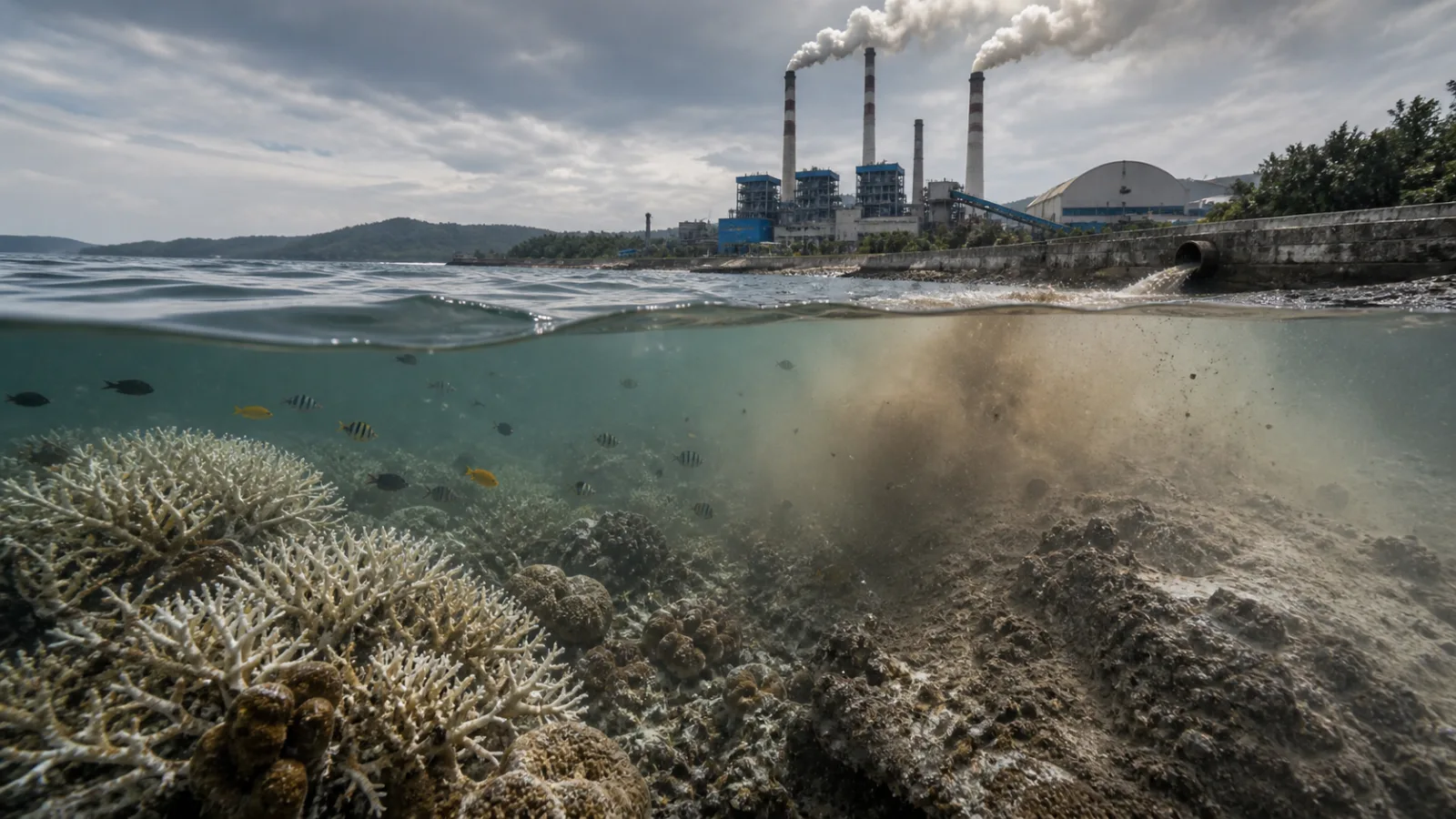
Legal Literacy - Behind the magnificent figures of Indonesia's economic growth, there is a dark reality that is often overlooked, namely, unlimited environmental exploitation. Environmental damage in Indonesia has not escaped the mischievous game of corporations and the massive exploitation of mining, plantations and forestry. The conversion of forest functions into commercial functions often does not pay attention to the carrying capacity of the environment. The massive conversion of forest functions into commercial functions often damages water catchment areas, eliminates vegetation cover, and increases the vulnerability of the region to ecological disasters.
Article 33 paragraph (3) the 1945 Constitution states that the earth, water, and natural resources shall be controlled by the state and shall be used to the greatest extent for the prosperity of the people However, in practice, the phrase "state control" is often used as an excuse to grant management licenses that can lead to loose exploitation, rather than as a mandate to protect the environment and community rights.


Massive defloration alert
According to a report by the Ministry of Environment and Forestry (MoEF), Indonesia has lost millions of hectares of forest to deforestation and fires in the past two decades. Data shows that more than 9 million hectares have been lost since 2000, with most of this caused by land clearing for plantations and mining.
Net deforestation in 2024 was recorded at 175.4 thousand hectares. This figure is obtained from gross deforestation of 216.2 thousand hectares minus the results of reforestation which reached 40.8 thousand hectares. The majority of gross deforestation occurred in secondary forests with an area of 200.6 thousand hectares. [1] The number of reforestation alone is far less than the deforestation that occurred, where the majority occurred in secondary forests. This statistic is not just a number on paper, it is a picture of the loss of living space, biodiversity, and climate stability for future generations.
















Comments
0Share your perspective politely, stay relevant, and focus on the article. Comments appear after moderation.
Join the discussion
Write a clear, polite response that stays on topic.
No comments yet. Be the first to discuss.
Comments will appear after moderation.