

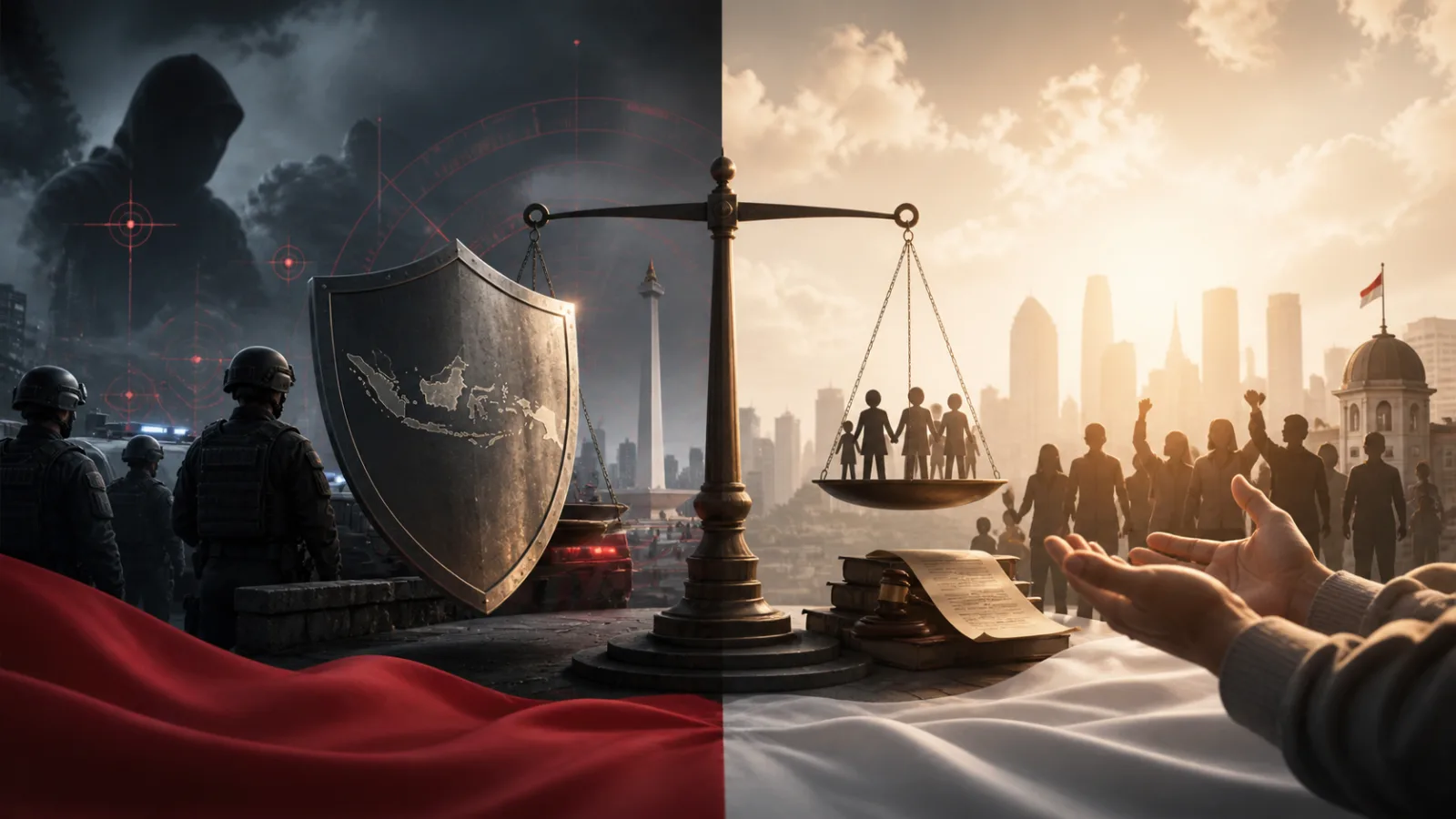
Legal Literacy - Hello, generation Z and millennials! Do you realize how many personal data leaks and spreads on social media in one day? Or how many times have you "scrolled" without realizing it, then accidentally shared uploads whose veracity is still questionable? In this fast-paced digital era, we are all digital citizens. But the question is: to what extent do we understand our rights and obligations as citizens in this seemingly borderless space?
Rights Inherent in the State, Still Applicable in Cyberspace
Are our rights as citizens (such as the right to express opinions, the right to assembly, and the right to privacy) automatically "logged in" to digital platforms? The answer is: yes. All the principles and rights stipulated in the constitution do not stop working in front of our cellphone screens. The main basis is enshrined in Article 28G paragraph (1) of the 1945 Constitution of the Republic of Indonesia, which states, "Every person shall have the right to the protection of his person, family, honor, dignity, and property under his control."


This is where this constitutional right is most relevant for us to be aware of. Every time we fill in our data on an online loan application, or when we are asked for facial verification by a social media platform, we are actually negotiating the boundaries of this right. Personal data is not just a string of numbers; it is a digital representation of who we are. Our personal data should be maximally protected as it is the right of every citizen, and should not be used as an object that harms us.
Then what about our expression? Can we freely criticize and express our thoughts without fear of being punished? Constitutional Court Decision (Constitutional Court) Number 115/PUU-XXII/2024 provides good news. The Court affirmed that criticism delivered in the digital space cannot be punished just because it causes noise. In addition, the Court also determined that criticism of state institutions (bureaucracy, institutions, positions) is not included in the realm of criminal defamation.
This decision is a major breakthrough for digital democracy. It expands the meaning of our freedom of speech, which is guaranteed by the constitution. However, keep in mind: while our opinions are free, there are still limits. Freedom cannot be used as a shield for hate speech, hoaxes, or defamation.


















Comments
0Share your perspective politely, stay relevant, and focus on the article. Comments appear after moderation.
Join the discussion
Write a clear, polite response that stays on topic.
No comments yet. Be the first to discuss.
Comments will appear after moderation.