
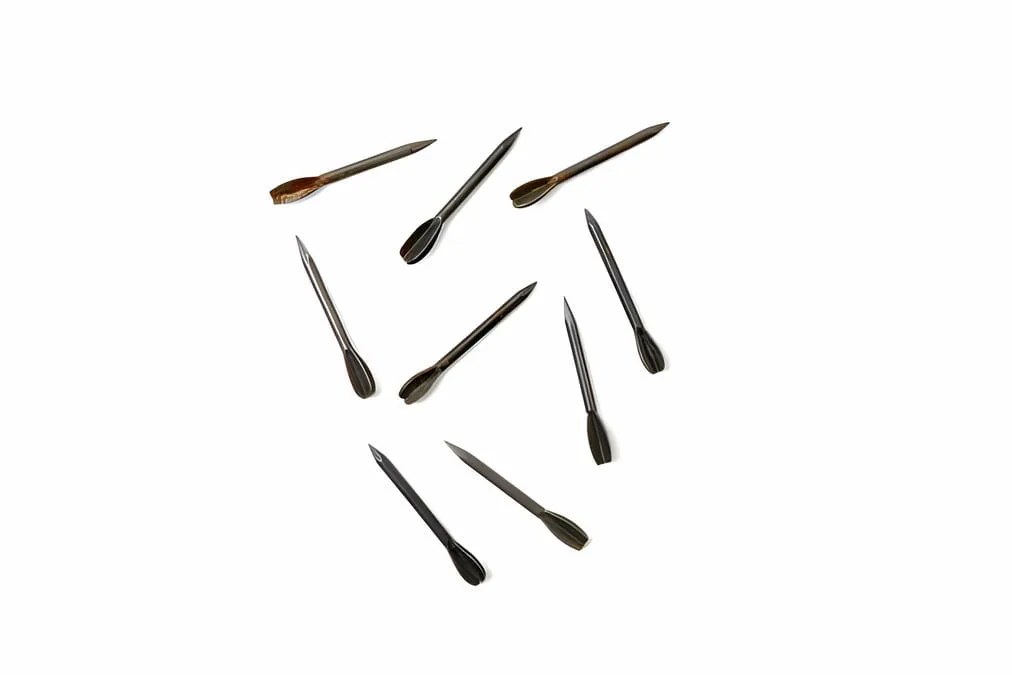
Regulations Regarding Flechettes
In the history of weapon restrictions, this was first regulated in the Hague Declaration XIV of 1907 which was based on the Declaration of St. Petersburg 1868. The Declaration of St. Petersburg was the first international agreement to prohibit the use of certain weapons in war. This prohibition was established because of the use and discovery of new inhumane weapons, creating unnecessary suffering.
With this declaration, it has also become material in the preparation of the Fourth Hague Conference and the regulations of war on land in 1899 (Convention (IV) respecting the Laws and Customs of War on Land and its annex: Regulations concerning the Laws and Customs of War on Land) in Article 23, namely:


"Referring to the Convention, it is forbidden to use: a. Dangerous weapons containing poison, b. Killing or cruelly wounding an individual from the enemy's forces or country, c. Killing or wounding an enemy who has lowered his weapon, has no weapon whatsoever and intends to protect himself, surrenders, d. Statements not to grant amnesty, e. Using weapons, projectiles, or material that can cause unnecessary suffering, f. Misusing the flag of peace, national flag or military emblems and uniforms of the enemy, including any badges regulated by the Geneva Convention,
g. Seizing or destroying property belonging to the enemy, unless such destruction is urgently required by the necessities of war, h. Declaring the abolition, suspension, or inadmissibility in court of the rights and actions of citizens of the hostile party. A belligerent is also prohibited from forcing citizens of the hostile party to take part in war operations directed against their own country, if they were serving the belligerent parties before the war occurred."
In addition to these rules, there are many other conventions that were born in the 20th to 21st centuries regarding the use of weapons. One of these Conventions is the 1980 Convention on Certain Conventional Weapons, this convention is intended to provide protection to civilians and combatants to avoid unnecessary suffering due to the use of weapons in warfare, one of which is projectiles such as bullets. In these rules, there are at least 5 types of weapons that are prohibited, namely:
- Weapons that are difficult and undetectable when injuring the body in a medical context
- Explosive traps, whether aimed at humans or combat vehicles
- Weapons that can cause burns or heat effects
- Laser weapons that can blind the opponent
- Weapons and ammunition left over/from war






















Comments
0Share your perspective politely, stay relevant, and focus on the article. Comments appear after moderation.
Join the discussion
Write a clear, polite response that stays on topic.
No comments yet. Be the first to discuss.
Comments will appear after moderation.