
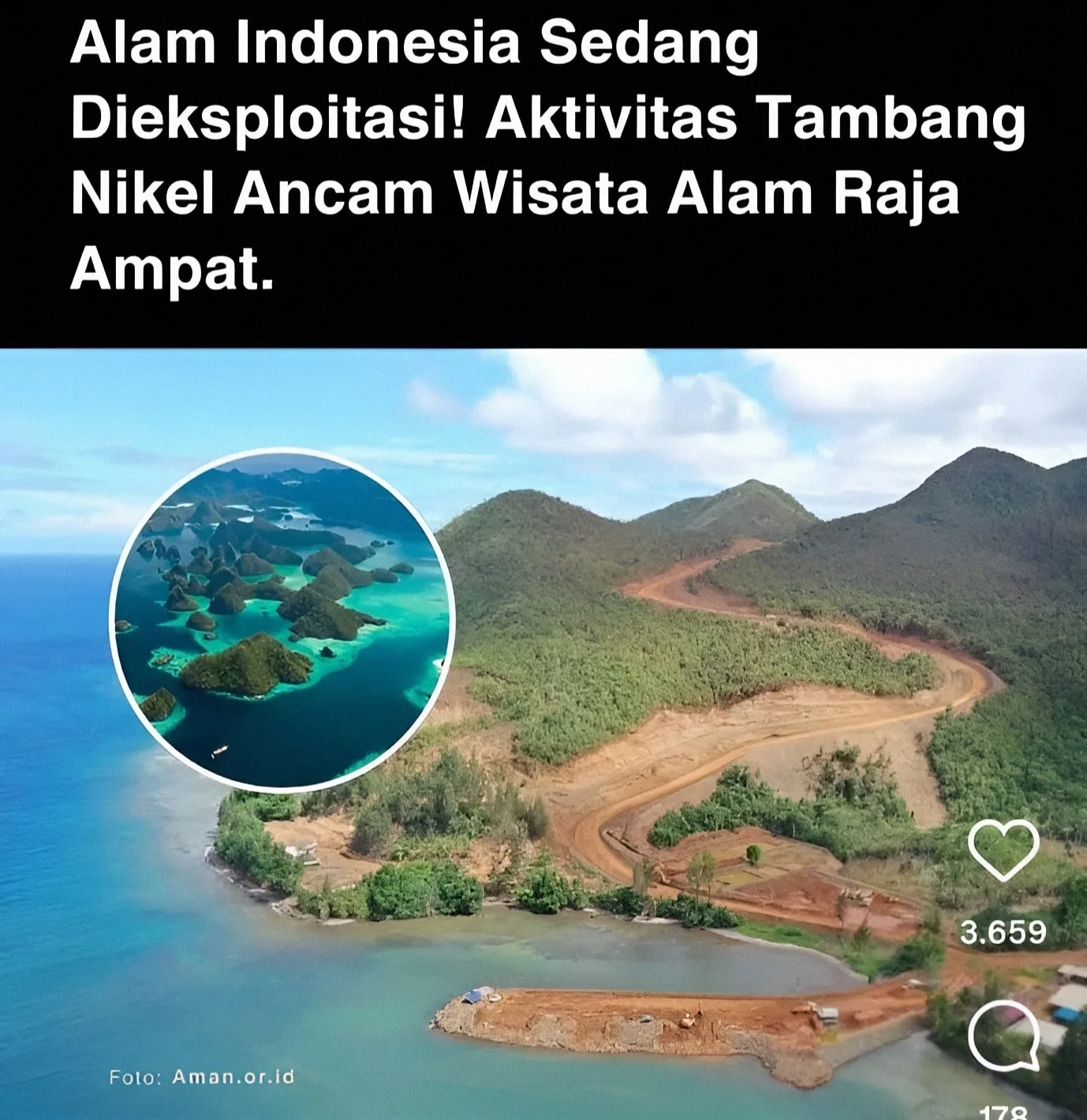
Raja Ampat, Nickel Mining, and the Environmental Ethics Crisis: When the State Fails to Be a Guardian of Nature
Legal Literacy - Amidst the government's grand narrative of "energy transition" and "green investment," a bitter irony is hidden: Raja Ampat, one of the world's most biodiverse marine areas, is on the verge of ecological destruction. The nickel mining exploitation plan on Kawe Island, a conservation area within the Raja Ampat region, proves that Indonesia's nature is not well and, moreover, is being sold cheaply by the state itself.
Government Neglect, Environmental Ethics Die
This nickel mining plan does not come without resistance. Environmental activists, indigenous people, and various civil society communities have taken to the streets. They strongly reject the mining plan, which not only threatens tropical marine ecosystems but also marginalizes local communities that live in harmony with nature.


However, the state's response, as usual, is ambiguous and confusing. Some members of parliament claim they "will follow up" but there are no concrete guarantees. The central government is busy celebrating economic growth and investment figures, without realizing that what is being built is a pseudo-progress on ecological ruins.
Environmental ethics should be the foundation of every development policy, but the reality is the opposite. The state not only ignores the intrinsic values of nature but also actively paves the way for destruction in the name of "progress." In this extractive paradigm, forests, seas, and land are nothing more than economic commodities, not a living heritage that must be preserved.
















Comments
0Share your perspective politely, stay relevant, and focus on the article. Comments appear after moderation.
Join the discussion
Write a clear, polite response that stays on topic.
No comments yet. Be the first to discuss.
Comments will appear after moderation.