
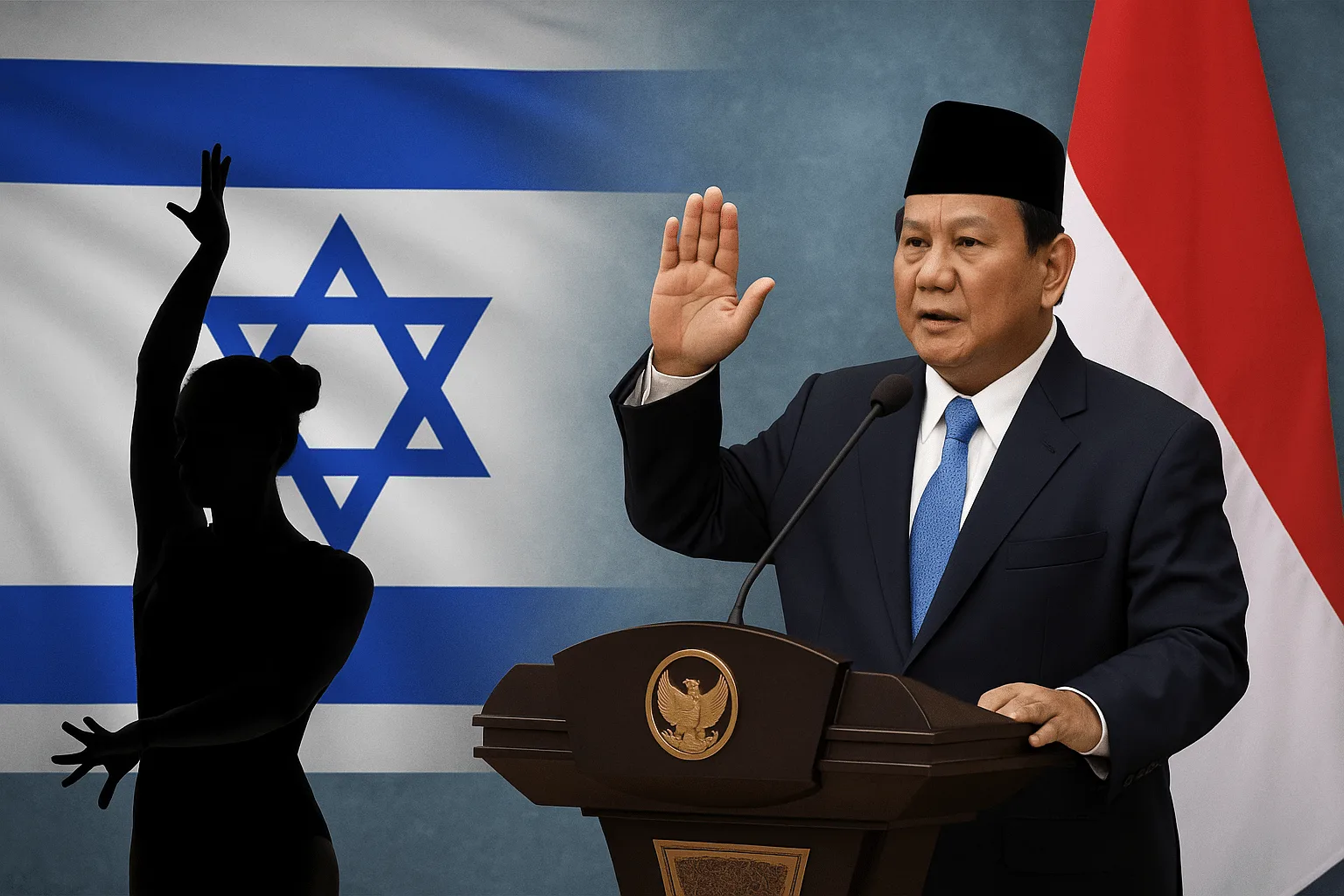
Legal Literacy - Calls to dissolve the DPR (People's Representative Council) emerged after the policy of increasing allowances for members of the council was announced. This has led to pros and cons among the public and the government. One of the most controversial was the response of DPR member Ahmad Sahroni, who called those who called for the dissolution "idiots." The wave of protests then continued through demonstrations on Thursday, August 28, 2025, and was widely discussed on social media. However, the question arises: can the DPR really be dissolved?
Legal Basis Protecting the DPR
The discourse on dissolving the DPR directly actually contradicts the constitution. Legally, the only legitimate mechanism is through elections, whether regular or early elections, or through amendments to the 1945 Constitution. The DPR cannot be dissolved by the president or other state institutions, according to Article 7C of the 1945 Constitution which states that "The President cannot freeze and/or dissolve the House of Representatives." This means that the constitution does guarantee the existence of the DPR to continue to function, whatever the political situation. This provision was born after the reformation to prevent the return of authoritarian practices such as during the Old Order and New Order eras, when the president held enormous power. In short, the DPR cannot be dissolved because its existence is guaranteed by the constitution. Its term of office only ends after five years, or if its members are individually dismissed according to applicable law. Although the DPR cannot be dissolved, there are certain conditions that could cause this institution to lose its function or experience serious disruption. For example, a major political crisis that prevents the DPR from carrying out its duties, such as if the majority of members resign en masse. Another condition is systemic corruption involving many members, rendering the institution paralyzed and unable to make effective decisions. In addition, the situation force majeure, which are events beyond human control such as major natural disasters, epidemics, or national emergencies, can also disrupt the course of sessions and the legislative process of the DPR.Views of Constitutional Law Experts
Furthermore, Prof. Sunny, a Constitutional Law Expert from Sebelas Maret University (UNS), explained that if the DPR is dissolved outside the constitutional mechanism, Indonesia could face a serious constitutional crisis. In addition to causing a deadlock in the legislative process, this could also trigger widespread political delegitimization. According to him, the only legitimate way to replace the DPR is through regular elections as scheduled or early elections that require amendments to the 1945 Constitution. Prof. Sunny emphasized that if the DPR is dissolved unilaterally, there are at least two main impacts, namely a violation of the principle of democracy and a violation of popular sovereignty. This expert also emphasized that there is no legal basis for demonstrations or mass pressure to dissolve the DPR. Mass actions only serve as a trigger for political change, for example, encouraging the DPR to improve policies or triggering constitutional changes through the People's Consultative Assembly."Demonstrations cannot legally dissolve the DPR, but they can trigger political change," said Prof. Sunny when asked for his views on Monday, August 25, 2025.Thus, demonstrations should be understood as a channel for channeling political pressure, not as a legal instrument for dissolving the legislative body.














Comments
0Share your perspective politely, stay relevant, and focus on the article. Comments appear after moderation.
Join the discussion
Write a clear, polite response that stays on topic.
No comments yet. Be the first to discuss.
Comments will appear after moderation.