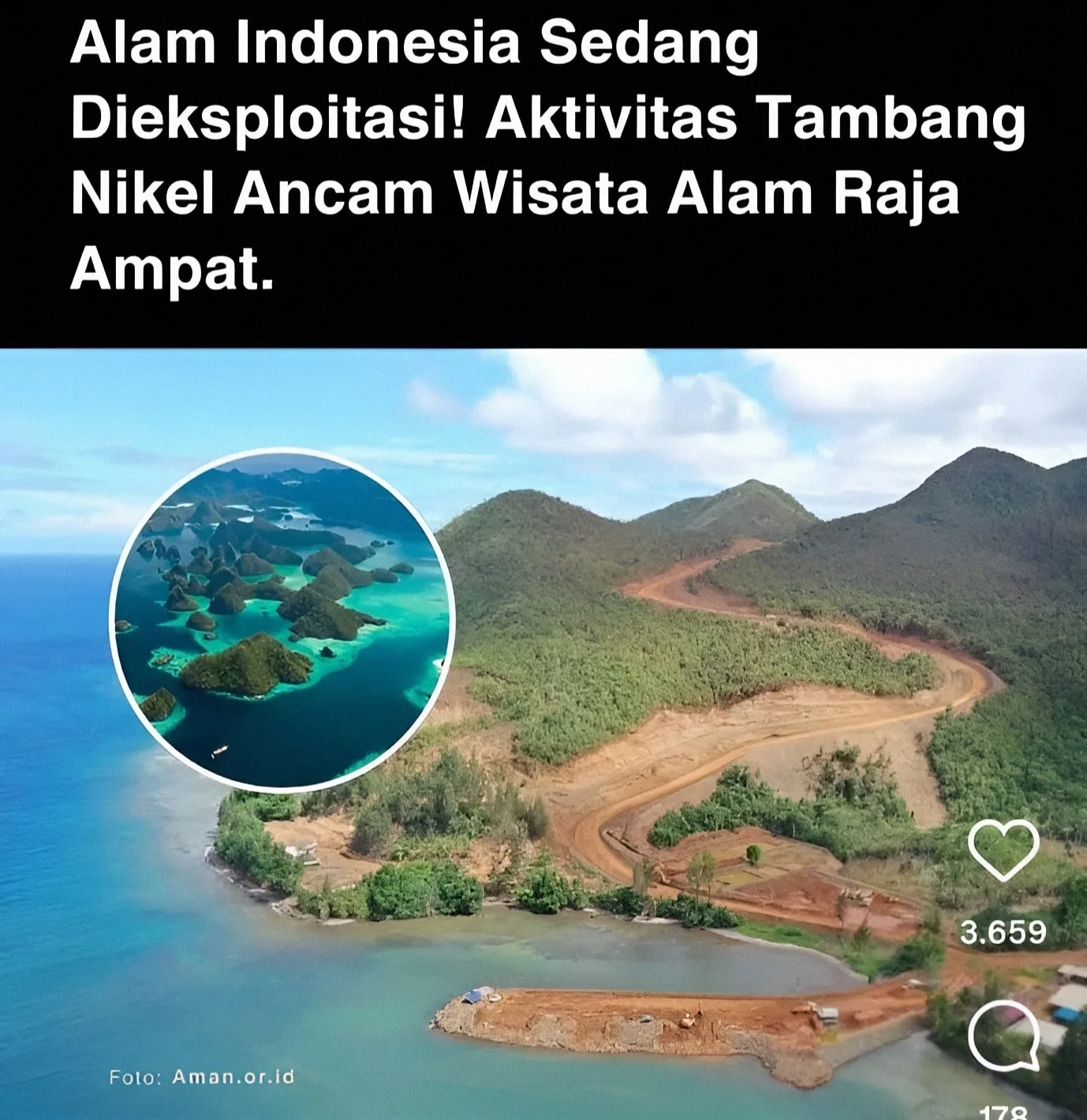
Failed As a Guardian State of Nature
The nickel mine plan in Raja Ampat must be read as a systemic symptom: Indonesia has failed as a guardian state of nature. The state, which should be the protector of ecological heritage, instead acts as an intermediary for corporations and foreign capital who want to extract as many resources as possible.
This failure is not just a matter of technical licensing or legal uncertainty, but a matter of an exploitative, short-term, and anti-ecological development paradigm. The state runs without an ethical compass, only fixated on economic graphs and investment indexes, while allowing the climate crisis and environmental destruction to run rampant.


From Raja Ampat, We Learn About Resistance
Raja Ampat is not only the last bastion of the world's marine biodiversity—it is also a symbol of resistance to power that ignores nature. The civil society movement that rejects mining must continue to be expanded, strengthened, and used as a moment to re-evaluate the entire national development model.
Indonesia has no shortage of laws. What we lack is the moral courage to enforce the law consistently, and to be on the side of a just ecological future. If the state continues to allow this destruction to occur, then the question we must ask is no longer: "how to save nature?" but: "do we still deserve to call ourselves a sovereign state?"





















Write a comment