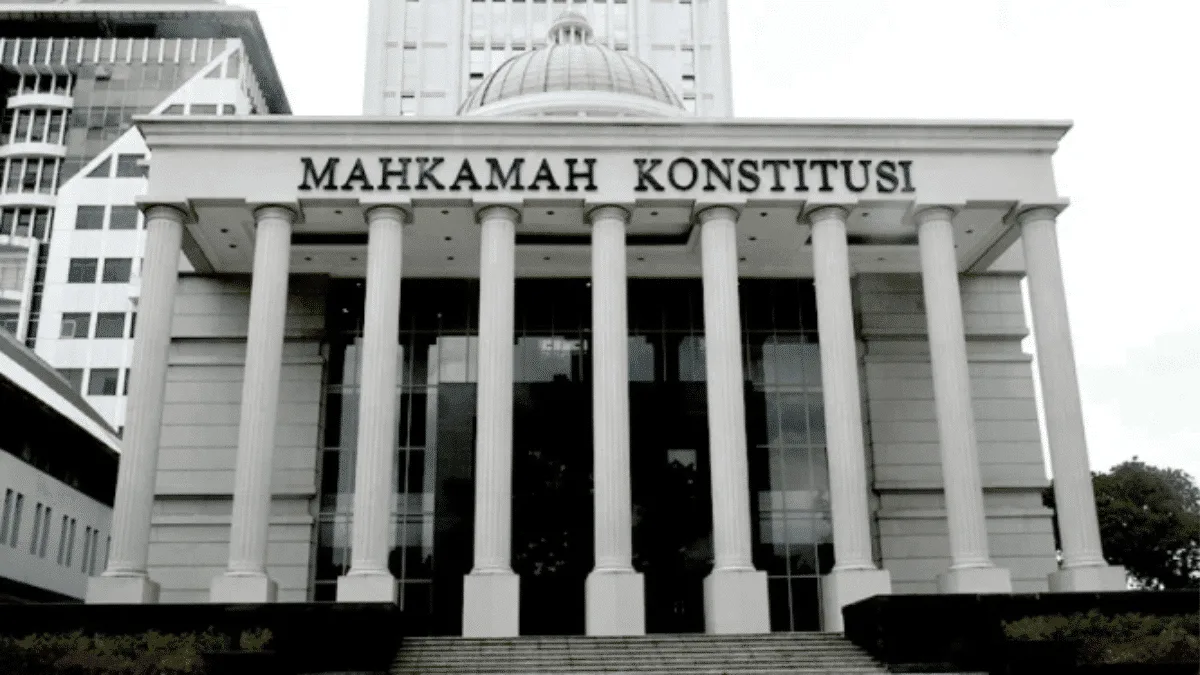
Legal Literacy - This article will provide an understanding of General Election Result Disputes (PHPU) in a fundamental and clear manner.
Introduction
In discussions about general elections (Pemilu), it is unavoidable to explain the significance of the concept of democracy, which is closely related to it. Democracy, etymologically, comes from Greek, namely "demos" which means people, and "kratos" which means government or power.


Thus, in a simple sense, democracy can be interpreted as a system of government in which power is in the hands of the people collectively, not centralized in one individual (monarchy) or a small group (oligarchy). Currently, the concept of democracy is increasingly developing and is often considered to have a similar meaning to a republic.
To implement the principles of democracy in running a country's government, it is impossible to involve all citizens directly. Therefore, the state chooses its representatives in government with the hope that they can create conditions that are beneficial to the people. A government that strives for the interests of the people is an ideal desired by society.
In an effort to realize these democratic principles, a special election mechanism is needed so that the elected government can represent the aspirations of its voters. The concept of general elections (Pemilu) was born as part of the development of the theory of democracy and the mechanism for electing a government that represents the voice of the people.
The implementation of these elections often leads to disputes over the election results. The same thing is also experienced by Indonesia. Disputes over the results of general elections are an unavoidable phenomenon in Indonesia's political dynamics.
Disputes over General Election Results (PHPU) in Indonesia
Disputes over election results, in accordance with the provisions of the 1945 Constitution, are resolved through the Constitutional Court, as regulated in Article 24C of the 1945 Constitution juncto Article 10 of Law Number 8 of 2011 concerning amendments to Law Number 24 of 2003 concerning the Constitutional Court.
Here are the things you need to know about PHPU Procedural Law in Indonesia
1. Definition
Article 1 Paragraph (3) of the Constitutional Court Law explains that a PHPU Application is a request submitted in writing to the Constitutional Court regarding disputes over the results of general elections. Further details regarding this matter are regulated in Constitutional Court Regulation (PMK) Number 1 of 2016 concerning Guidelines for Proceedings in Cases of Disputes over the Results of Elections for Governors, Regents, and Mayors; PMK Number 2 of 2016 concerning Procedures in Cases of Disputes over the Results of General Elections for Members of the House of Representatives and Regional House of Representatives; PMK Number 3 of 2018
concerning Procedures in Cases of Disputes over the Results of General Elections for Members of the Regional Representative Council; and PMK Number 4 of 2018 concerning Procedures in Cases of Disputes over the Results of General Elections for President and Vice President.
2. Content of the Application
At a minimum, in submitting a case to the Constitutional Court, the existence of three important elements that must be included in the application is required. These three elements are formal and material requirements of an application. In the context of disputes over general election results (PHPU), applications related to PHPU must also contain these three elements in accordance with the provisions of Article 31 paragraph (1) of the Constitutional Court Law, namely:
- Identity of the Applicant and the Respondent being addressed
- Description of the matter that is the basis of the application as referred to in Article 30 (Posita/Fundamentum petendi)
- things requested to be decided (Petitum)
The identity of the parties is a formal requirement of the application. Meanwhile, the posita and petitum are material requirements of the application.
Article 75 of the Constitutional Court Law stipulates the mandatory matters to be presented in the application for the Election Result Dispute (PHPU) are
“In the submitted application, the applicant must clearly describe:
a. Errors in the vote count announced by the General Election Commission and the correct count according to the Applicant; andb. A request to annul the vote count announced by the General Election Commission and to determine the correct vote count according to the Applicant.”
3. The Parties
Regarding the application for election result disputes (PHPU), Article 74 Paragraph (1) explains that the Applicant is: a. an Indonesian citizen individual who is a candidate for the Regional Representative Council participating in the general election; b. a pair of candidates for President and Vice President participating in the Presidential and Vice Presidential elections; and c. a political party participating in the general election.
The existence of the provisions contained in Article 74 paragraph (1) of the Constitutional Court Law has led to developments in the Constitutional Court's decisions regarding election result disputes (PHPU), where the considerations explain the legal standing of the Applicant. By elaborating on the Applicant's legal standing in its decision, the Constitutional Court allows the parties in the case to clearly see the reasons behind the Constitutional Court's decision in accepting or rejecting the Applicant's legal standing.
Meanwhile, regarding the Respondent in PHPU, it is regulated in Article 3 paragraph (2) of PMK No. 2/2018. Based on these provisions, the Respondent is the General Election Commission (KPU), which is a national, permanent, and independent election organizing institution.
The related party in PHPU is a person who believes that their interests are related to the Applicant's application. The Related Party in PHPU can be involved in the dispute to strengthen the Applicant's application or to strengthen the decision of the KPU, the provincial KPU, the regency/city KPU, the provincial KIP, the regency/city KIP. However, the involvement of the Related Party in the dispute may also be solely to fight for their interests.
4. Trial and Evidence Process
The trial process in the Constitutional Court will begin after the application from the Applicant is declared accepted by the Registrar of the Constitutional Court, as evidenced by the issuance of the Application File Acceptance Deed (APBP), and then registered through the issuance of the Case Registration Deed. In accordance with Article 74 paragraph (3) of the Constitutional Court Law, an application for an election result dispute can only be submitted within a maximum period of 3 x 24 (three times twenty-four) hours from the time the General Election Commission announces the determination of the election results nationally.
After the applicant's application is deemed complete and meets the requirements, the Registrar of the Constitutional Court will issue a Case Registration Deed and record it in the Constitutional Case Registration Book (BRPK), then proceed with the examination of the PHPU case, which is carried out through a preliminary examination and a trial examination. The examination of the case is carried out in a Panel Session or a Plenary Session open to the public.
The panel session is the initial stage in the Constitutional Court trial, which is generally carried out as a preliminary examination. Based on Article 28 paragraph (4) of the Constitutional Court Law, the Court is authorized to form a group of panel judges consisting of a minimum of three constitutional judges.
Simply put, the trial examination process is carried out in the following stages;
a. examining the Applicant's Application;
b. examining the Respondent's Answer and the Information of the Related Party,
and/or Bawaslu Information;
c. validating the evidence.
d. examining written evidence;
e. listening to witness testimony;
f. listening to expert testimony;
g. examining other evidence;
h. examining a series of data, information, actions, circumstances, and/or events that are appropriate to other evidence that can be used as a clue.
Each party involved in the trial is asked to present evidence relevant to the case being investigated. The Constitutional Court will give consideration to parties who can present valid evidence. In the context of election result disputes (PHPU), valid evidence usually takes the form of vote count documents, both official versions from election organizers, election supervisors, and witness testimony. If the authenticity of each document can be verified by the parties involved, the Constitutional Court will consider the facts revealed in the trial as a basis for formulating a decision.
The trial also provides an opportunity for the parties and witnesses to convey matters related to the case. If the Constitutional Court considers that the trial is sufficient to render a decision, the Court will set a schedule for the reading of the decision. After the decision reading session, the parties involved will receive a copy of the decision directly from the Registrar of the Constitutional Court.
5. Court Decision
In determining the decision, the Constitutional Court will hold a Judge Deliberation Meeting (RPH), which must be attended by at least 7 constitutional judges who listen to the results of the panel of judges' meeting. This RPH is closed to the public. The decision taken through the RPH is carried out through deliberation to reach a consensus by first listening to the legal opinions of the constitutional judges.
The decision regarding the election result dispute will then be read out in a meeting that is open to the public, the substance of which is based on the provisions of Article 57 PMK No. 2/2018 juncto Article 57 PMK No. 3/2018 juncto Article 51 PMK No. 4/2018 juncto Article 47 PMK No. 5/2017 which reads
a. The application cannot be accepted (niet otvankelijk verklaard) if the applicant and/or the application does not meet the requirements;
b. The application is granted if the application is proven to be justified and the Court subsequently annuls (void an initio) the results of the vote count by the KPU, and determines the correct vote count results;
c. The application is rejected if the application is proven to be unreasonable.
The Constitutional Court's decision is final, even for PHPU cases there is no other effort to annul the Constitutional Court's decision.


















Comments
0Share your perspective politely, stay relevant, and focus on the article. Comments appear after moderation.
Join the discussion
Write a clear, polite response that stays on topic.
No comments yet. Be the first to discuss.
Comments will appear after moderation.