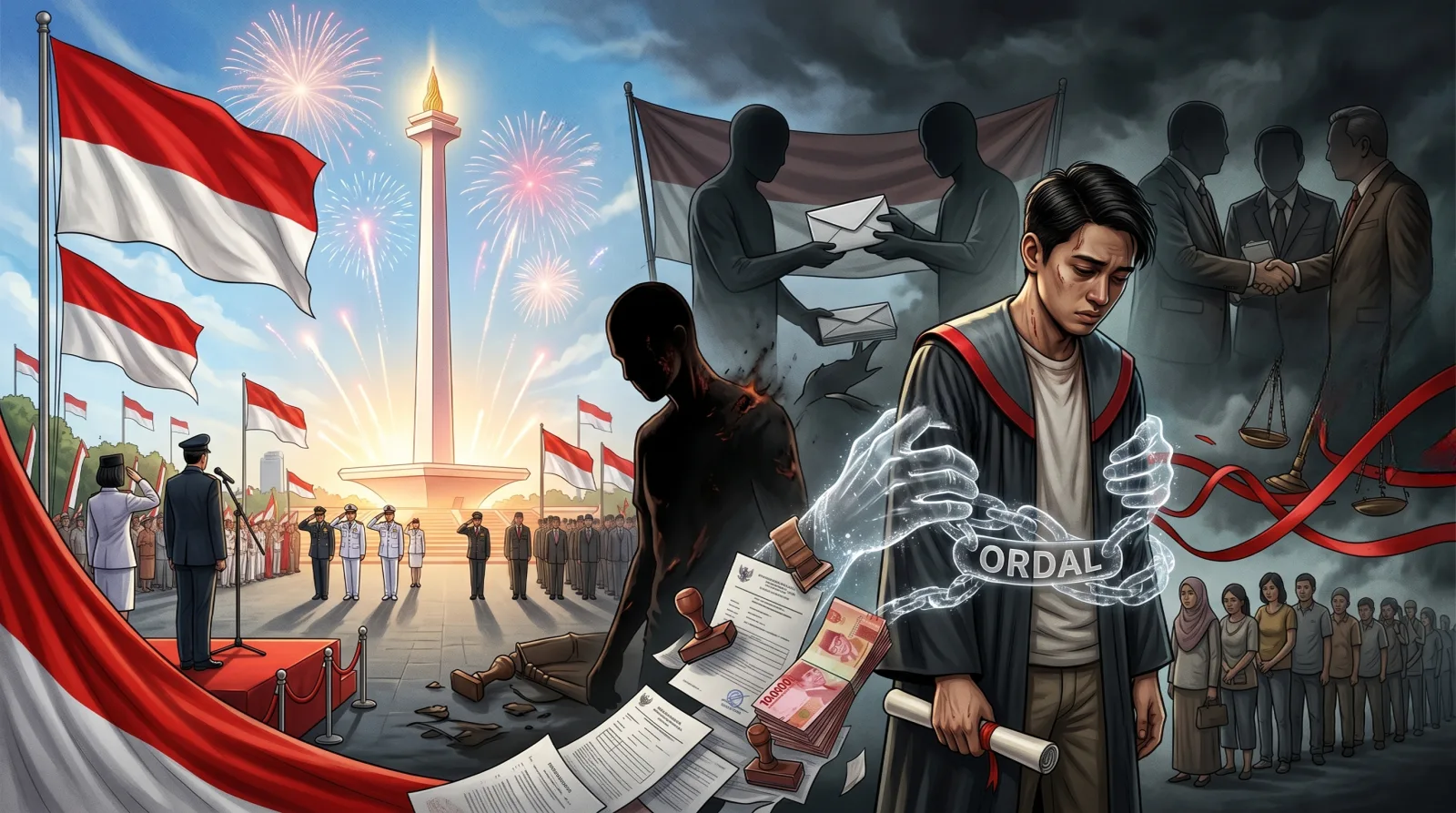
Legal Literacy - Writing by Raihan Andhika Santoso entitled President's Prerogative Rights and the Public's Sense of Justice: Rehabilitation of Former President Director of ASDP Amidst Polemics (Indonesian Legal Literacy, 3/12/2025) highlights the fierce debate regarding constitutionally guaranteed rehabilitation (Article 14 Paragraph (1) of the 1945 Constitution of the Republic of Indonesia). A crucial question arises: Is this step in line with the public's sense of justice, or does it instead protect hidden interests?

This analysis reminds us of the granting of abolition to Tom Lembong, former Minister of Trade of the Republic of Indonesia, and amnesty to Hasto Kristiyanto, Secretary General of PDIP.

President of the Republic of Indonesia Prabowo Subianto is using his constitutional power, namely the prerogative rights of abolition, amnesty, and rehabilitation. Substantially, these three things are different, but their application is indicated to be laden with political content. The criminal sentence of 4.5 years in prison in the sugar import corruption case against Tom Lembong, the 3.5-year prison sentence in the Harun Masiku bribery case against Hasto Kristiyanto, and the 4-year 6-month prison sentence in the PT Jembatan Nusantara acquisition case by PT ASDP against Ira Puspadewi, were annulled through this mechanism. Indeed, law is the commander, but politics is the king (Prasetio, Law as Commander and Politics as King, 2024).

Prerogative Rights and Politics

The President's prerogative right of amnesty is regulated in the 1945 Constitution as amended by the fourth amendment, Article 14 paragraph (2), which reads: "The President grants amnesty and abolition with due regard to the considerations of the House of Representatives."

This provision affirms that the approval of amnesty involves the consideration of the DPR, which is essentially a political institution. The public often does not know what underlies the DPR's considerations in approving the granting of amnesty.

Advertisement
Read without ads.
Join Membership

Definition and Procedure of Amnesty

Amnesty is the elimination of all legal consequences of a criminal offense (both punishment and criminal status) for an offense, as if the act never occurred. Etymologically, amnesty comes from Greek amnestia which means "forgetting". According to Ben Chigara in Amnesty in International Law, this term means forgetfulness or oblivion. Amnesty is usually general, does not mention individual names specifically but is based on criteria, and is granted in the interests of the state.

In Indonesia, there is no standard procedure for submitting amnesty individually like clemency, because amnesty is generally a government policy established through a Presidential Decree (Keppres). Common criteria usually include humanitarian conditions, types of criminal acts, reconciliation or national interests, restitution of state losses, and legal status.

The process of issuing a Keppres for amnesty certainly involves a lengthy review. The initiation comes from the government (President or Minister of Law and Human Rights), requesting advice from the Supreme Court (MA), before finally being brought to the DPR for consideration and approval.

Advertisement
Read without ads.
Join Membership

The Irony of Granting Amnesty

Hasto Kristiyanto may smile happily as he leaves "Hotel Prodeo" and breathes the fresh air with the "magical letter" of Presidential amnesty. The guilty status decided by the judge is automatically erased. However, Hasto is not the only one. A total of 1,178 other people also received amnesty, and ironically, the majority of recipients (1,017 people) were related to narcotics crimes—crimes that can destroy the nation's future generations. Is it that easy for the President to grant amnesty?

The Trail of Amnesty from President to President

President Prabowo Subianto seems to be following in the footsteps of his predecessors in using this prerogative right:

  • President Soekarno: Granted amnesty to DI/TII rebels led by Kahar Muzakar (Keppres No. 330/1959).
  • President Soeharto: Granted amnesty and abolition to FRETILIN followers in East Timor for the sake of stability.
  • President BJ Habibie: Granted amnesty to 18 East Timorese political prisoners as well as pro-democracy figures Sri Bintang Pamungkas and Muchtar Pakpahan.
  • President Abdurrahman Wahid (Gus Dur): Granted amnesty to Budiman Sudjatmiko and GAM members.
  • President SBY: Granted amnesty to former GAM members after the peace agreement.
  • President Jokowi: Granted amnesty to the Din Minimi group, Saiful Mahdi (ITE Law case), and Baiq Nuril (victim of criminalization of harassment).

Only President Megawati Soekarnoputri is recorded as never having officially granted amnesty. Although there was a discourse on forgiveness for former President Soeharto, it was canceled. History records that only in Megawati's era was this right not used for amnesty.

Bibliography

  1. literasihukum.com
  2. Book: Law as Commander and Politics as King, Aziz Prasetio SH, Jejak Publisher, 2024
  3. Hukum Online and several other online media
  4. The 1945 Constitution fourth amendment/change