
The Role and Controversy of Military Involvement in Cyber Security
One of the biggest concerns of this policy is the possibility of a military approach being applied in the digital world. The author highlights that so far the digital world has been monitored by Kominfo and the National Police, with BSSN regulating the security mechanisms. With the entry of the TNI, there is a potential that their more repressive approach will be used in dealing with cyber threats.
Why is this a problem? Because the military approach is usually more assertive and inflexible, which can lead to measures such as widespread information blocking, increased surveillance of public activity on the internet, to restrictions on freedom of expression. If left unchecked, the TNI could have great power in determining the flow of information in the digital world, including suppressing voices critical of the government.


On the other hand, there are also those who support the revision of the TNI Law. Some members of Commission I of the DPR argue that this new rule will actually strengthen the military's position in protecting the country from increasingly sophisticated digital threats. They argue that cyber threats have now developed to a more complex stage, including cyber warfare and hybrid warfare that can threaten national stability.
In their view, without the involvement of the TNI (Indonesian National Armed Forces), Indonesia could have difficulty in dealing with cyber attacks from foreign parties or certain groups who want to weaken the country's defense system. With this revision, the TNI has a stronger legal basis to carry out its duties in defending Indonesia's digital sovereignty.
Balance Between Security and Freedom
Clearly, although there is an argument that the presence of the TNI in cyberspace could help strengthen Indonesia's digital defense, clear boundaries are still needed so that their authority does not extend into areas that could threaten civil liberties. After all, cybersecurity is a complex aspect and involves many parties. If the roles between institutions are not well regulated, it could create chaos in coordination and policy making.
The best solution may not be just involving the TNI in cyberspace, but creating a more integrated system among related institutions. That way, all parties can work together according to their respective roles without causing conflicts of interest or abuse of authority.
Conclusion
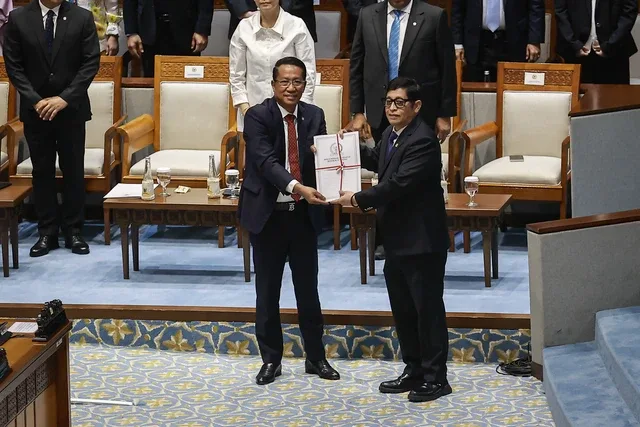
The involvement of the TNI in the cyber world is a decision that has sparked much debate. On the one hand, this step could strengthen the country's defense against increasingly complex digital threats. However, on the other hand, if not properly regulated, it could lead to overlapping authorities, inter-agency conflicts, and even endanger the digital freedom of the community.
Therefore, it is important for the government to ensure that this TNI Law revision not only strengthens cyber defense, but also maintains a balance between national security and the rights of citizens in the digital world. This policy must be designed with clear regulations, so that efforts to maintain security do not lead to restrictions on freedom of expression and human rights in the digital age.



















Comments
0Share your perspective politely, stay relevant, and focus on the article. Comments appear after moderation.
Join the discussion
Write a clear, polite response that stays on topic.
No comments yet. Be the first to discuss.
Comments will appear after moderation.