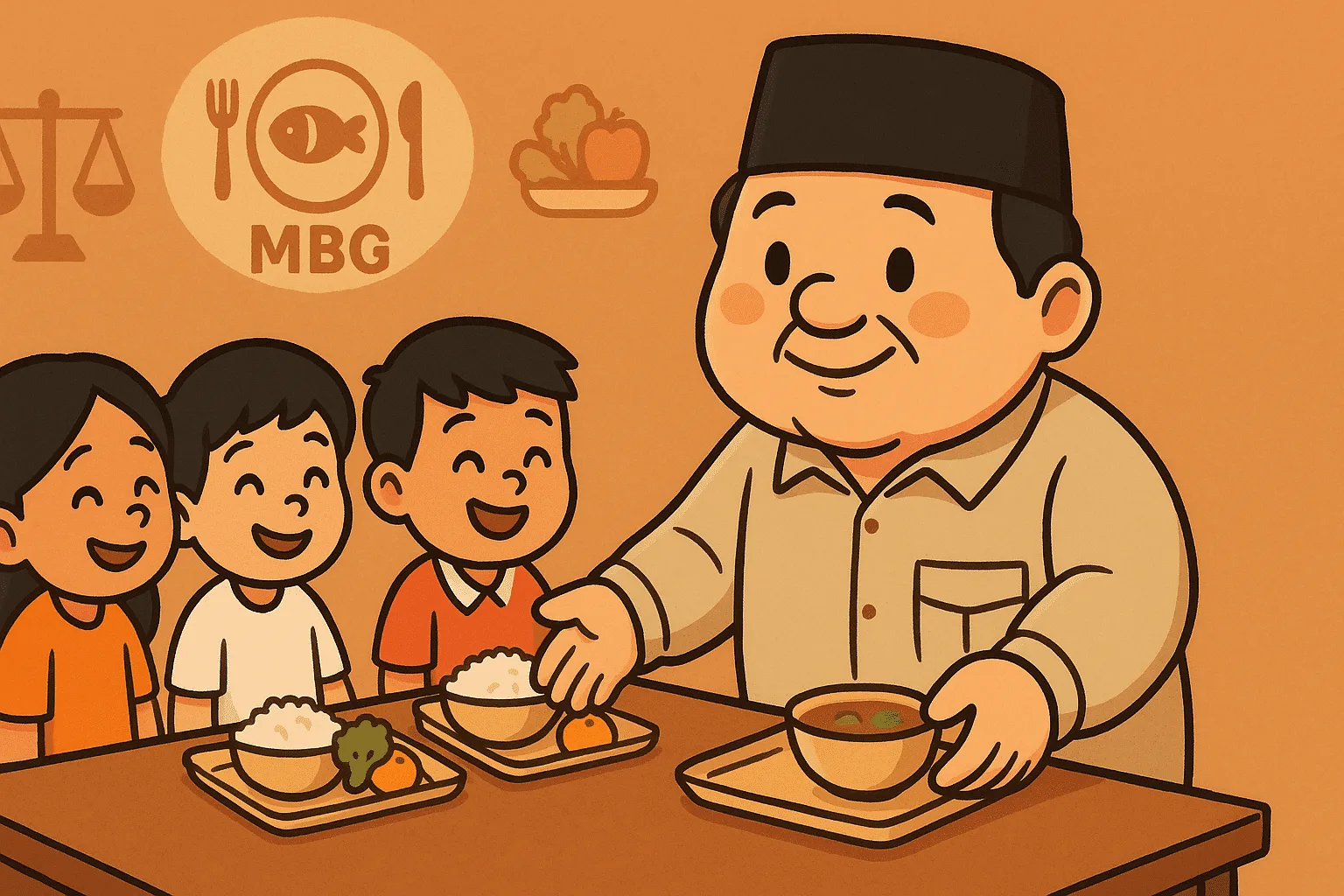
Although MBG is a big step in ensuring social welfare, this program must be faced with good infrastructure readiness and distribution mechanisms. Some of the main challenges that must be anticipated include:
- Budget Sustainability– The government must guarantee that MBG funding is not dependent on short-term political or economic conditions.
- Equitable Distribution– An effective logistics system must be built so that every child throughout Indonesia, including in remote areas, can benefit from this program.
- Food Quality and Safety– The government must ensure that the food provided in the MBG program meets high nutritional and food safety standards.
- Transparency and Accountability– The public must be involved in the supervision and evaluation of this program to prevent misuse of the budget or inefficiencies in its implementation.
Concluding Remarks
The MBG program is not just a social assistance policy, but also an implementation of human rights, especially the right to food and the right to life guaranteed in the Indonesian constitution. By examining the experiences of India and the thoughts of Amartya Sen, Indonesia has a great opportunity to make this policy a transformative instrument that is not only oriented towards meeting short-term needs, but also as a foundation for building a more just and prosperous society.


For this program to be truly effective and sustainable, public participation in overseeing its implementation is a key factor. With critical awareness and active public support, MBG can be a real step in creating a healthier and more empowered generation. Now is the time for the government and the public to join hands to ensure that the right to food is truly realized for all Indonesian citizens.














Comments
0Share your perspective politely, stay relevant, and focus on the article. Comments appear after moderation.
Join the discussion
Write a clear, polite response that stays on topic.
No comments yet. Be the first to discuss.
Comments will appear after moderation.