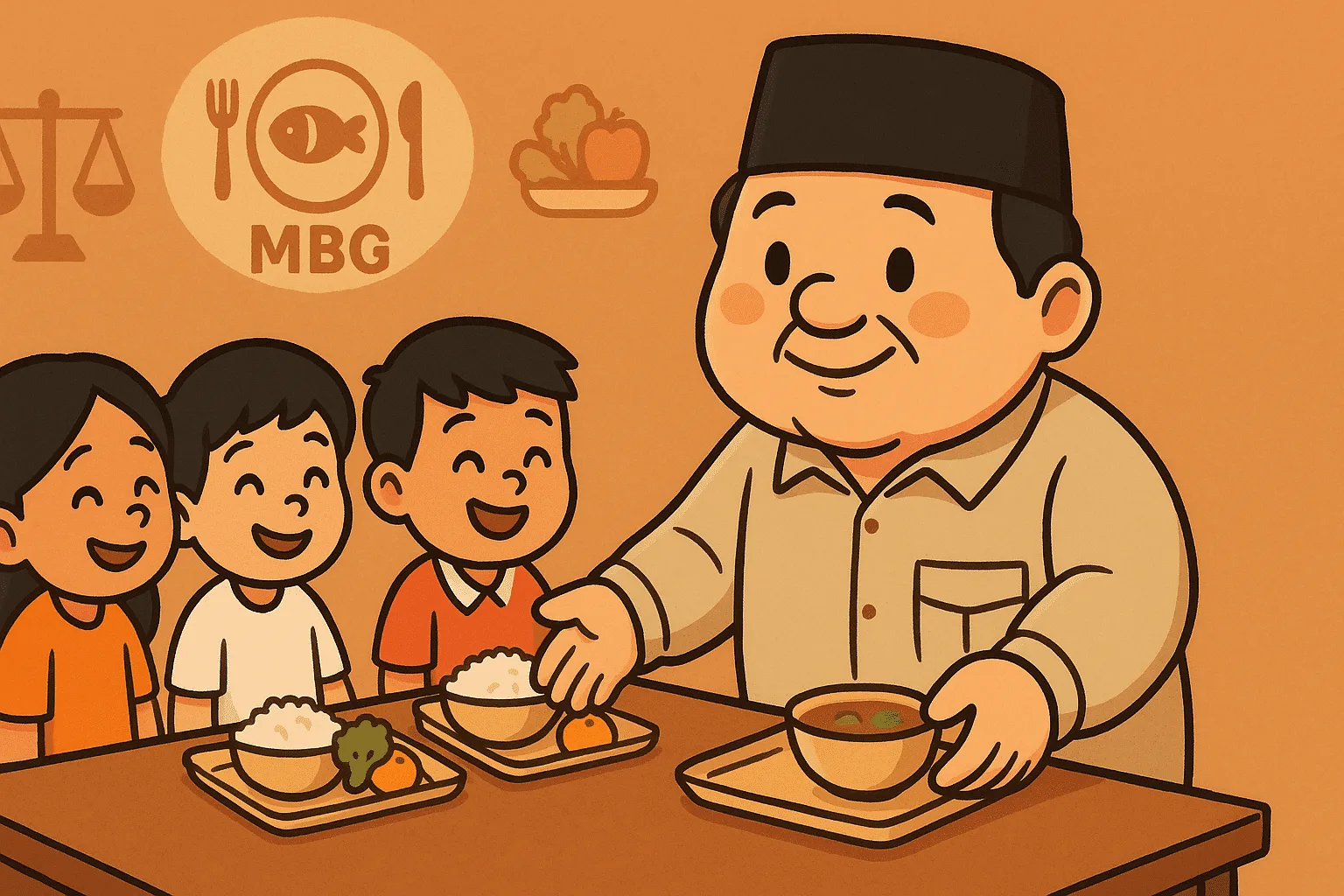
Legal Literacy - The Free Nutritious Food and Drink Program (MBG) implemented by the Prabowo Subianto administration brings a breath of fresh air to social policy. This policy is not only an instrument to reduce malnutrition rates among Indonesian children but also reflects the basic principles of human rights, especially the right to life and the right to adequate food. If implemented with a clear vision and mature strategy, this policy has the potential to be a milestone in systemic change in ensuring people's welfare, in line with AstacitaPrabowo and the mandate of the constitution UUD NRI 1945.
Human Rights, Right to Life, and Right to Food
The right to food is not just assistance. It is a human right recognized in the Indonesian constitution and in international law. Article 28A of the 1945 Constitution guarantees the right to life, while Article 28C affirms the right to achieve welfare, including access to nutritious food. Article 34 even clearly states that the state is responsible for meeting the basic needs of the people. The Universal Declaration of Human Rights (UDHR) and the International Covenant on Economic, Social, and Cultural Rights (ICESCR) also affirm that everyone has the right to an adequate standard of living, including access to nutritious food. This means that MBG is not just a policy of state generosity, but a concrete form of government responsibility in guaranteeing the rights of the people.



















Comments
0Share your perspective politely, stay relevant, and focus on the article. Comments appear after moderation.
Join the discussion
Write a clear, polite response that stays on topic.
No comments yet. Be the first to discuss.
Comments will appear after moderation.