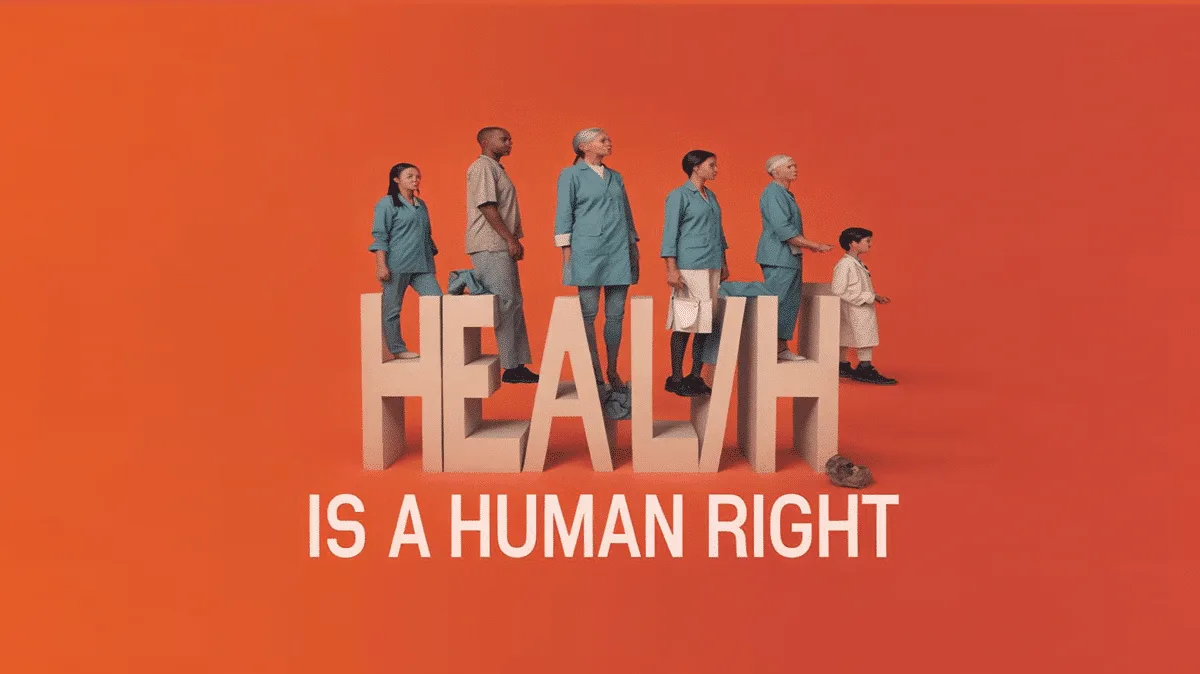
Legal Literacy - This article highlights the complexities of human rights in modern health law, focusing on access, quality, and medical services. Investigating the concept of human rights from a legal and health perspective, this writing invites readers to consider the importance of a comprehensive understanding of patient rights and the responsibilities of governments and health workers in ensuring equality and justice in health services.
Advances in modern medical technology and current social developments demand a re-examination of the implementation of human rights within the health system. Various health service issues such as accessibility, availability of facilities, costs, and quality of care often become obstacles in the implementation of the right to health services. Therefore, a review and reconsideration of the existing health system is appropriate, especially concerning rights in the medical field in general, and patient rights in particular.


The Concept of Human Rights
Basic human rights, better known as Human Rights (HAM), are a concept that emerged as a response to various social and political developments occurring in the world. Historically, many documents regulate human rights, including Magna Carta (1215), the English Bill of Rights (1689), the French Declaration of Human Rights and Citizen (1789), as well as the Constitution and Bill of Rights of the United States (1791). Even long before that, various religious scriptures implicitly and explicitly regulate human rights.
The modern concept of human rights began to be universally accepted after the end of World War II, two years after the establishment of the United Nations (UN). At the end of 1948, UN member states officially adopted the Universal Declaration of Human Rights (UDHR) as a response to post-war humanitarian developments and provided recognition of universal rights for all individuals. The rights and freedoms contained in the UDHR include a complete set of rights, be they civil, political, cultural, economic, and social rights of each individual, as well as several collective rights (Rhona K. M. Smith, et al, Yogyakarta, 2008, 89). The principles of the UDHR, which have been adopted by member states, including Indonesia, are now being realized in national laws and regulations and various government actions.
Human Rights in Health Law
To uphold the UDHR, the UN Human Rights Commission formulated two important agreements, namely the International Covenant on Economic, Social and Cultural Rights (ICESCR) and the International Covenant on Civil and Political Rights (ICCPR). The ICESCR focuses on issues in the fields of food, education, health, and housing, while the ICCPR focuses on basic rights such as the right to life, freedom of speech, religion, and voting. Each agreement has been ratified by the Indonesian government through Law No. 11 of 2005, and Law No. 12 of 2005.























Comments
0Share your perspective politely, stay relevant, and focus on the article. Comments appear after moderation.
Join the discussion
Write a clear, polite response that stays on topic.
No comments yet. Be the first to discuss.
Comments will appear after moderation.