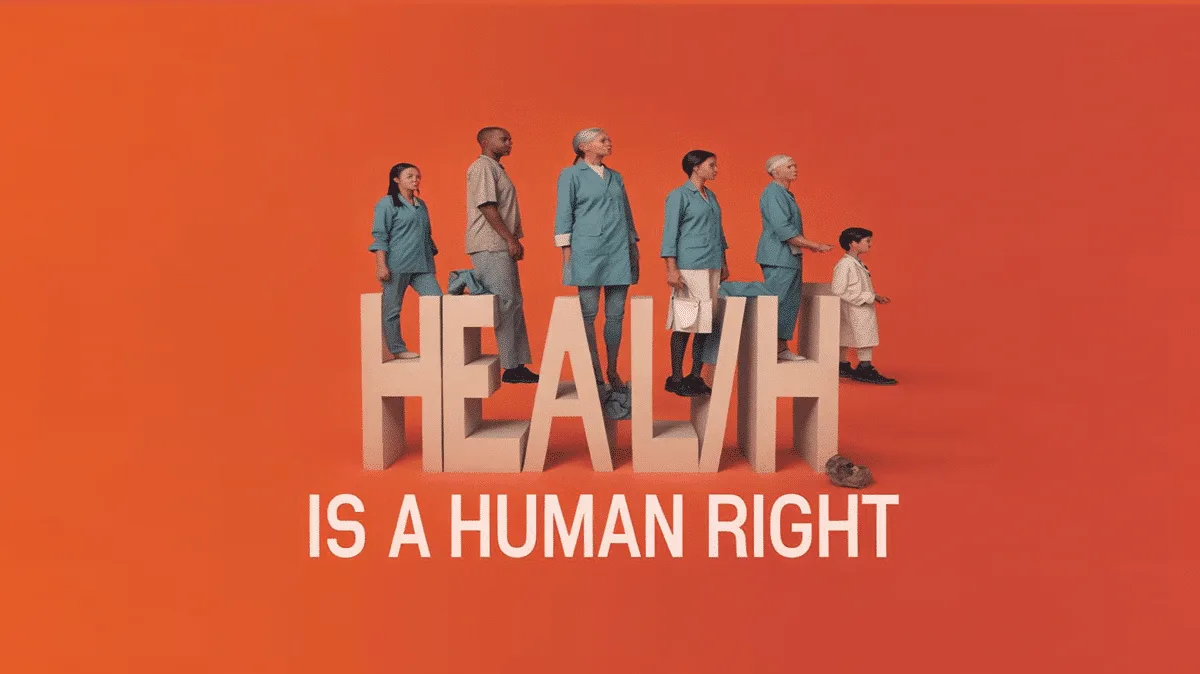
Based on these international provisions, broadly speaking, two basic human rights are recognized in the health sector, namely basic social rights and basic individual rights.
Basic Social Rights
The prominent basic social right in the health sector is The Right to Health Care. Regarding this right, the World Health Organization (WHO) explains that there are at least four important elements, namely:


a. Availability
Availability means the adequacy of health facilities, goods, and services needed by everyone and readily available.
b. Accessibility
Accessibility means that health facilities, goods, and services are accessible to everyone. Accessibility has four dimensions: non-discrimination, physical accessibility, economic accessibility (affordability), and information accessibility.
c. Acceptability
Acceptability means that health facilities, goods, services, and programs are people-centered and meet the specific needs of diverse population groups and respect medical ethics and culture.
d. Quality
Quality means that health facilities, goods, and services must meet high scientific and medical standards and be of good quality, including the availability of skilled medical personnel, medicines, and hospital equipment that have been scientifically proven, and adequate sanitation.
Basic Individual Rights
Besides the social right of The Right to Health Care, there is an individual right called The Right to Medical Service, which is mutually supportive and runs in parallel with social rights. The most prominent basic individual right here is The Right of Self-determination (TRoS), which is in line with international provisions, including:
Article 3 of the UDHR: Everyone has the right to life, liberty, and security of person.
Article 1 of the ICCPR: All peoples have the right of self-determination.
Article 7 of the ICCPR: No one shall be subjected to torture or to cruel, inhuman or degrading treatment or punishment. In particular, no one shall be subjected without his free consent to medical or scientific experimentation.
The Right of Self-determination is also the source of other individual rights such as the right to privacy and a person's right over their own body. In its development, these two rights have become key in the operation of health services.
a. Right to privacy
The right to privacy is commonly applied in healthcare, particularly concerning patient status records or medical records. The Hippocratic Oath, recorded since 400 years before Christ and a reference for medical profession oaths worldwide, states:
And whatsoever I shall see or hear in the course of my profession, as well as outside my profession in my intercourse with men, if it be what should not be published abroad, I will never divulge, holding such things to be holy secrets.






















Comments
0Share your perspective politely, stay relevant, and focus on the article. Comments appear after moderation.
Join the discussion
Write a clear, polite response that stays on topic.
No comments yet. Be the first to discuss.
Comments will appear after moderation.