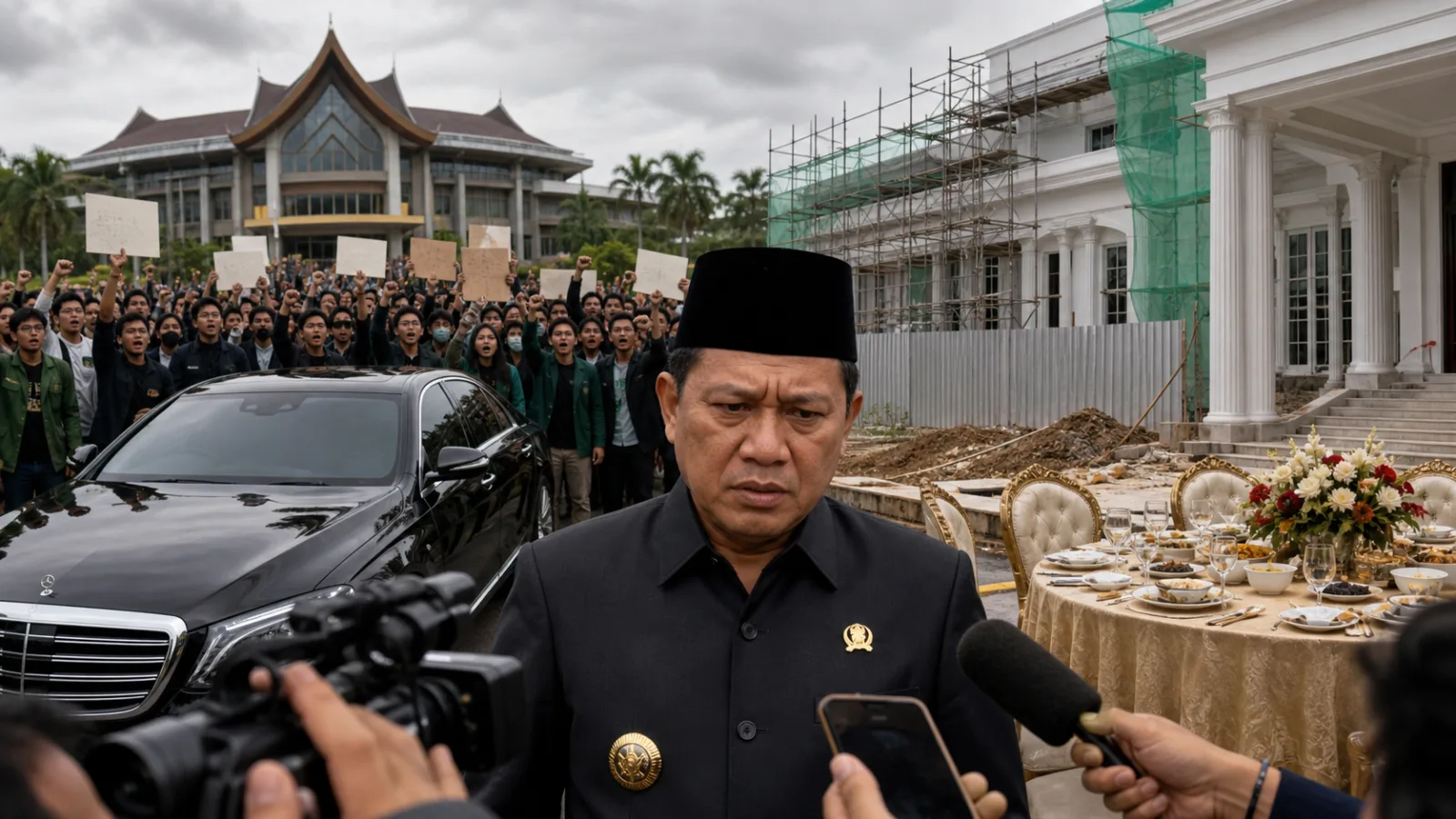
The Voice of the Constitutional Court (MK) and the Prohibition of Concurrent Positions for Deputy Ministers

Legal Literacy - Voice Constitutional Court has repeatedly echoed, affirming the prohibition of concurrent positions for Deputy Ministers (Wamen). However, this message seems to fade amidst the hustle and bustle of the power struggle. The question that arises is, “Who cares?” This article dissects the issue of Deputy Ministers holding dual roles as directors or commissioners in state-owned enterprises (BUMN). The focus is on the urgency, legal basis, implications the Constitutional Court's decision, and comparison with practices in other countries.

Urgency and Legal Basis: A Contradiction

Effective and efficient governance has always been the goal. In this context, the existence of Deputy Ministers is often seen as a way to strengthen coordination, accelerate programs, and provide specialization to ministries. Some argue that the dual role of Deputy Ministers in BUMN can ensure policy alignment and strict oversight of state assets. In addition, Deputy Ministers are considered to have better access and understanding of government policies, so their role in BUMN becomes a bridge between the government's vision and implementation in the field.

However, herein lies the contradiction. The claimed urgency often clashes with the principles of good governance and potential conflicts of interest. Basically, a Deputy Minister is a public official who is fully responsible to the ministry. When holding dual roles in BUMN, the potential for conflicts of interest becomes inevitable because decisions can be more influenced by the position in the ministry than the needs of the BUMN or the public.


Legal Perspective

From a legal perspective, Article 23 of Law Number 39 of 2008 concerning State Ministries regulates the existence of Deputy Ministers. However, the rules regarding concurrent positions in BUMN are often unclear and give rise to debate. This void or ambiguity is filled by interpretations and clarifications from the Constitutional Court. The Constitutional Court's decision is intended as the main reference for limiting such practices, while maintaining the integrity and accountability of state administration.

Constitutional Court Decision: Positive or Negative Legislator?

The Constitutional Court has repeatedly affirmed the prohibition of concurrent positions for Deputy Ministers. The most relevant decision is Decision No. 80/PUU-XVII/2019. In this decision, the Constitutional Court explicitly prohibits Deputy Ministers from becoming commissioners or directors in BUMN, private companies, or other professional positions that generate income. The Constitutional Court's reasoning is clear: concurrent positions can create conflicts of interest, divert attention from core duties, and trigger abuse of power. In addition, this prohibition is related to budget efficiency and prevention moral hazard.

Advertisement
Read without ads.
Join Membership

The next question is, did the Constitutional Court act as a positive or negative legislator? In legal theory, a positive legislator creates new legal norms, while a negative legislator repeals or declares norms unconstitutional. In this case, the Constitutional Court did not create new laws, but rather interpreted the constitution in a binding manner. Thus, the Constitutional Court acted as a negative legislator, reinforcing constitutional limitations. This ruling serves as a warning to the executive branch to comply with the constitution, rather than seeking legal loopholes.

International Comparison

To gain a broader perspective, we can examine practices in other countries. In the United States, there are strict rules regarding ethics and conflicts of interest for public officials. Ministers or Deputy Ministers are required to resign from all positions in private companies or state-owned enterprises during their tenure. They often even place assets in blind trust to avoid accusations of conflicts of interest.

Advertisement
Read without ads.
Join Membership

A similar situation applies in many Western European countries and Canada, where accountability and transparency are highly valued. Senior public officials are expected to fully focus on national duties. Dual positions that provide personal gain or create conflicts of interest are strictly limited, even completely prohibited. This system is designed to minimize the risk of corruption, increase public trust, and maintain objectivity in decision-making.

Lessons for Indonesia

This comparison shows that the prohibition of dual positions for Deputy Ministers is a necessity, not an exception. In fact, Indonesia still frequently faces this practice despite the Constitutional Court's decision. This condition reflects the weak law enforcement and culture of compliance among public officials. Developed countries have long understood that the integrity of officials is the foundation of a strong government. One way to achieve this is by eliminating potential conflicts of interest through the prohibition of dual positions.