
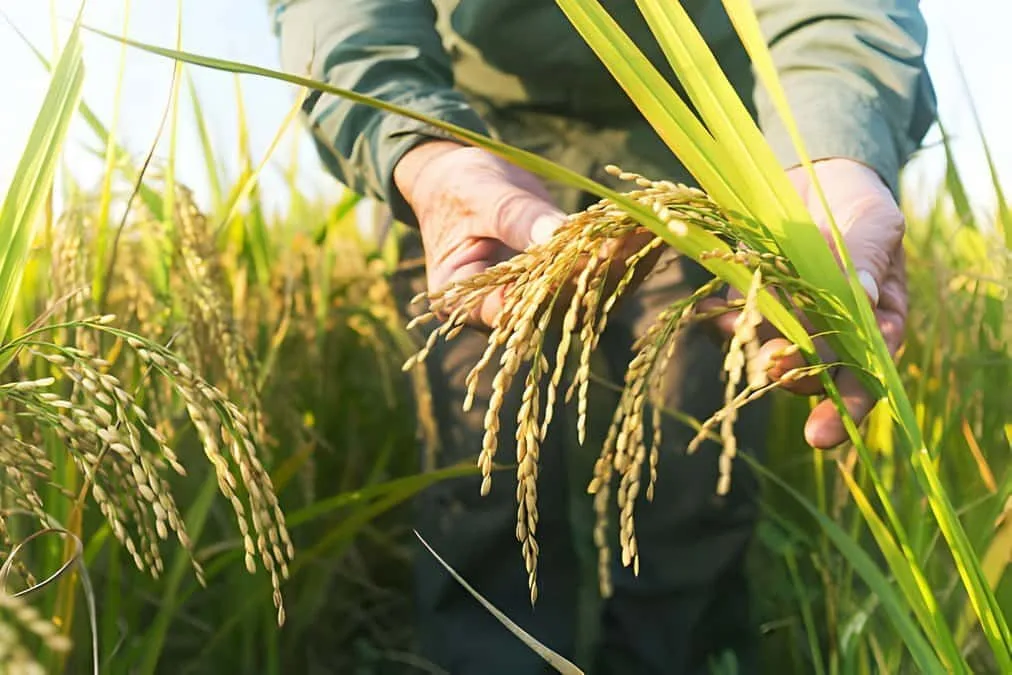
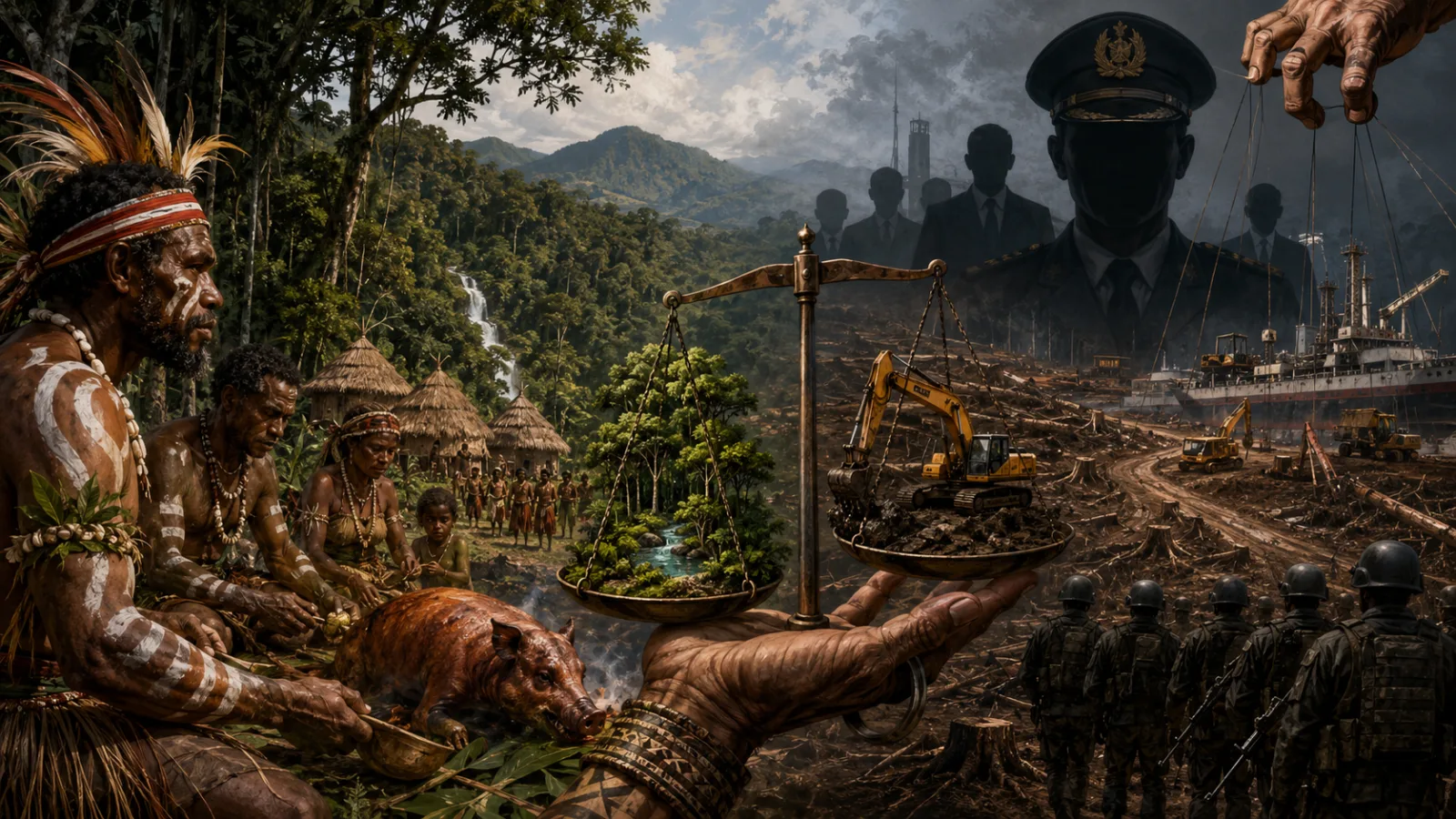
This kind of political-legal ambivalence actually reaps appreciation when the government seems to invite us back to the era of colonialism where the domein verklaring principle is revived, which evicts lands as a synthesis of colonial agrarian legal politics based on the claim that the state owns all land that is not attached to individual ownership rights, such as protected forests. As a result, the resultant of the food estate policy is none other than the threat of environmental degradation and the welfare of communities living in protected forest areas, one of which is indigenous peoples.
Food Estate: Bad News for Food Security Based on Indigenous Community Wisdom
One of the biggest threatening challenges feared from the food estate program is the loss of certainty over the customary land of indigenous peoples, especially for indigenous peoples whose existence has not been recognized. In fact, a media report from tempo.co recently released a statement from the Secretary General of the Indigenous Peoples Alliance of the Archipelago (AMAN), Rukka Sombolinggi, who stated that; “So that indigenous peoples lose their pride in their sago, lose their bond with their land, so that when a company comes, they will say ‘just take it, it’s just sago’, even though that’s their food barn.”


Printing land for a 'handful' of rice for urban communities seems like a socio-ecological injustice that creates new trauma for communities after many cases of criminalization of indigenous peoples are found. Many criticisms have been leveled against this ambitious project, including damaging the ecosystem, negating the role of communities in protecting the environment, policies that are not proportional between the budget and the results to be achieved, and taking indigenous peoples' land without a consultation process, let alone free prior and informed consent.
In terms of the policy of granting permits for the use of forest areas, in 2021 the Ministry of Environment and Forestry still granted forest control permits to 259 HPH-HA concessions covering 18.4 million hectares and 295 IUPHHK-HT concessions covering 11.1 million hectares. In addition to this controversy, as of 2021 the Ministry of Environment and Forestry has also released forest areas for plantation and non-forestry cultivation with a total area of reaching 7.4 million hectares, which includes 21 thousand hectares of customary territory that have been seized through the release of forest areas for plantations since 2015-2020.[3]
Its relevance, if the policy food estate continues to be implemented without recognition of the customary territory of indigenous peoples, the existence of customary forests will be gradually eroded. Moreover, it must be acknowledged that the implications of Article 5 of Law Number 41 of 1999 concerning Forestry still raise questions because protected forests are now designated as state forests – a domein claim of 'state property'.

















Comments
0Share your perspective politely, stay relevant, and focus on the article. Comments appear after moderation.
Join the discussion
Write a clear, polite response that stays on topic.
No comments yet. Be the first to discuss.
Comments will appear after moderation.