Analysis of Study Findings
The novelty of this research lies in the in-depth analysis of the protection of the right to work safety for partner workers in the gig economy sector, with a specific focus on Gojek drivers. This research combines legal and human rights perspectives, highlighting the regulatory gaps in the Indonesian Manpower Law that do not explicitly protect partner workers. In addition, this research explores the impact of worker status as independent contractors on their access to legal protection, insurance, and occupational safety training. Using empirical data obtained through in-depth interviews and document analysis, this research provides new insights into the real conditions faced by Gojek partner workers and emphasizes the urgency for more inclusive regulatory reform. This is a significant contribution to the labor literature, especially in the context of the rapidly growing gig economy in Indonesia.
Protection of the Right to Work Safety for Partner Workers at Gojek
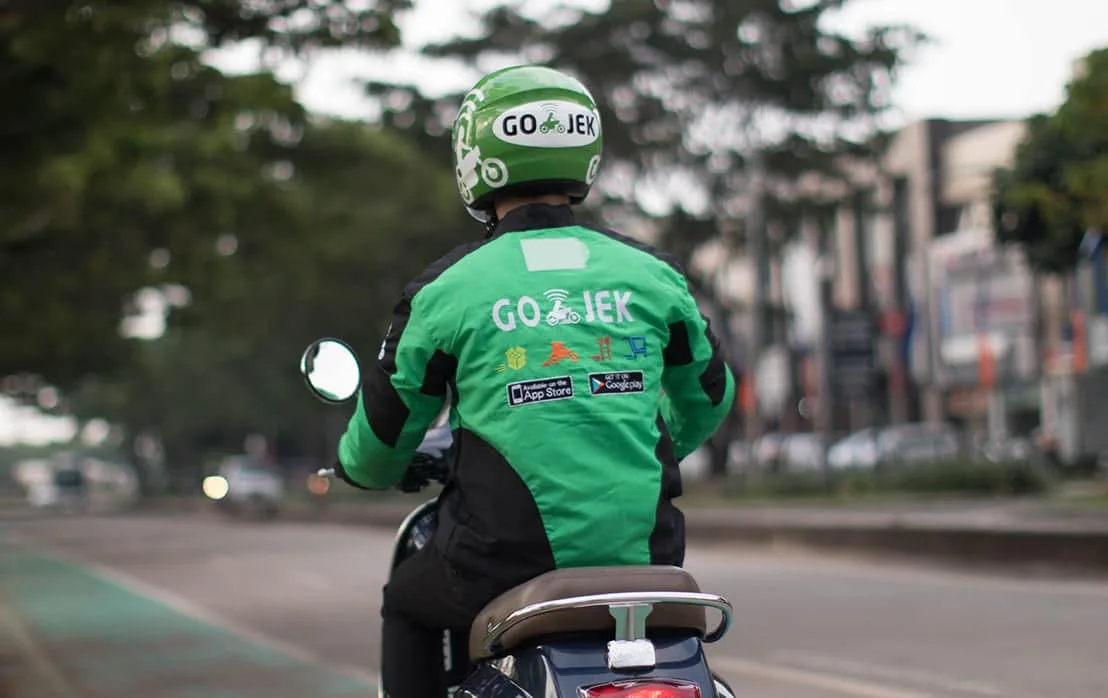
The right to work safety for partner workers at Gojek is an important aspect that needs serious attention in the gig economy era. Partner workers at Gojek, which generally consist of online motorcycle taxi drivers and car drivers, often face significant risks when carrying out their duties, including traffic accidents, workplace violence, and exposure to hazardous working conditions. Gojek considers its drivers as independent contractors rather than permanent employees, which is regulated through a partnership agreement, which stipulates that the relationship between Gojek and its drivers is that of independent contractors, not employees. There are important reasons behind Gojek being an independent contractor. These include operational flexibility, control over work methods, financial aspects, and contractual relationships.
[6]. In this case, Gojek drivers have high operational freedom, such as determining working hours and choosing which orders to reject or accept, without direct sanctions from the company.
[7]Gojek drivers also have full control over the tasks carried out, such as choosing travel routes and using private vehicles and taking care of them themselves, in this case Gojek provides promos for drivers for vehicle maintenance. From a financial perspective, Gojek drivers are paid based on the number of trips that have been carried out based on orders, not with a fixed salary and are fully responsible for paying taxes with personal income.
Even though Gojek is considered an independent contractor, the right to work safety remains relevant and crucial. The right to work safety for partner workers at Gojek is closely related to Law No. 13 of 2003 concerning Manpower and Minister of Manpower Regulation No. 5 of 2018 concerning Occupational Safety and Health in the Work Environment. Even though the two laws are specifically aimed at permanent employees of the company, there are basic principles that are relevant that the Gojek company applies to protect drivers. Referring to Article 86 of Law No. 13 of 2003, it states that every worker has the right to protection of occupational safety and health. Based on this phrase, there are efforts to protect workers from the risk of accidents and health problems arising from the activities of workers. In this case, partner workers on the Gojek platform provide driving safety training, and distribute personal protective equipment (PPE) such as helmets and protective jackets for Gojek drivers, this is also in line with Permenker No.5 of 2018 Article 4. Meanwhile, referring to Article 87 of Law No.13 of 2003 requires companies to implement an integrated occupational safety and health management system. In this case, Gojek develops and implements safety policies and procedures that are specific to partner workers, for example risk monitoring through technology such as GPS tracing and safety features in the application, as well as providing access to health and accident insurance that occurs.
As workers in the gig economy sector, drivers are often exposed to high risks such as traffic accidents, violence and unstable working conditions without protection. Referring to the Universal Declaration of Human Rights and the International Covenant on Economic, Social and Cultural Rights, the right to work safety in safe and healthy conditions is an important part of Human Rights that must be guaranteed. However, the obstacle of the partner worker status as an independent contractor makes the guarantees and rights that should be obtained are put aside, because there is no legal regulation and legal certainty to protect the rights of partner workers
[8]As a result, partner workers do not have full access to legal protection, health and accident insurance, as well as the right to adequate safety supervision and training, this is due to the reasons for Gojek partnership drivers. As stated in an interview by Mr. M, that there is indeed no legal protection related to Gojek drivers, so if there are customers who commit sexual harassment, violence or threats against drivers, what is done is to look for the nearest police station and drop off the customer. When a Gojek driver experiences a work accident or dies, the Gojek company provides a work accident and death guarantee program. This program makes it easier for drivers to register and pay BPJS Employment contributions of Rp. 10,000 per month for work accidents and Rp. 6,800.00 for death. It is important to note that this program is not a guarantee of work safety for Gojek drivers. This is because there is no employment relationship between the Gojek company and Gojek drivers, as regulated in Law No. 13 of 2003.
[9]Considering that Gojek drivers are independent contractors, seeing from the financial aspect that they do not receive a fixed salary and are fully responsible for paying taxes with personal income, this results in anxiety and challenges for drivers because of a 20 percent deduction in every income earned. In his
opinion, even though a partner is a partner, the partner should receive an allowance, even though Gojek has implemented this, but the allowances or bonuses given to drivers are not reasonable because the working hours and targets are too tight. This was conveyed that the intensive hours given were around working hours. Incentives always change depending on the private Gojek company, and mostly during working hours, which start at 3-4 pm, and last at 9-10 pm.
[10]In addition, there is also a need to improve security services that must be emphasized and considered for drivers, because the risk of travel is very likely to occur, especially when traveling at night. In addition, there is a need for improvements in the Gojek application itself when drivers receive customers who are directly connected without being able to choose and sort
[11]Law No. 13 of 2003 concerning Manpower and Minister of Manpower Regulation No. 5 of 2018 concerning Occupational Safety and Health in the Work Environment do not clearly regulate the employment relationship between companies and partner workers in the gig economy sector. This creates a legal loophole that harms partner workers, such as Gojek drivers, because they do not receive adequate legal protection. Articles 86 and 87 of Law No. 13 of 2003 state that every worker has the right to protection of occupational safety and health, and companies are obliged to implement an occupational safety and health management system. However, because of this legal loophole, these rights do not automatically apply to partner workers in the gig economy sector, and cannot be applied directly to Gojek drivers because they are considered independent contractors. As a result, the responsibility for ensuring occupational safety and health falls on the individual partner worker, not on the company. This poses a significant challenge in ensuring that the right to work safety, which is recognized as a human right, can be applied effectively so that the safety of Gojek workers is not vulnerable to criminal acts such as violence, fraud or sexual harassment.
Conclusion
Gojek partner workers, such as drivers, face major challenges related to work safety due to their status as independent contractors and the lack of adequate legal regulations. Although Gojek has offered insurance and compensation programs, this protection is not sufficient to guarantee the safety and welfare of workers in high-risk working conditions. Therefore, more comprehensive regulatory and policy reforms are needed, as well as adaptation of labor laws that include workers in the gig economy sector. This is important to ensure that human rights related to work safety can be guaranteed and applied fairly to all workers, including those who work as partners on platforms such as Gojek. The existence of the Manpower Law and Petmenkes does not have legal certainty in protecting the safety of partner workers.
[1]The Government of the Republic of Indonesia, “1945 Constitution” (1945), Article 27 paragraph (2) and Article 28D paragraph (2).
[2]M. Kharis Mawanda and Adam Muhshi, “Perlindungan Hukum Mitra Ojek Daring Di Indonesia,” Lentera Hukum 6, no. 1 (2019): 37, https://doi.org/10.19184/ejlh.v6i1.9203.
[3]Direktorat Statistik Kesejahteraan Rakyat, Statistik Pendidikan 2023, 12th ed. (Jakarta: Badan Pusat Statistik, 2023), 171.
[4]Whitney Brigitta Sinaga and Nadia Intan Rahmahafida, “Perlindungan Hak Dalam Mendapatkan Pekerjaan Yang Layak Terhadap Mitra Dari Perusahaan Jasa Transportasi Daring,” Jurnal Hukum Magnum Opus 6, no. 1 (2023): 88.
[5]R Aditia and H Mahmud, “Perlindungan Hukum Bagi Mitra Pengemudi Ojek Online Apabila Mengalami Kecelakaan Kerja,” Jurnal Bevinding 01, no. 02 (2023): 47.
[6]Anggalih Bayu Muh. Kamim and M. Rusmul Khandiq, “Mitra Pengemudi Gojek dalam Jeratan Ekonomi Berbagi Melalui Platform,” Jurnal Studi Pemuda 8, no. 1 (June 29, 2019): 8, https://doi.org/10.22146/studipemudaugm.45240.
[7]Zidna Aufima, “Jaminan Keselamatan Kerja bagi Pengemudi go-jek di Surabaya,” Yurispruden 2, no. 1 (January 23, 2019): 9, https://doi.org/10.33474/yur.v2i1.1589.
[8]Arif Noviato and Ari Hernawan, “Encouraging Decent & Fair Work for Gig Workers: A Preliminary Study on the Gig Economy in Indonesia,” in IGPA Press, Yogyakarta, 2021, 67.
[9]Nur Siti Annazah et al., “Working Conditions in Partnership Relations: A Case Study on Online Transportation Company Partners,” Jurnal Ketenagakerjaan 18, no. 3 (December 28, 2023): 12, https://doi.org/10.47198/jnaker.v18i3.305.
[10]Mr. M (Gojek Partner Driver), Surabaya Interview, June 2, 2024
[11]Ibid



















Comments
0Share your perspective politely, stay relevant, and focus on the article. Comments appear after moderation.
Join the discussion
Write a clear, polite response that stays on topic.
No comments yet. Be the first to discuss.
Comments will appear after moderation.