
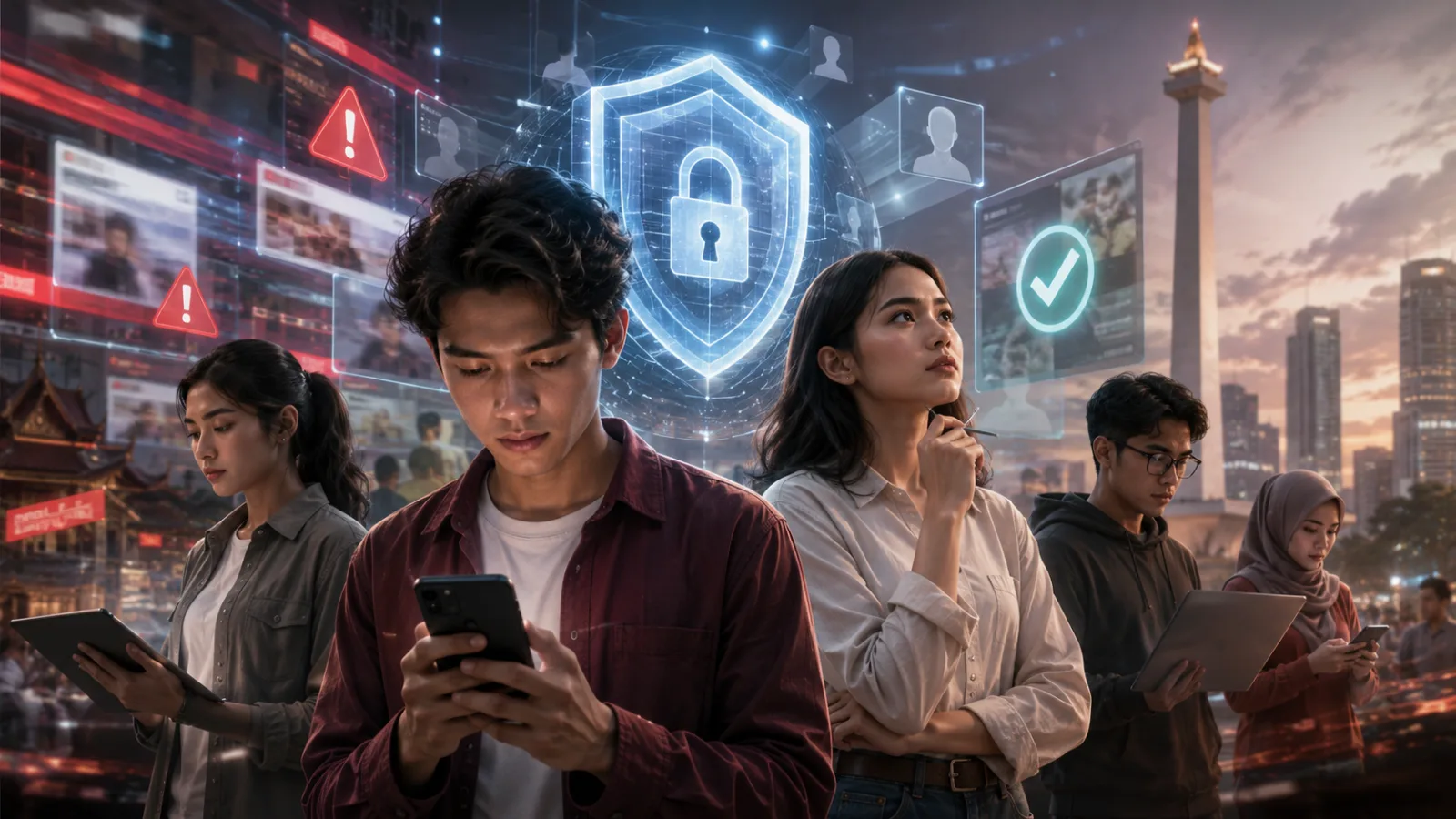
Legal Literacy - Hello, generation Z and millennials! Do you realize how many personal data leaks and spreads on social media in one day? Or how many times have you "scrolled" without realizing it, then accidentally shared uploads whose veracity is still questionable? In this fast-paced digital era, we are all digital citizens. But the question is: to what extent do we understand our rights and obligations as citizens in this seemingly borderless space?
Rights Inherent in the State, Still Applicable in Cyberspace
Are our rights as citizens (such as the right to express opinions, the right to assembly, and the right to privacy) automatically "logged in" to digital platforms? The answer is: yes. All the principles and rights stipulated in the constitution do not stop working in front of our cellphone screens. The main basis is enshrined in Article 28G paragraph (1) of the 1945 Constitution of the Republic of Indonesia, which states, "Every person shall have the right to the protection of his person, family, honor, dignity, and property under his control."


This is where this constitutional right is most relevant for us to be aware of. Every time we fill in our data on an online loan application, or when we are asked for facial verification by a social media platform, we are actually negotiating the boundaries of this right. Personal data is not just a string of numbers; it is a digital representation of who we are. Our personal data should be maximally protected as it is the right of every citizen, and should not be used as an object that harms us.
Then what about our expression? Can we freely criticize and express our thoughts without fear of being punished? Constitutional Court Decision (Constitutional Court) Number 115/PUU-XXII/2024 provides good news. The Court affirmed that criticism delivered in the digital space cannot be punished just because it causes noise. In addition, the Court also determined that criticism of state institutions (bureaucracy, institutions, positions) is not included in the realm of criminal defamation.
This decision is a major breakthrough for digital democracy. It expands the meaning of our freedom of speech, which is guaranteed by the constitution. However, keep in mind: while our opinions are free, there are still limits. Freedom cannot be used as a shield for hate speech, hoaxes, or defamation.
Digital Privacy Rights: The Boundary Between Public, Digital Space, and Identity
"No one knows you're a dog on the internet" may be an old saying that used to be true. But now, with the "one single identity" system that the government is starting to implement, we are all being digitally mapped.
One of the latest changes is the issuance of Ministerial Regulation Communication and Digital (Permenkomdigi) Number 7 Year 2026. Through this regulation, an official mobile number is no longer just a means of communication; it is now attached as the official digital identity of every citizen. To prevent this identity from being misused, everyone is also encouraged to have the right to check all numbers registered under their NIK name and request blocking in case of suspected data misuse.
On the other hand, the Human Rights Bill being drafted even proposes the inclusion of the concept of "right to be forgotten". This right would allow a person who has been proven innocent in a court of law to request the removal of their bad digital footprint (e.g. negative framing or news) that has expired. This shows that the state is genuinely trying to protect its people from the permanent psychological impact of a digital world that never forgets. But again, this right does not run automatically, but must go through a court mechanism.
Obligations as a Digital Citizen: Fighting Hoaxes and Disinformation
Now that we know about rights, let's talk about obligations. If we all just demand the right to expression without being responsible, our digital space will become wild and toxic. The government is currently aggressively implementing digital literacy, and explicitly states that "freedom of expression cannot be used as an excuse to spread content that violates one's privacy and honor."
Spreading hoaxes or fake news is no longer just a mistake, but a form of violation of obligations as a citizen. Disinformation undermines public trust, destabilizes, and can even trigger conflict.
Thus, digital literacy is our main weapon. Unfortunately, data shows that although internet penetration in Indonesia has reached 80%, the digital literacy index is still stagnant at the middle level. This means that many of us are already "online", but not smart enough to filter and verify information.
Key Role: Critical Young Voters
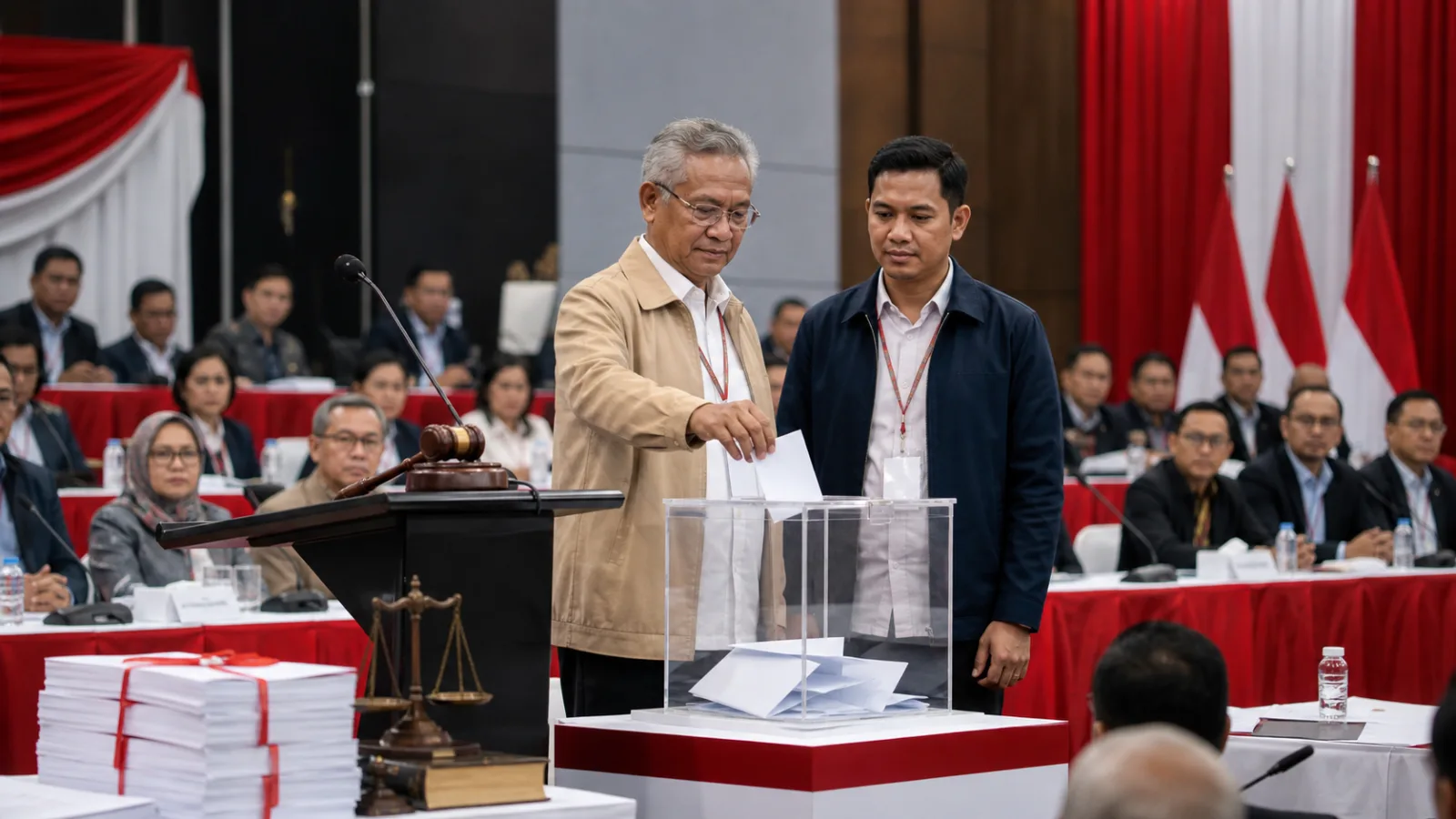
In turn, this understanding of digital rights and obligations is not just academic. It has a direct impact on our political practices and sovereignty. The Chairman of the Indonesian Election Supervisory Agency (Bawaslu), Rahmat Bagja, highlighted that the number of young voters currently reaches around 50 percent of the total national electorate. The voice of the younger generation determines the direction of the nation. They have great potential to become the "moral guardians of democracy".
"Young voters must be the moral guardians of democracy, not be tempted by money politics, and not participate in spreading hoaxes that can damage the democratic process," he said. The young generation has great power through social media to spread the values of clean, participatory and dignified democracy. Use timelines for critical discussions, not for spreading slander. If so far many people think politics is "dirty" and choose to abstain, this statement invites us to enter and change it from within.
Digital and Ethics: Education as Foundation
Finally, there is no meaningful change without education. The Ministry of Communication and Digital (Komdigi) is currently encouraging the strengthening of digital literacy at various levels, even in Islamic boarding schools and public schools. Education on digital rights and media ethics must be continuously promoted, starting from the village level to government institutions. Synergy between the government, media, and educational institutions is needed to create a free, critical, and civilized digital ecosystem.
Let's Play a Role
To conclude, the digital world is not "lawless". It is an extension of our public space. Understanding your rights in it will protect you from cybercrime and intimidation. Carrying out your obligations in it will create a calmer, smarter and more democratic Indonesia.
Start now. Before sharing an article, check its veracity. When our data is requested, read the privacy terms. And when the election comes, don't hesitate to use your voice and power for a better future. A critical generation is not only good at being loud, but also careful in their actions online.













Comments
0Share your perspective politely, stay relevant, and focus on the article. Comments appear after moderation.
Join the discussion
Write a clear, polite response that stays on topic.
No comments yet. Be the first to discuss.
Comments will appear after moderation.