
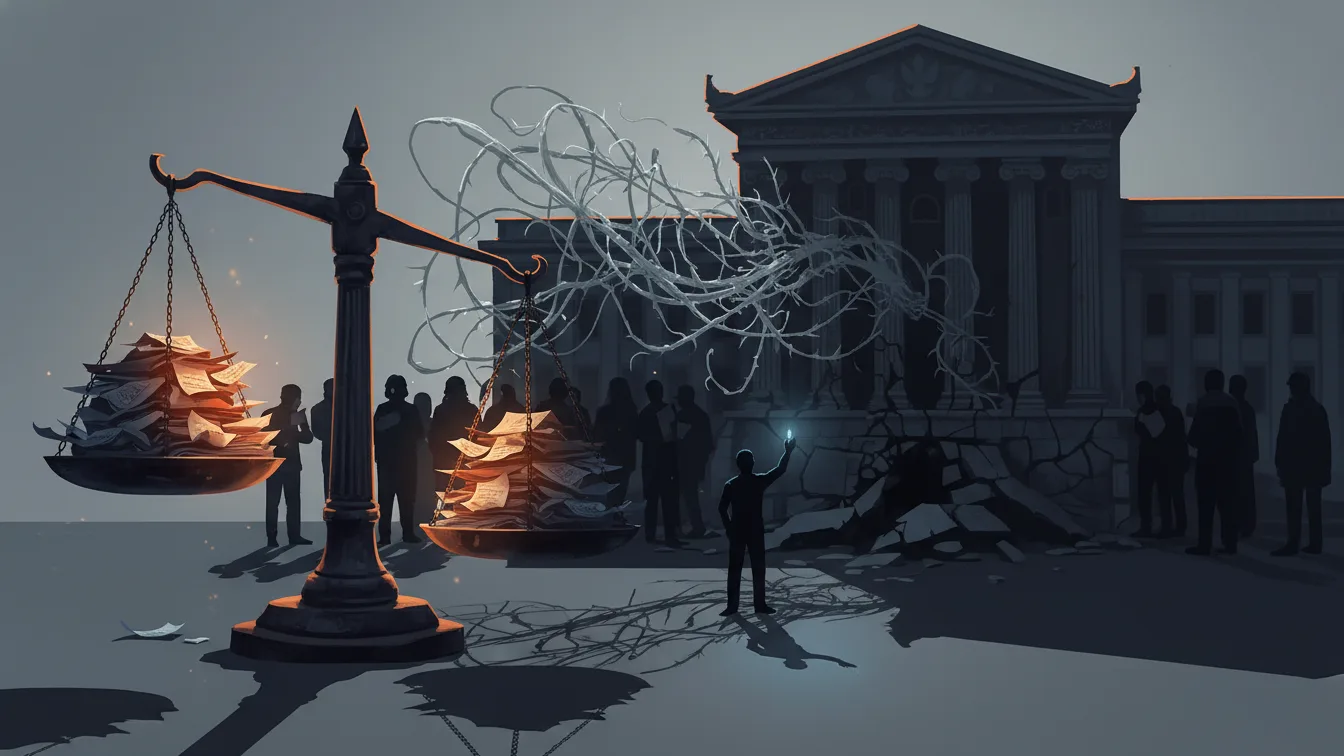
This intellectually corrupt law-making process produces legislation that suffers from a legitimacy deficit. Truth in the context of constitutional law cannot only be measured from the aspect of rechtmatigheid (formal validity), but must be based on doelmatigheid (usefulness) and gerechtigheid (substantive justice). When the ethical foundation of law-making has eroded due to public lies—such as concealing the original draft from the general public until the final moments of ratification—then every article it produces inherently carries a congenital defect. Such a law may be de facto valid, supported by armed forces and correctional institutions, but de jure and philosophically, it fails to be a civilized law.
judicial review of a law and the Examination of Formal Truth
Faced with the brutality of a legislative machine that is often controlled by a political oligarchy, the architecture of our constitution has indeed provided a fundamental safety valve mechanism (safeguard mechanism) through the Constitutional Court (MK). This is where the battle to prove the true "legal truth" lies. For many years, the tradition of judicial review of a law in Indonesia has relied too heavily on material review (material judicial review), which focuses on whether the substance of an article is contrary to the 1945 Constitution. However, along with the increasing sophistication of manipulation in the legislative process, the paradigm of constitutional review must, and has, undergone a very progressive shift towards formal review (formal judicial review).


A very crucial jurisprudential milestone in this context is Constitutional Court Decision Number 91/PUU-XVIII/2020. This decision is not merely an ordinary legal document, but an intellectual monument that dismantles the illusion of truth from manipulative legislative procedures. Through this decision, the Constitutional Court established the doctrine of meaningful participation (meaningful participation) as an absolute prerequisite that determines the life and death of a law. The Constitutional Court explicitly emphasized that public participation should not only be ritualistic—such as merely inviting academics or civil society groups to the council building just to be photographed and recorded in the attendance list, while their input is completely ignored.
Meaningful participation, according to the Constitutional Court's jurisprudence, demands the fulfillment of three fundamental rights of the public: the right to have their opinions heard (right to be heard), the right for their opinions to be seriously considered (right to be considered), and the right to obtain explanations or answers to the opinions given (right to be explained). If a law is passed without fulfilling these three cumulative prerequisites, then the Constitutional Court has a solid constitutional basis to declare that the law is formally flawed. In other words, the Constitutional Court conveys the message that the "truth" of a law cannot be separated from the honesty and transparency of its formation process. Lies in covering up drafts, or manipulation in suppressing critical voices of the public, are a direct violation of the people's sovereignty mandated by Article 1 paragraph (2) of the 1945 Constitution.
A formal review by the Constitutional Court is essentially a constitutional audit process of the truth of the lawmakers' claims. The Court is tasked with tracing the legislative trail, examining the minutes of the proceedings, and carefully examining whether the academic paper prepared truly reflects the objective conditions of society or is merely an order from a political sponsor. When the Court finds that the process of forming a law is filled with legal smuggling and disregards democratic procedures, then annulling the law in its entirety is not a form of judicial activism which is not excessive, but rather a moral and constitutional obligation to uphold the rule of law. The Court is the last bastion that ensures rationality and common sense do not die at the hands of the tyranny of the majority in parliament.
Reclaiming Hijacked Constitutionalism
Realizing that law can be engineered in such a way as to perpetuate power, the public sphere must not remain silent. True legal truth will never fall from the sky, and is rarely given voluntarily by rulers who are satiated with privileges. That truth must be seized and defended. This is where the relevance of Progressive Law thinking inherited from Prof. Satjipto Rahardjo lies. Progressive law refuses to submit to corrupt legislative texts. It invites jurists, academics, and the wider community to have the moral courage to dismantle structural crimes that hide behind legal formal phrases. Law is for humans, not humans for law; therefore, if the law injures humans due to its manipulative formation process, it is the law that must be destroyed and rebuilt.
The effort to reclaim this hijacked constitutionalism requires strong legal literacy in society. The public should no longer only be invited to memorize articles, but must be educated to be able to dissect the political anatomy behind the birth of an article. Opinion pieces, scientific journals, progressive court decisions, and academic discussions in digital literacy spaces play a very essential role as instruments of national enlightenment. When a law is packaged with sweet promises of prosperity but the draft is kept tightly hidden, it is the critical reasoning of the community that must first shout that a lie is being smuggled.
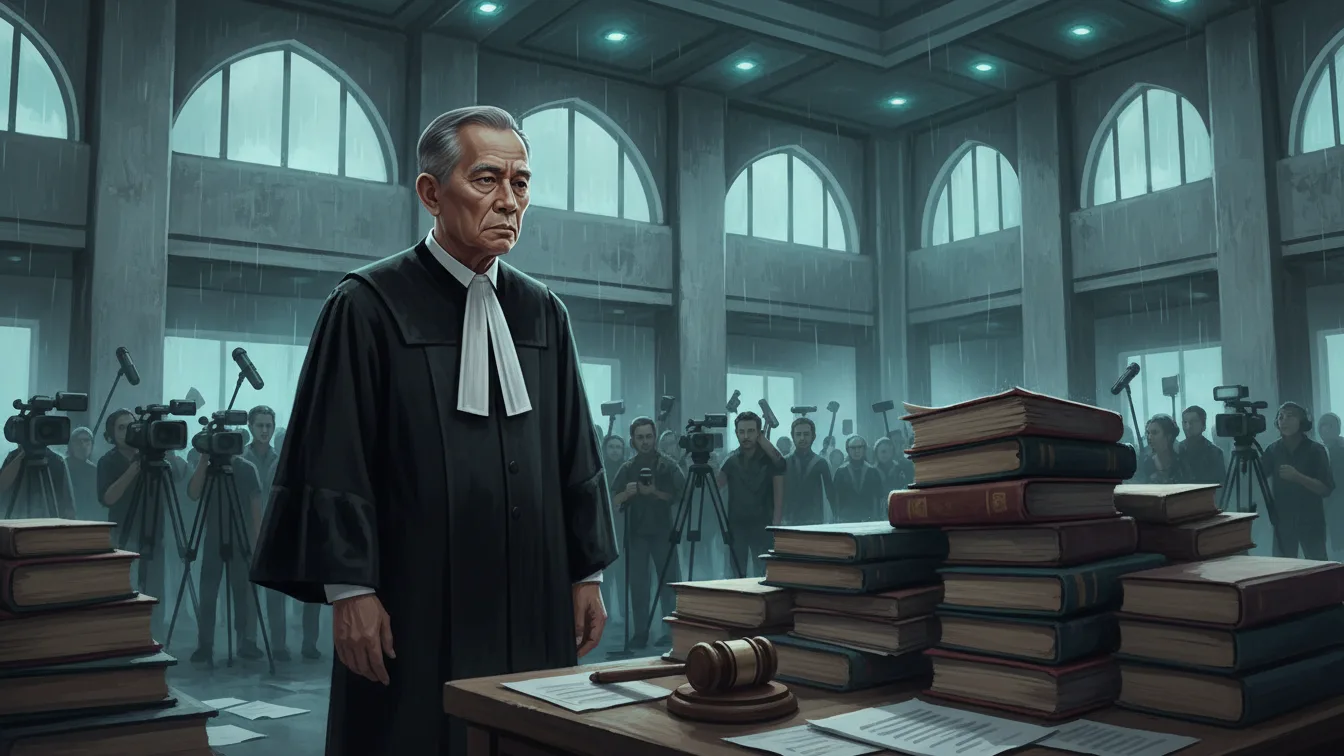
In the end, the location of the truth of a law that since its creation has been filled with lies and elitist interests is nil. It has no substantive truth, but only a fictional truth that is imposed. However, the absence of truth in this flawed legislative product should be a catalyst for the awakening of public legal awareness. That the struggle to uphold justice does not stop when the law is passed, but has only just begun. Through relentless public oversight, through free academic forums, and through the gavel of an integrity-driven constitutional judge, the lies of a legal product will ultimately always find a way to be exposed.





















Comments
0Share your perspective politely, stay relevant, and focus on the article. Comments appear after moderation.
Join the discussion
Write a clear, polite response that stays on topic.
No comments yet. Be the first to discuss.
Comments will appear after moderation.