

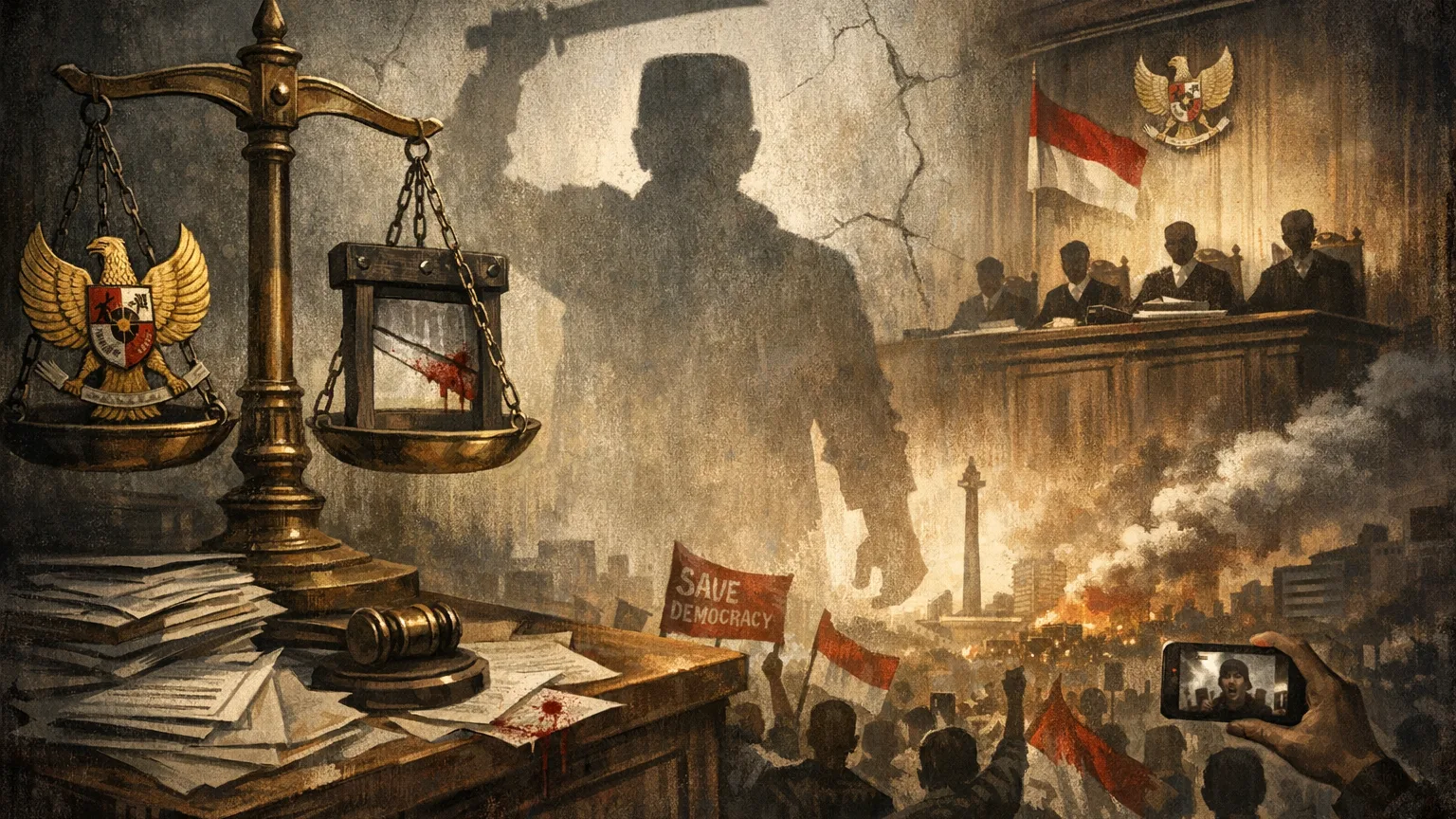
Legal Literacy - Eradicating corruption has always been the most loudly voiced political promise in every change of national leadership. At the beginning of his administration, President Prabowo Subianto showed a very strong verbal commitment to this agenda. In various speeches and public statements, he affirmed his determination to uphold the law impartially and to cleanse the corrupt practices that have been eroding the country. The message was conveyed in a firm and confident tone, fostering public hope for a brave and decisive leadership.
As time went on, unease arose in the public sphere regarding the extent to which this commitment was truly realized in practice. This is where the public began to see a gap between political statements and implementation on the ground. Corruption is not merely a matter of rhetoric, but rather a matter of courage to take political risks, consistency in law enforcement, and a willingness to dismantle the networks of power that have been protecting the perpetrators.


Controlled Central Corruption and Stalled Old Cases
An interesting phenomenon is the near absence of new large-scale corruption cases at the central level. This condition is often referred to as a controlled situation. However, the absence of major cases does not necessarily indicate improved governance. It could be that corruption is becoming more organized and protected. Ironically, the handling of old cases appears to be stalled, as if losing priority and direction for resolution. Corruption at the central level generally involves actors with strategic positions, extensive political networks, and the ability to influence legal processes. Therefore, the absence of major cases does not necessarily reflect the success of corruption eradication, but rather could indicate the strengthening of political and bureaucratic protection mechanisms.
In conditions like these, the law risks losing its reach when faced with elite interests. While new cases appear minimal, the handling of old cases is experiencing a significant slowdown. A number of major legacy cases are stalled, unresolved, or losing their momentum for law enforcement. This situation creates the impression that resolving old cases is no longer a priority, even though these cases should be the entry point for dismantling systematic corruption patterns. The stagnation in handling old cases also has a serious impact on public trust. When legal processes proceed slowly without clarity, the public will tend to believe that the state is hesitant or unwilling to touch the major actors involved. If this condition continues to be allowed, the narrative of controlled corruption could potentially turn into the normalization of impunity at the central level.




















Comments
0Share your perspective politely, stay relevant, and focus on the article. Comments appear after moderation.
Join the discussion
Write a clear, polite response that stays on topic.
No comments yet. Be the first to discuss.
Comments will appear after moderation.