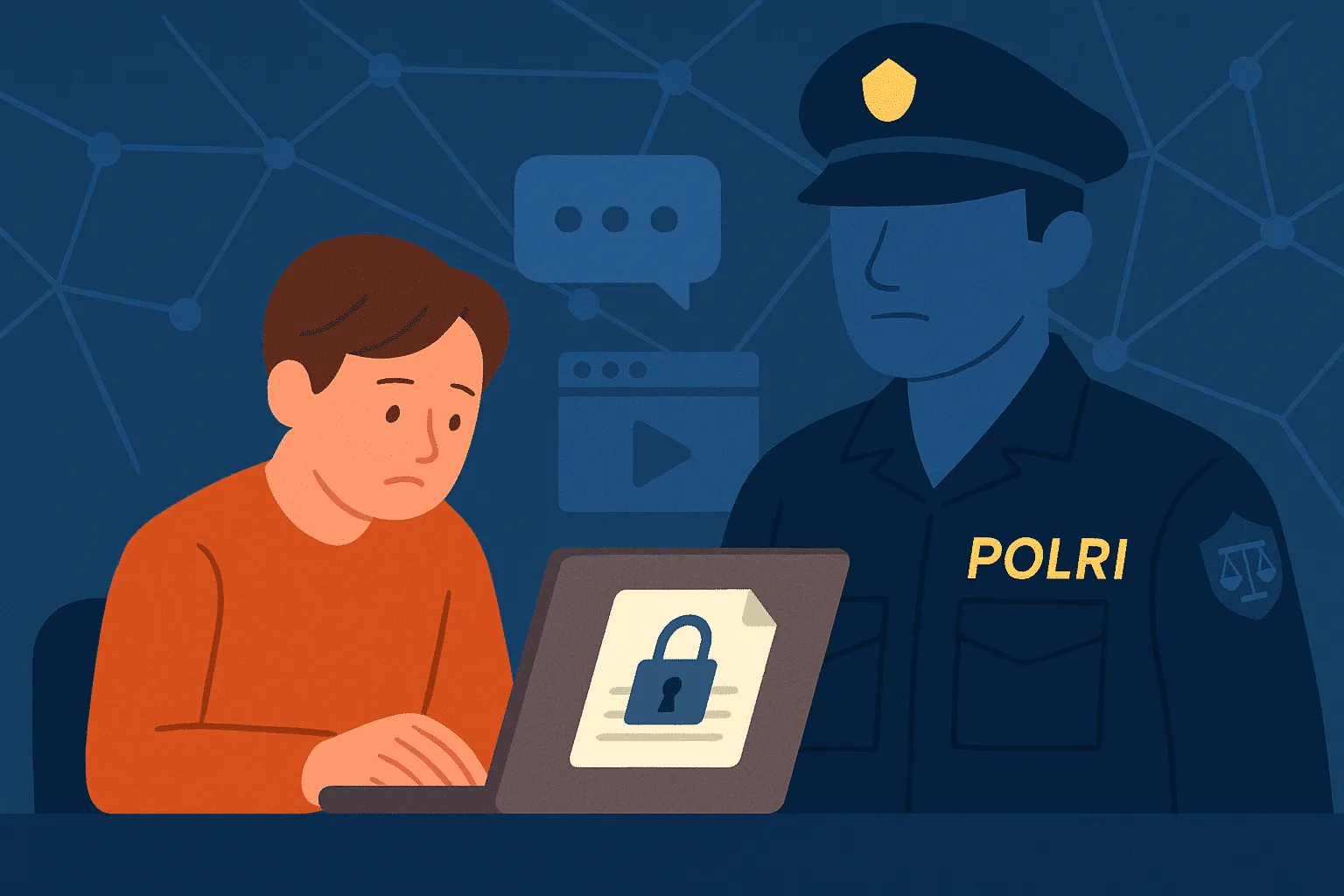
Legal Literacy - The discourse on the revision of the National Police Law is increasingly rolling, potentially sparking public controversy, as was the polemic that previously occurred in the revision to the enactment of the TNI Law some time ago.
This regulatory change initiative emerged amidst sharp scrutiny of the police institution, which has recently been overshadowed by a series of serious cases—ranging from intimidation and repression against the punk band Sukatani, alleged sexual violence involving officers, drugs, corrupt practices, to arbitrary actions that resulted in torture and death of suspects without due process.


Commission III of the DPR has stated its readiness to discuss the National Police Bill if it is deemed an urgent need. As we know, this bill is included in the DPR's list of initiatives and its discussion has been rolling since 2024.
However, the latest news shows that the process that is currently underway has been temporarily halted. The National Police Commission (Kompolnas) informed of the postponement of the discussion of the bill. This news was conveyed directly by the Daily Chairman of Kompolnas, Arief Wicaksono Sudiutomo, after communicating with the National Police Chief General Listyo Sigit Prabowo, on Wednesday, April 9, 2025.
Threats to the Freedom of Digital Space
Based on the draft of the National Police Bill circulating on the internet, a number of articles proposed for change are suspected of sparking polemics because the substance of the articles is felt to be detrimental to the public.
For example, Article 16 Paragraph (1) letter q states that the Police have the authority to take action, block or disconnect, and make efforts to slow down access to cyberspace for domestic security purposes. Wiretapping in cyberspace is also prone to occur, because with this revision the police have the authority claimed to be in accordance with the Wiretapping Law.
In the historical record, the practice of slowing down or cutting off internet access has often been used as an instrument to quell protests and silence civil society actions. For example, as happened in 2019 in Papua and West Papua. At that time, the government cut off internet access, which was later declared by the Jakarta State Administrative Court (PTUN) as a form of unlawful act.
In the context of the current discussion of the bill, the involvement of the Police in restricting cyberspace has the potential to complicate the space for freedom of expression and opinion in the digital space, especially for criticism directed at institutions or parties in the government.













Comments
0Share your perspective politely, stay relevant, and focus on the article. Comments appear after moderation.
Join the discussion
Write a clear, polite response that stays on topic.
No comments yet. Be the first to discuss.
Comments will appear after moderation.