
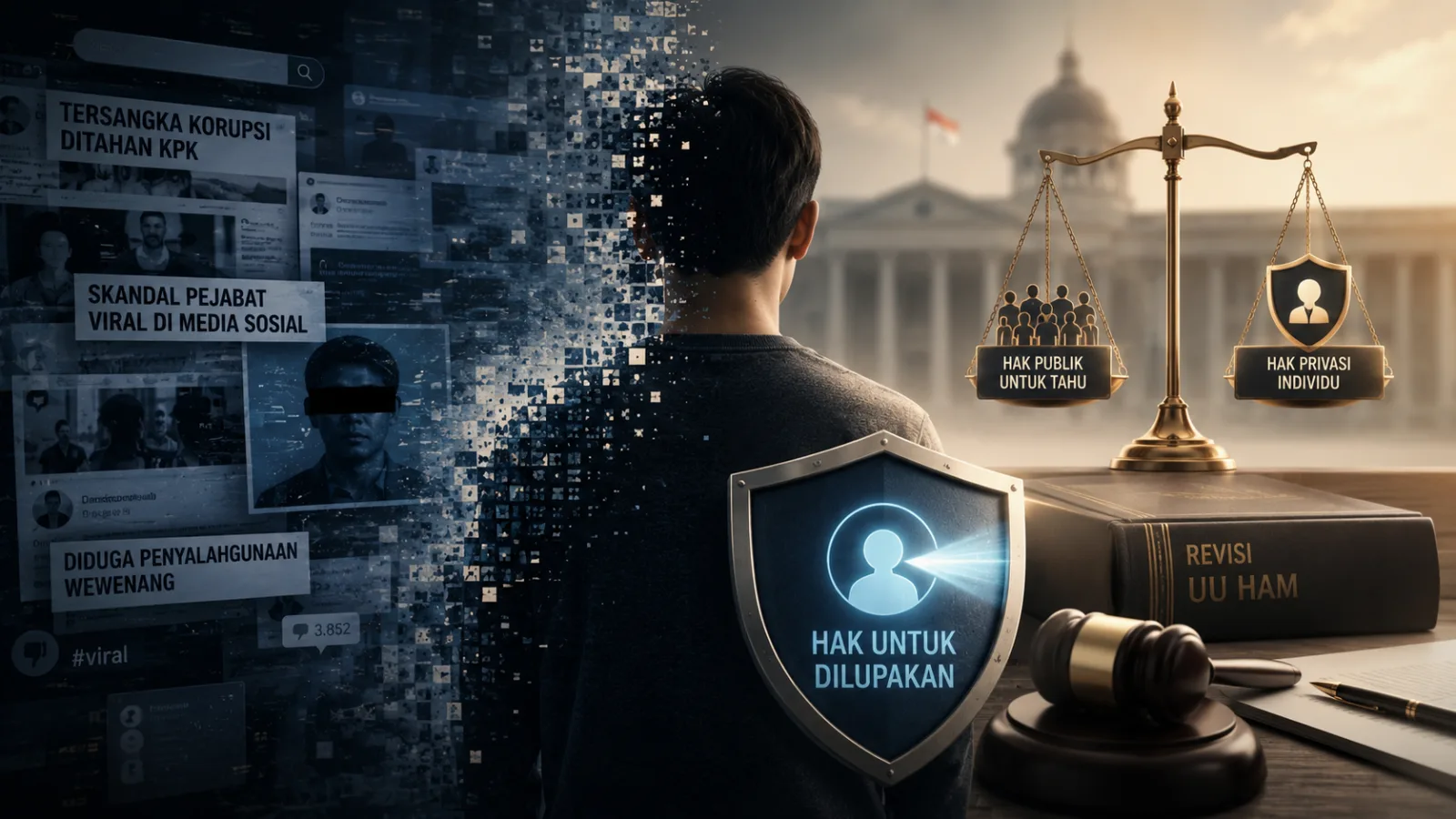
Analysis of the Right to be Forgotten in the Revised Human Rights Law
The Need for the State to Provide Legal Protection
The Right to Be Forgotten can indeed be a form of protection for someone who has previously been implicated in a case, but is not legally proven guilty. Digital footprints still often lead to prolonged stigma, even though the court has declared someone innocent. This condition can have an impact on a person's social life, work, let alone their future in the long run. The state is considered to have to provide legal protection so that a person does not continue to receive social consequences for accusations that are not proven true.
Beware of Potential Abuse of Digital Footprint Removal
The existence of regulations on the Right to be Forgotten is also inseparable from the possibility of potential abuse by certain parties, especially influential officials in the community. The deletion of digital track records related to the public interest can certainly raise new issues related to information transparency. Basically, the public has the right to know a person's track record, especially in relation to abuse of power or cases that have been in the public spotlight. Many legal experts also emphasize that the revision of the Human Rights Law must contain strict instruments and restrictions so that this right does not turn into a tool to whitewash negative track records in the digital space. [4]


The Midpoint between Individual Privacy and Public Interest
The Right to Be Forgotten could potentially clash with the public's right to know and the principle of freedom of the press if not carefully regulated. Deleting digital information is necessary to protect one's right to privacy and future. However, not all negative track records can be deleted easily, especially when the information is still related to the public interest. Therefore, what is needed is not just deleting information entirely, but a clear balance between the protection of one's privacy and the public's right to know relevant information.
Conclusion
The Right to Be Forgotten can indeed be a form of legal protection for someone who is not proven guilty so that they do not continue to be overshadowed by digital stigma in the long run. However, the existence of regulations should not ignore the public's right to obtain information, especially those related to the public interest and transparency of information from public officials. The revision of the Human Rights Law still needs to present clear and strong limits and mechanisms so that its application is not misused as a tool to whitewash negative track records. Thus, what needs to be built is not only about the protection of individual privacy, but also about the balance between personal rights and public interests in a proportional manner.






















Comments
0Share your perspective politely, stay relevant, and focus on the article. Comments appear after moderation.
Join the discussion
Write a clear, polite response that stays on topic.
No comments yet. Be the first to discuss.
Comments will appear after moderation.