
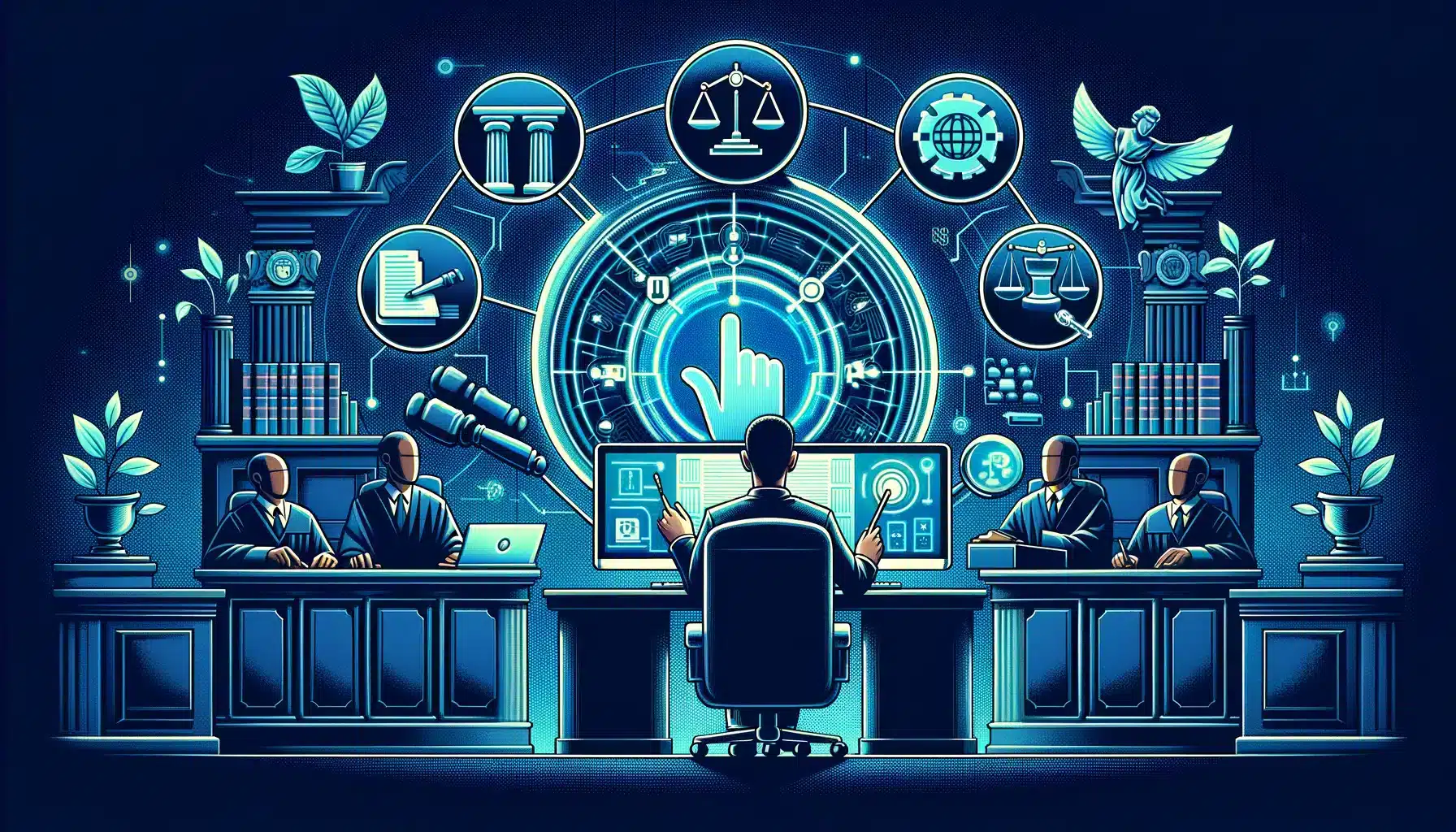
Legal Literacy - This article discusses the evolution of the Electronic Justice System (E-Court) in Indonesia, especially in court administration and proceedings. Against the backdrop of continuously developing technology and the need for a more efficient justice system, this article explains the regulations governing E-Court, including relevant Supreme Court Regulations. It also describes various modules and services within E-Court, such as e-Filing, e-Payment, and e-Summons, as well as their benefits, including saving time and costs, increasing transparency, and reducing illegal levies.
Introduction
In today's Era of Globalization, technology is increasingly developing. In the 1980s, digital technology provided its own color and brought many changes in various sectors of life. As time goes by, technological developments then entered a new, more advanced era with the Industrial Revolution 4.0, where digital technology became a major necessity for almost all of society.


Human activities that were initially manual and physical have now been replaced by digital-based patterns. This also applies to the legal field. The impact of digital technology on people's lifestyles seems to have changed, integrated into the legal world and brought significant changes in law in Indonesia, marked by the birth of various regulations and changes in several patterns of law enforcement from conventional to digital.
In response to these digital developments and transformations, the Supreme Court has a blue print for the Judiciary 2010-2035, where one of the important points is to realize the Great Indonesian Judiciary, through a modern and integrated Information Technology-based judiciary. Modernization began in 2018 with the issuance of Supreme Court Regulation Number 3 of 2018 concerning electronic courts (e-Court).
Regarding e-court cases, the Supreme Court issued a new regulation, namely, Supreme Court Regulation Number 7 of 2022 concerning Amendments to Supreme Court Regulation Number 1 of 2019 concerning Administration and Proceedings in Court Electronically, which came into effect on October 10, 2022 and stated that the previous Supreme Court Regulation was no longer valid. Supreme Court Regulation Number 7 of 2022 regulates several aspects of changes in the electronic conference system. These changes encourage the implementation of broader electronic conferences under any conditions, including defendants who do not express approval of electronic conferences and/or are abroad.





















Comments
0Share your perspective politely, stay relevant, and focus on the article. Comments appear after moderation.
Join the discussion
Write a clear, polite response that stays on topic.
No comments yet. Be the first to discuss.
Comments will appear after moderation.