
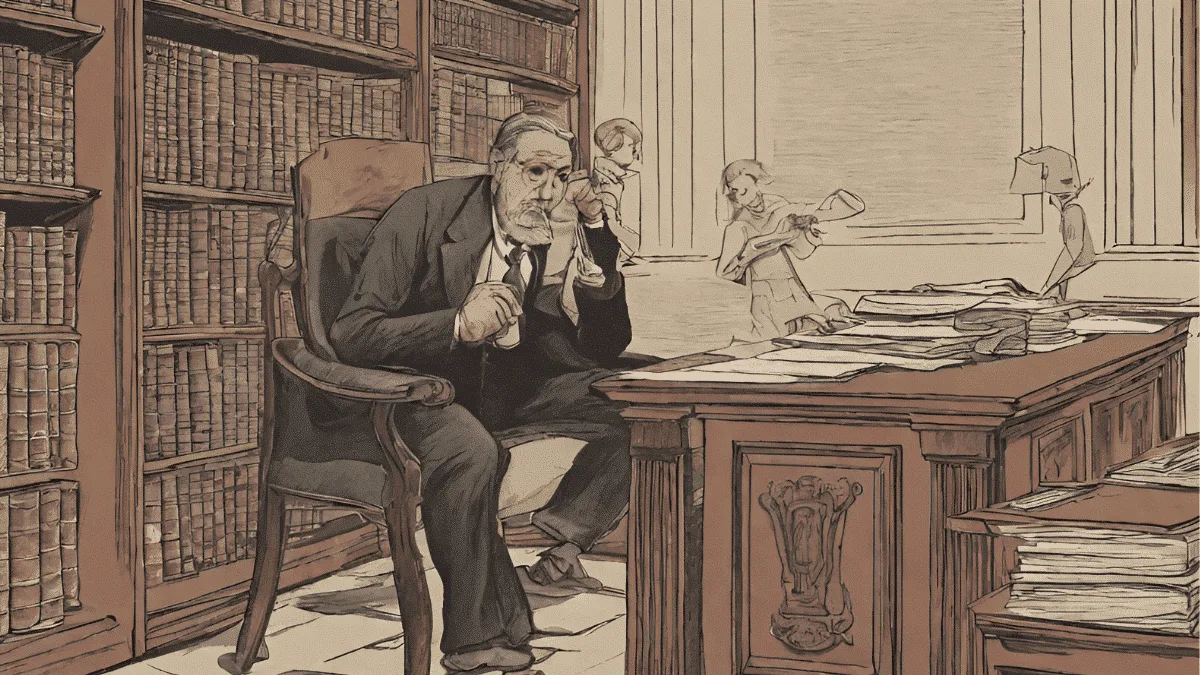
Legal Literacy - Critical Legal Studies (CLS) is an approach in legal studies that rejects the view that law is neutral or objective. This school of thought highlights the aspects of power, social structure, and inequality that underlie the legal system.
By:Miftakhul Shodikin


What is Critical Legal Studies (CLS)?
Critical Legal Studies (CLS) is an approach in legal studies that emerged in the late 20th century and offers a critical perspective on the traditional legal system. CLS rejects the view that law is neutral or objective, and instead, delves into the aspects of power, social structure, and inequality that underlie the legal system.
This school of thought is suspicious of legal formalism, which only assesses legal rules technically without considering their social context.
What is the Purpose of Critical Legal Studies (CLS)?
The purpose of CLS is to delegitimize claims of truth, dismantle power and domination to form a just and equitable system, so that established legal doctrines can be reconstructed to reflect the existing pluralism of values.
What Aspects are Highlighted by Critical Legal Studies (CLS)?
CLS is more inclined to highlight social and economic dimensions by seeking to understand the impact of law on society as well as how law can be a tool of power used to perpetuate inequality.
Legal language is also an important focus, as CLS recognizes that language can influence the interpretation and application of law. Overall, Critical Legal Studies encourages critical questions about law and seeks to open insights into conflicts of interest, inequality, and power dynamics hidden within the legal system.
This approach has helped enrich discussions in legal science by highlighting the complexities and social consequences of legal policies and decisions.


















Comments
0Share your perspective politely, stay relevant, and focus on the article. Comments appear after moderation.
Join the discussion
Write a clear, polite response that stays on topic.
No comments yet. Be the first to discuss.
Comments will appear after moderation.