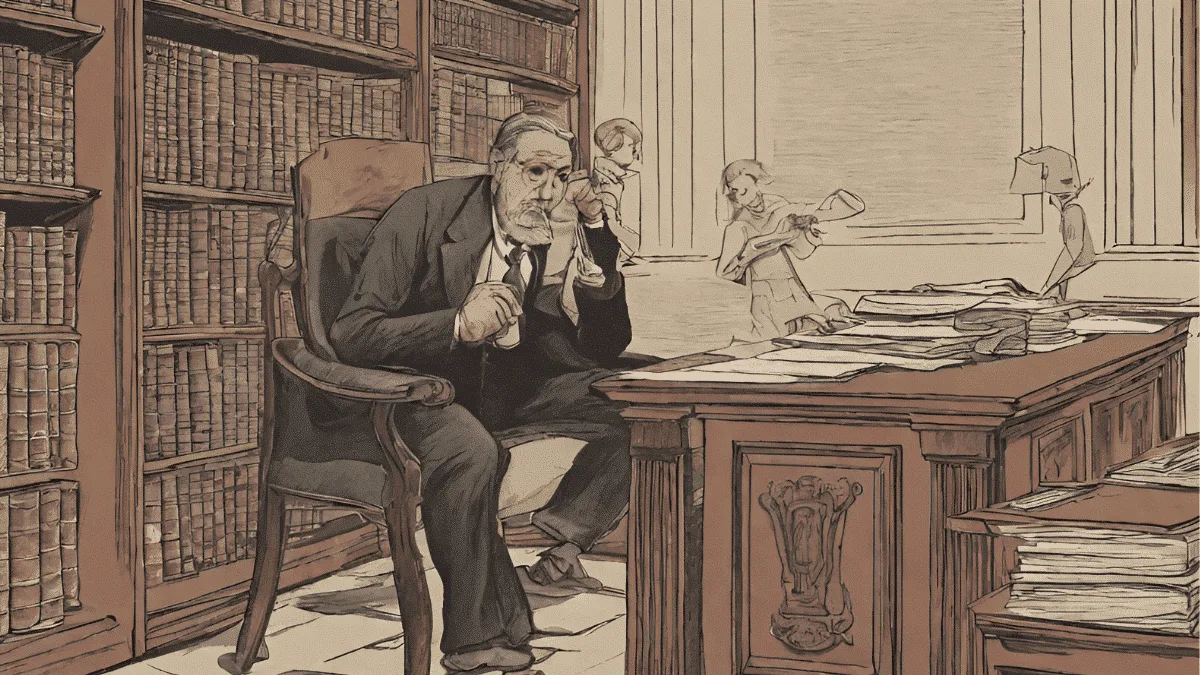
Law and Politics according to Critical Legal Studies (CLS)
In its view, CLS reveals that law is a variable that depends on political variables. This means that the CLS's thinking lies in the fact that law is politics, so CLS rejects and attacks the beliefs of positivists in legal science.
CLS criticizes the prevailing law for being politically biased and never neutral. The legal doctrines that have been formed so far are actually more biased towards those who have power, so it is concluded that the law is flawed from birth because it is formed through political “battles” that tend to be biased and subjective for the benefit of certain groups.


In addition, CLS exemplifies how the law is always “disturbed” by political and economic interests in legislators who are making a law.
According to CLS, in every formation of laws, there must be two interests that overshadow it, namely the interests of power relations and market relations (economy).
Therefore, the “color” of the law will depend on the political regime in power. If the political system is authoritarian in character, then the legal product is repressive.
Conversely, if the political system is democratic in character, then the legal product is responsive. That is why law is a variable that depends on political variables, in other words, legal products also depend on political products.
Behind the law and social order that appear on the surface as something neutral, in reality it is full of certain interests that are biased in culture, race, gender, and even economic interests.
The legal doctrines that have been formed so far are actually more biased towards those who have power, be it economic, political or military power. Therefore, in understanding legal issues, it must always be seen from the context of power-relations.























Write a comment