
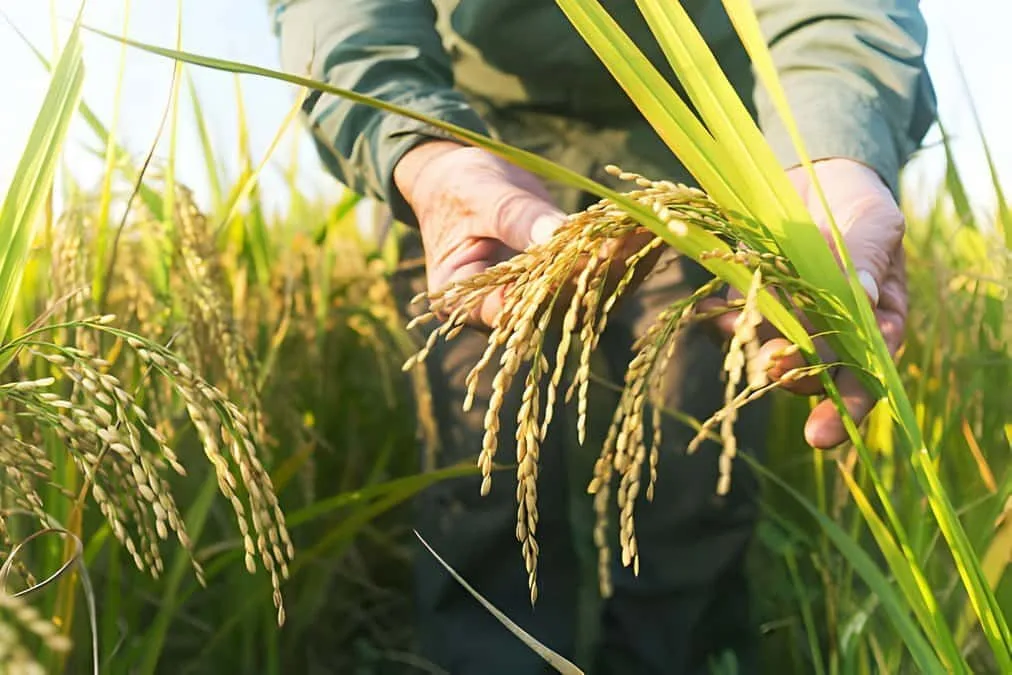
Legal Literacy - The Indonesian government issued an important policy to maintain national food security by providing Forest Areas for Food Security or Food Estate. However, this policy has sparked controversy because it converts protected and production forest areas for the food estateproject. Along with this, indigenous peoples have become victims because they have lost their customary land. This article discusses the negative impacts of the policy food estate on the environment and indigenous peoples, as well as the criticisms leveled against this project.
By: Jordan Mordekhai (Founder of Circular Economy Society, Alumnus of Faculty of Law, Universitas Padjadjaran)


To maintain national food security, the government of the Republic of Indonesia recently officially issued a crucial policy in the form of the Minister of Environment and Forestry Regulation Number P.24/MENLHK/SETJEN/KUM.1/10/2020 Concerning the Provision of Forest Areas for Development of Food Estate, the provisions of which were slightly amended in the Minister of Environment and Forestry Regulation Number 7 of 2021 concerning Forest Planning, Changes in Forest Area Designation and Changes in Forest Area Function as well as Use of Forest Areas, where the Provision of Forest Areas for Development of Food Estate or what is later written as Forest Area for Food Security legitimizes the conversion of production forest areas and/or protected forest areas for the food estateproject. According to the Director General of Forest Planning and Environmental Management, Sigit Hardwinarto, this policy is a national strategic program and is considered quite urgent in order to support food sovereignty in the future.[1]
Instead of being considered urgent, the food estate policy as stipulated in the regulation has sparked controversy, leading to condemnation because the beleid regulation is controversial because Article 19 of the Minister of Environment Regulation Number 24 of 2020 concerning the Provision of Forest Areas for Development of Food Estate, states that; “the provision of Forest Areas for development of Food Estate using the KHKP determination mechanism, is carried out in: Protected Forest Areas; and/or Production Forest Areas. The Protected Forest area referred to according to the legal arrangement is a protected forest that is no longer fully functioning as a protected area in accordance with the provisions of laws and regulations”.[2]
In fact, it needs to be carefully noted that if the protected forest area referred to in Article 19 of the Minister of Environment and Forestry Regulation is not functioning, it should be restored to its function as stated in the Minister of Environment and Forestry Regulation No. P.105/MENLHK/SETJEND/KUM.1/12/2018 concerning Procedures for Implementing, Supporting Activities, Providing Incentives, as well as Guidance and Control of Forest and Land Rehabilitation Activities, not converted into the provision of forest areas for development of food estate.
This kind of political-legal ambivalence actually reaps appreciation when the government seems to invite us back to the era of colonialism where the domein verklaring principle is revived, which evicts lands as a synthesis of colonial agrarian legal politics based on the claim that the state owns all land that is not attached to individual ownership rights, such as protected forests. As a result, the resultant of the food estate policy is none other than the threat of environmental degradation and the welfare of communities living in protected forest areas, one of which is indigenous peoples.
Food Estate: Bad News for Food Security Based on Indigenous Community Wisdom
One of the biggest threatening challenges feared from the food estate program is the loss of certainty over the customary land of indigenous peoples, especially for indigenous peoples whose existence has not been recognized. In fact, a media report from tempo.co recently released a statement from the Secretary General of the Indigenous Peoples Alliance of the Archipelago (AMAN), Rukka Sombolinggi, who stated that; “So that indigenous peoples lose their pride in their sago, lose their bond with their land, so that when a company comes, they will say ‘just take it, it’s just sago’, even though that’s their food barn.”
Printing land for a 'handful' of rice for urban communities seems like a socio-ecological injustice that creates new trauma for communities after many cases of criminalization of indigenous peoples are found. Many criticisms have been leveled against this ambitious project, including damaging the ecosystem, negating the role of communities in protecting the environment, policies that are not proportional between the budget and the results to be achieved, and taking indigenous peoples' land without a consultation process, let alone free prior and informed consent.
In terms of the policy of granting permits for the use of forest areas, in 2021 the Ministry of Environment and Forestry still granted forest control permits to 259 HPH-HA concessions covering 18.4 million hectares and 295 IUPHHK-HT concessions covering 11.1 million hectares. In addition to this controversy, as of 2021 the Ministry of Environment and Forestry has also released forest areas for plantation and non-forestry cultivation with a total area of reaching 7.4 million hectares, which includes 21 thousand hectares of customary territory that have been seized through the release of forest areas for plantations since 2015-2020.[3]
Its relevance, if the policy food estate continues to be implemented without recognition of the customary territory of indigenous peoples, the existence of customary forests will be gradually eroded. Moreover, it must be acknowledged that the implications of Article 5 of Law Number 41 of 1999 concerning Forestry still raise questions because protected forests are now designated as state forests – a domein claim of 'state property'.
Recognition of Indigenous Peoples in the Concept of Legal Pluralism as the Only Way: A Conclusion
So, it is time for us to be open that the government's steps in establishing policies food estate to fulfill food security are considered inappropriate to be applied to a number of parties, especially in a situation where there is no recognition of indigenous legal communities. It should be remembered that long before the newly formed Unitary State of the Republic of Indonesia, the existence of indigenous legal communities has existed until now. Therefore, one way that reflects that the state has 'courtesy' towards the existence of indigenous peoples who have existed beforehand is by implementing legal policies (legal policy) in the form of granting recognition to indigenous legal communities as regulated in the mechanism in the Regulation of the Minister of Home Affairs Number 52 of 2014 concerning Guidelines for the Recognition and Protection of Indigenous Legal Communities.
Even if this mechanism is fulfilled, there is still a 'stumbling block' because the state recognition given is still a prerequisite. John Griffits through the theory of legal pluralism conveys that; “state recognition of customary law is a phenomenon of weak legal pluralism to create a parallel legal system where the centralism/control of state law remains the main focus, including in this case the state of Indonesia (information added)”.[4]
Therefore, the only best way is to reconcile that legal pluralism is part of the reality of life. In practice, Indonesia needs to hold a grand legal reform agenda, namely by unraveling the restrictions imposed by the 1945 Constitution of the Republic of Indonesia, especially in the phrase 'as long as it still exists' because the wording of the article has the potential to deny the original legal characteristics of the Indonesian nation which are living law, meaning that customary law lives, grows and develops with the community so that it does not easily die.
After that, the Indonesian government is invited to reflect on the policy self-regulation through the policy of recognizing customary villages as the best alternative solution that is stronger and more suitable to the inner atmosphere of the Indonesian nation which is plural at this time. This is because Article 76 of Law Number 6 of 2014 concerning Villages states that; “Village Assets can be in the form of… village-owned forests”.
This article contains the logical implication that without the presence of a regional regulation on the recognition of indigenous legal communities from the Government, customary forests still exist through the village asset management mechanism. Meanwhile, the best alternative way from a comparative study of countries also finds that the collaborative approach model carried out by Russia in recognizing indigenous legal communities can be exemplified through the process of recognizing origin rights by following the development of the ethnopolitical process involving a systemic approach based on the historical material of indigenous legal communities clearly approached from various dimensions such as; historical, legal-historical, value-normative, anthropological.
That way, state recognition is not limited to regulatory norms, but also real control over land historically so that customary forests continue to exist.[5]Only after that, can we talk about policies food estate in any variety can be passed to maintain the food security of the Indonesian nation in the future.
So does the state still perpetuate food estate, while marginalizing the position of indigenous legal communities over their land?
References
- [1] An nisa Ayu Mutia, Regulation of Food Estate Development in Forest Areas to Realize Food Security in Indonesia, Bina Hukum Lingkungan, Volume 6, Number 2, February 2022, p. 226
- [2] Article 19, Regulation of the Minister of Environment and Forestry Number 24 of 2020 concerning the Provision of Forest Areas for Food Estate Development.
- [3] Indigenous Peoples Alliance of the Archipelago, Resilient in the Midst of Crisis, End of Year Notes 2021, p. 24
- [4] John Griffiths, “Understanding Legal Pluralism, A Conceptual Description”, in Legal Pluralism: An Interdisciplinary Approach, ed. Association for Community and Ecological Based Law Reform (HuMa) (Jakarta: Association for Community and Ecological Based Law Reform [HuMa], 2005, pp. 74-80.
- [5] Maksim Zadorin, et.all, Governance principles of collaboration between state and indigenous peoples of Arkhangelsk Governorate – Based on archive materials, Advances in Social Science, Education and Humanities Research, volume 332, Proceeding on Advances in Social Science, Education and Humanities Research, p. 155



















Comments
0Share your perspective politely, stay relevant, and focus on the article. Comments appear after moderation.
Join the discussion
Write a clear, polite response that stays on topic.
No comments yet. Be the first to discuss.
Comments will appear after moderation.