
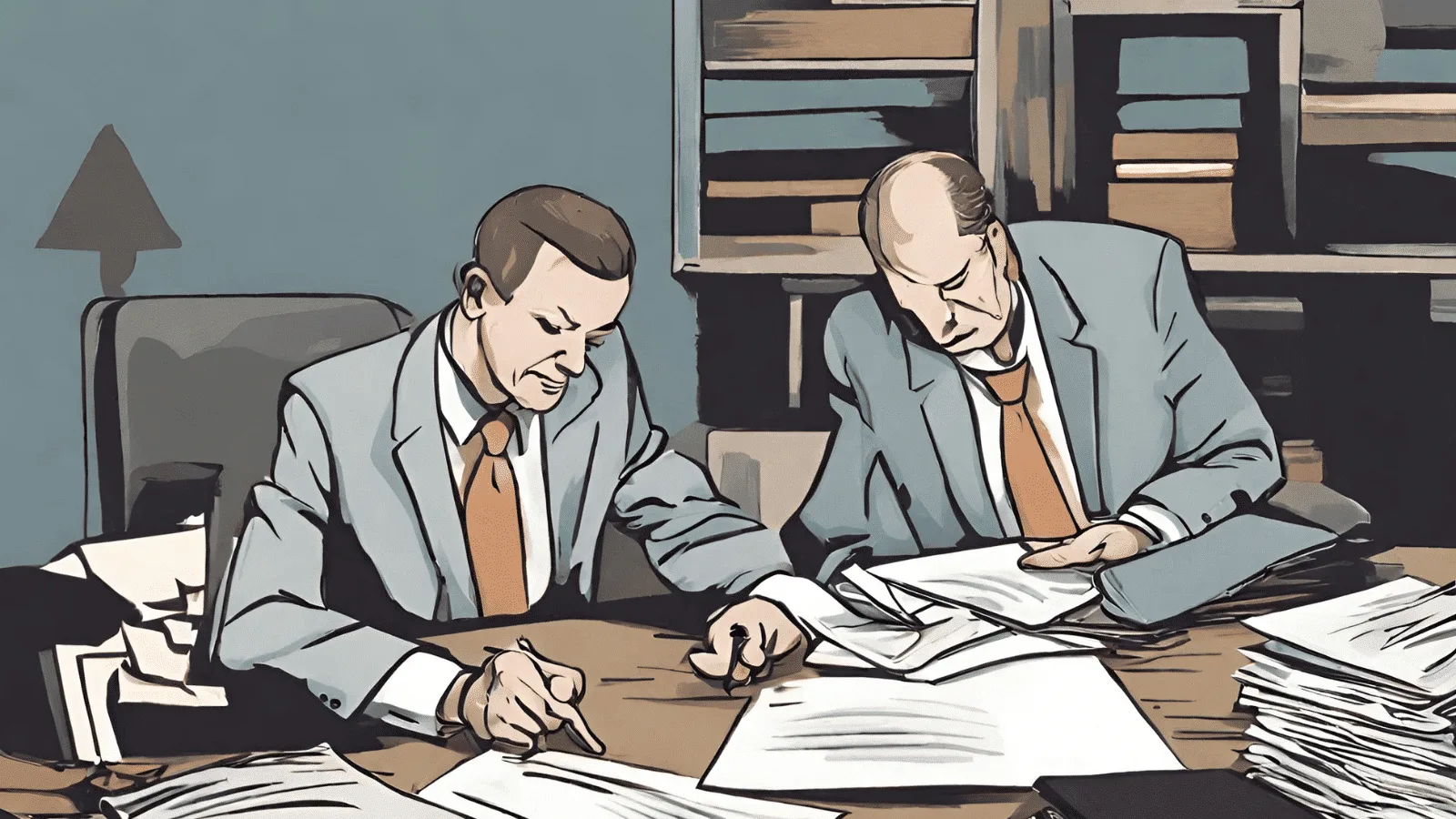
Legal Literacy - Avoid legal risks! Understand 5 legal consequences that are often overlooked when violating an agreement. Learn about compensation, cancellation, fines, and more.
Definition of Agreement
An agreement is an understanding between two or more people regarding a specific matter that is agreed upon by them. Agreements can be made orally or in writing.


Legally, agreements are regulated in the Indonesian Civil Code (KUHPerdata), specifically in Article 1313 which reads:
"An agreement is an act whereby one or more persons bind themselves to one or more other persons to do something or not to do something.."
Conditions for the Validity of an Agreement
Conditions for the validity of an agreement are regulated in Article 1320 of the Civil Code (KUHPerdata), namely:
- Agreement of those who bind themselves
- Capacity to create an engagement
- A specific matter
- A lawful cause
Types of Agreements
Types of agreements include:
- Consensual agreement: an agreement that arises solely from the agreement of the parties, for example, buying and selling, renting, and exchange.
- Real agreement: an agreement that arises from the delivery of an object, for example, borrowing and lending, and pawning.
- Formal agreement: an agreement that must be made in a specific form determined by law, for example, marriage and grants.
Function of Agreements
Functions of agreements include:
- Affirming the rights and obligations of the parties
- Providing legal certainty
- Facilitating dispute resolution
Examples of Agreements
Examples of Agreements in daily life include:
- Sale and purchase agreement
- Lease agreement
- Employment agreement
- Credit agreement
When Does an Agreement Become Effective and Terminate?
Entry into force of an agreement:
- Written Agreement:
- Since it is signed by all competent parties (adult and mentally sound).
- The effective date is specified in the agreement
- Verbal Agreement:
- Since an agreement is reached between all competent parties
Termination of an agreement:
- Fulfillment of the agreement's purpose: Example: in a sale and purchase agreement, the agreement ends after the buyer receives the goods and the seller receives payment.
- Lapse of the specified time: Example: in a lease agreement, the agreement ends after the lease period ends.
- Cancellation of the agreement: Cancellation can be carried out by one of the parties or by mutual agreement; Reasons for cancellation: default, mutual agreement, or other legitimate reasons.
- Merger or consolidation of parties in the agreement: Example: two companies that merge, then the agreement made by one of the companies will end.
- Changes in legislation: If the legislation underlying the agreement changes, the agreement may terminate.
- Court decision: The court may decide to terminate the agreement if there is a default or other legitimate reason.
5 Legal Consequences of Breaching an Agreement

Breaching an agreement, or in legal terms called default, can lead to various legal consequences that are often not realized by the parties. Here are 5 legal consequences that you need to know:
1. Compensation
The party who suffers a loss due to default is entitled to demand compensation from the violating party. This compensation can be in the form of:
- Actual damages:compensation for actual losses incurred
- Moral damages:compensation for non-material losses (e.g., mental suffering)
- Compensation for expected profits:compensation for profits that should have been obtained
2. Cancellation of Agreement
The injured party has the right to cancel the agreement if the default is serious enough. The cancellation of this agreement may result in:
- Refund:money that has been paid is returned to the party canceling the agreement
- Return of goods:goods that have been received are returned to the party in breach of the agreement
3. Compelling Performance of the Agreement
The aggrieved party may compel the breaching party to perform the agreement. This can be done through:
- Lawsuit to court:a lawsuit is filed to the court so that the breaching party is punished to carry out the agreement
- Court execution:if the breaching party does not want to carry out the court's decision, then a court execution can be carried out
4. Fine
The agreement may contain a penalty clause which requires the breaching party to pay a fine to the aggrieved party.
5. Termination of Business Relationship
If the default is committed in a business relationship, the aggrieved party may terminate the business relationship with the breaching party.
Case Example
Andi and Budi agreed to buy and sell a house. Andi has paid a down payment, but Budi does not want to hand over the house. In this case, Andi can claim compensation, cancellation of the agreement, or force Budi to hand over the house.
Tips
- Before making an agreement, read it carefully and understand all of its contents.
- If you are not sure about the contents of the agreement, consult with an advocate or legal consultant.
- If a default occurs, immediately contact an advocate or legal consultant to get legal assistance.




















Comments
0Share your perspective politely, stay relevant, and focus on the article. Comments appear after moderation.
Join the discussion
Write a clear, polite response that stays on topic.
No comments yet. Be the first to discuss.
Comments will appear after moderation.