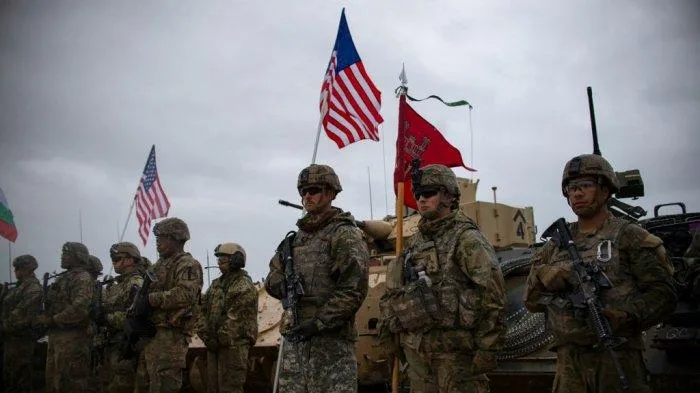
When discussing the Draft Law on the Indonesian National Army (RUU TNI), questions arise regarding how the role of the military is regulated in a civilian context in the United States compared to Indonesia. When we discuss the role of the military in law enforcement and civilian politics in the United States, it is important to understand that there are significant differences between policies in the US and in other countries, including Indonesia. In the United States, military involvement in civilian affairs is strictly regulated to prevent abuse of power and maintain a balance between civilian and military authority.
Regulations on Military Involvement in Law Enforcement: Posse Comitatus Act, Insurrection Act, and the Role of the National Guard
In the United States, the role of the military in civilian affairs is strictly regulated. The country's constitution and policies place civilian supremacy over the military as a fundamental principle. The president, as commander-in-chief, is elected from civilian ranks, and the military is not allowed to engage in politics or civilian law enforcement. One of the main pillars of this policy is the Posse Comitatus Act which was passed in 1878. This law explicitly prohibits the use of the military to enforce domestic laws except in emergency circumstances that have been approved by Congress. The historical background relates to the Reconstruction period after the Civil War, where the military was used to enforce federal policies in the Southern states. To prevent the abuse of military power as a political instrument, Posse Comitatus Act was enacted.


Although there is a general prohibition, there are certain exceptions regulated in the Constitution and other laws. One of the main exceptions is the Insurrection Act, which allows the president to use the military in situations of armed rebellion or when the law cannot be enforced by civilian authorities. However, the use of Insurrection Act this is very rare and is considered a last resort. In addition, the United States has the National Guard (National Guard), which operates under the control of state governors and is not included in the scope of Posse Comitatus Act. The National Guard can be used more flexibly to handle emergency situations at the state level. In certain situations, the National Guard can be 'federalized' (federalized') and placed under the control of the president, especially when a broader response is needed or when the situation exceeds the state's capacity.

















Write a comment