World News Day for Journalists or Political Buzzers?
Amidst the rise of political buzzers, Indonesian journalism faces a crisis of confidence. This opinion piece examines the irony of World News Day 2025 and the call for the media to return to its dignity as the last bastion against...

Opinion Note
This opinion article was written by a contributor/columnist. The views expressed are entirely the responsibility of the author and do not necessarily represent the views of the editors.
CONTRIBUTOR PROGRAM
You can become a columnist at Legal Literacy.
Submit your legal opinion/analysis writing. If it is published, you have the opportunity to obtain a payout/honorarium in accordance with the provisions.
Legal Literacy- World News Day (World News Day) which falls on September 28 should be a celebration of the victory of journalism. However, in the midst of the current situation, this celebration feels like a bitter irony—like dancing on the grave of the mass media. When political buzzers dominate the timeline with millions of rupiah, professional journalists are forced to compete with anonymous accounts that have no moral responsibility.
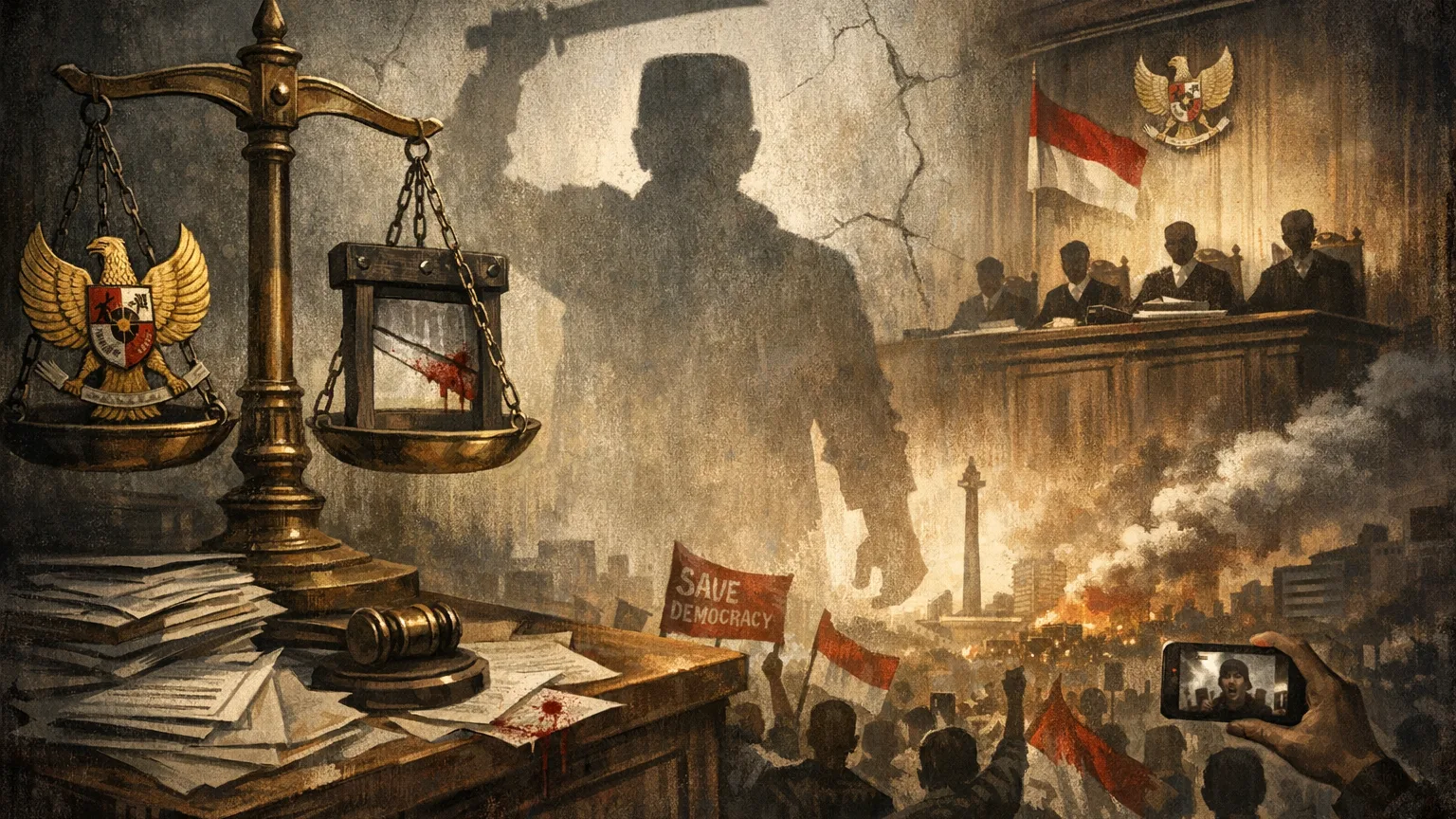
If we look at the situation in Indonesia in the last few months, we can clearly see how social media has become an arena for incredibly heated narrative battles. Remember the massive demonstrations in August-September 2025? The wave of protests stemmed from public disgust at the attitude of the political elite. Videos of council members dancing in the midst of a crisis, followed by controversial statements about salaries, exploded on the timeline. Some people who were initially indifferent eventually became angry.
Public anger peaked after tragic news emerged about an online motorcycle taxi driver who died after being run over by a tactical vehicle during the action. The moments of the incident went viral everywhere, triggering widespread solidarity and anger. However, the situation became even more complicated with the presence of political buzzers. In Indonesia, the existence of buzzers can be identified through anonymous social media accounts that often create provocative, intimidating and tendentious narratives. Instead of helping to clarify information, they actually muddy the waters with various counter-narratives. Some try to underestimate the victims, some are busy diverting the issue, and some deliberately amplify the provocation. In essence, buzzers manipulate public emotions for certain political interests.
This phenomenon shows how buzzers are no longer small actors on the periphery. Buzzers on social media can also be called opinion makers (opinion makers) for their central and dynamic role. They present information wrapped in photos, digital posters, videos and stories that are designed to be attractive and easy to understand. The aim is for netizens to be interested in themselves and follow the reasoning of the information maker. They have networks, funds and often move in an organized manner.
Unfortunately, some media outlets are being swept along. Instead of upholding journalistic standards, they broadcast news without verification, even complying with certain orders. As a result, the media, which should be an anchor of truth, has instead become part of the propaganda machine.
This is the reason why
Support
• Indonesian Legal Literacy
Read more comfortably, while supporting literacy.
Join Membership or submit your article for publication.
Membership
Read without ads, focus more, and access premium features.
Submit Article
Submit your writing—we curate and help publish it. If it is published, you have the opportunity to earn points/payouts according to the terms.

















Comments
0Share your perspective politely, stay relevant, and focus on the article. Comments appear after moderation.
Join the discussion
Write a clear, polite response that stays on topic.
No comments yet. Be the first to discuss.
Comments will appear after moderation.