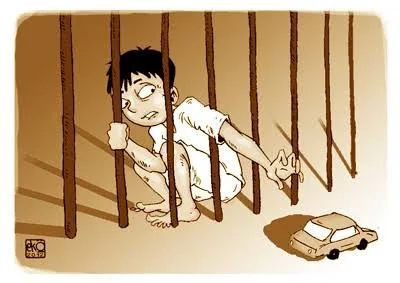
Legal Literacy - This article discusses in depth regarding Diversion in the Juvenile Criminal Justice System in Indonesia.
Restorative Justice in Child Criminal Cases
Indonesia is entering a new era in the system of criminal law Indonesia. The reformation of Indonesian criminal law has led to many developments, one of which is restorative justice (restorative justice) as a criminal law paradigm that emphasizes the goal of achieving justice through recovery and improvement of the situation after a criminal event. Restorative justice emphasizes justice through retribution efforts, while restitutive justice emphasizes justice through compensation. The view of a crime also differs between retributive justice (crime is formulated as a violation against the state) and restorative justice (crime is formulated as a violation of one person against another). Therefore, this writing will discuss in detail everything about diversion in child criminal law.
In this case, government officials have their authority expanded as widely as possible through discretionary efforts as stipulated in Law No. 2 of 2002 concerning the Indonesian National Police. Of course, law enforcement officials, through discretionary efforts, can take authority in a criminal act with a certain action to stop or continue through a policy that has been made. In addition, the diversion system is an obligation that must be carried out in the juvenile justice process as stipulated in Law Number 11 of 2012 concerning the Juvenile Criminal Justice System (hereinafter referred to as UU SPPA).
Children are the nation's future generation who will continue the relay of a nation's government, therefore legal protection must be specifically regulated for children. The Convention on the Rights of the Child (Convention on the Rights of the Child) which has been ratified in Presidential Decree Number 36 of 1990, Law Number 4 of 1979 concerning Child Welfare and Law Number 23 of 2002 concerning Child Protection and Law Number 11 of 2012 concerning the Juvenile Criminal Justice System. All these regulations seek to provide legal protection for children based on general principles, namely non-discrimination, respect for child participation, attention to child survival, and prioritizing the best interests of the child's welfare.
History of the Diversion Concept
The concept of diversion originated in the 19th century, marking the beginning of juvenile justice, which aims to ensure that the treatment of children is not the same as the treatment of adults. Diversion is present as a non-penal approach or persuasive action and provides an opportunity for children to correct mistakes.
The presence of diversion has the primary goal of ensuring that children do not experience coercion, torture, and violence in the judicial process until their conviction. The background for the implementation of diversion is as a preventive effort against the negative effects that could potentially arise on psychological development if the resolution is carried out through the criminal justice system in general. Diversion has urgency in guaranteeing children's human rights and preventing the stigma of being a naughty child against children in conflict with the law. Therefore, the law can be enforced without torture and violence against children and provide an opportunity for children to correct mistakes without going through criminal punishment by the state that has power in a country.
Objectives of Diversion

Diversion is a process of diverting child criminal cases from the criminal justice process to outside the criminal justice process, which only applies to children aged 12 years up to children who have not reached 18 years as referred to in Article 1 of the Juvenile Criminal Justice System Law. It is also explained in Article 6 regarding the objectives of diversion, including:
- achieving peace between the victim and the Child;
- resolving Child cases outside the judicial process;
- avoiding Children from deprivation of liberty;
- encouraging the community to participate; and e. instilling a sense of responsibility in Children.
Diversion in its application must certainly pay attention to 2 formal requirements as stipulated in Article 7 paragraph (2) of the Juvenile Criminal Justice System Law. The first requirement is that the crime committed by the child is a crime with a threat of imprisonment of under 7 years. The second requirement is that the crime committed by the child is not a repeat offense.
The result of holding diversion is an agreement between the two parties. The agreement must obtain the approval of the victim, unless the crime is a violation, a minor crime (a crime punishable by a maximum imprisonment of 3 months), a crime without a victim (crime without victim), or a crime whose value of loss is no more than the local provincial minimum wage.
Termination of Diversion
Diversion can end with an agreement in the form of:
- peace with or without compensation;
- return to parents/guardians;
- participation in education or training at LPKS for a maximum of 3 months; or
- community service
Diversion Regulations
The implementation of diversion is outlined in PERMA Number 4 of 2014 concerning Guidelines for the Implementation of Diversion in the Juvenile Criminal Justice System. After the issuance of the Decree of the Head of the Court regarding diversion, the relevant judge/facilitator issues a Decree on the Diversion Deliberation Day. The implementation of diversion in court is attended by the parties accompanied by community advisors, professional social workers, community representatives, and other parties deemed necessary to be involved in the diversion deliberation.
Failure of the diversion process according to the report from the community advisor of the correctional center, the judge as facilitator can continue the case into the court which is subject to the Juvenile Criminal Justice Procedure Law. The judge must also consider the implementation of part of the diversion agreement. Regardless of the content of the diversion agreement, the judge/diversion facilitator cannot be held liable civilly or criminally.
Comments (0)
Write a comment