World News Day for Journalists or Political Buzzers?
Amidst the rise of political buzzers, Indonesian journalism faces a crisis of confidence. This opinion piece examines the irony of World News Day 2025 and the call for the media to return to its dignity as the last bastion against...

Opinion Note
This opinion article was written by a contributor/columnist. The views expressed are entirely the responsibility of the author and do not necessarily represent the views of the editors.
CONTRIBUTOR PROGRAM
You can become a columnist at Legal Literacy.
Submit your legal opinion/analysis writing. If it is published, you have the opportunity to obtain a payout/honorarium in accordance with the provisions.
World News Daywe must interpret it seriously. There are three important things that press people need to keep in mind.First, return to basic principles.The media must adhere to journalism that is accurate, verified and independent. The public needs information that can be trusted, not hasty news that only attracts clicks. If the media constantly chases sensation, they will eventually lose credibility. Once credibility is lost, the public will run to alternative sources of information that are often more dangerous because they do not have ethical standards. Ironically, during the August-September 2025 Action, many people actually reported to international media due to the lack of coverage from local media.Second, keep your distance from political interests.The media must dare to keep their distance from buzzers and political orders. Media that are subject to these interests are no longer a free press, but a propaganda mouthpiece. If this practice continues, the public will find it increasingly difficult to distinguish between real and fabricated news, which can ultimately destroy trust in the media altogether.Third, adapt without losing your mission.The media does need to adapt to the digital era. However, adaptation does not mean sacrificing the main mission. In the midst of an information flood, the public increasingly needs in-depth coverage, investigations and reports that are truly on the side of the public interest, not just becoming a factory of trivial content that goes viral for a moment.
The Press Law and the Journalistic Code of Ethics have affirmed thatfreedom of the press comes with responsibility. This means that the media is free to report anything, but not free to spread lies. Unfortunately, in the field we often see the media forgetting this obligation due to business pressure or closeness to power. For example, currently many news media only contain ceremonial government agendas or narratives of politicians who are mutually condemning without providing substantive evaluation.
As a society, we also have a role. Media literacy is key so that we are not easily consumed by false issues. Don't just believe something because it's viral. We need to learn to sort information, compare sources, and be more critical. An intelligent public can put pressure on the media so that they do not work arbitrarily.
However, the main responsibility remains on the shoulders of the media. The momentumWorld News Daythis must be a loud call: the media must stand firm on press law and the journalistic code of ethics. Don't be tempted by involvement (engagement) pseudo. Do not submit to orders from buzzers or unethical political power. Conventional media, in particular, must maintain their dignity because the public still considers them a more reliable source of information than the misty world of cyberspace.
In the end,World News Day2025 should be a turning point. Journalism is not just a job, but a social responsibility. We need a press that dares to say "no" to buzzers, to political orders, and to cheap sensations. We need a press that returns to its mission: to voice the truth, to oversee power, and to side with the people.
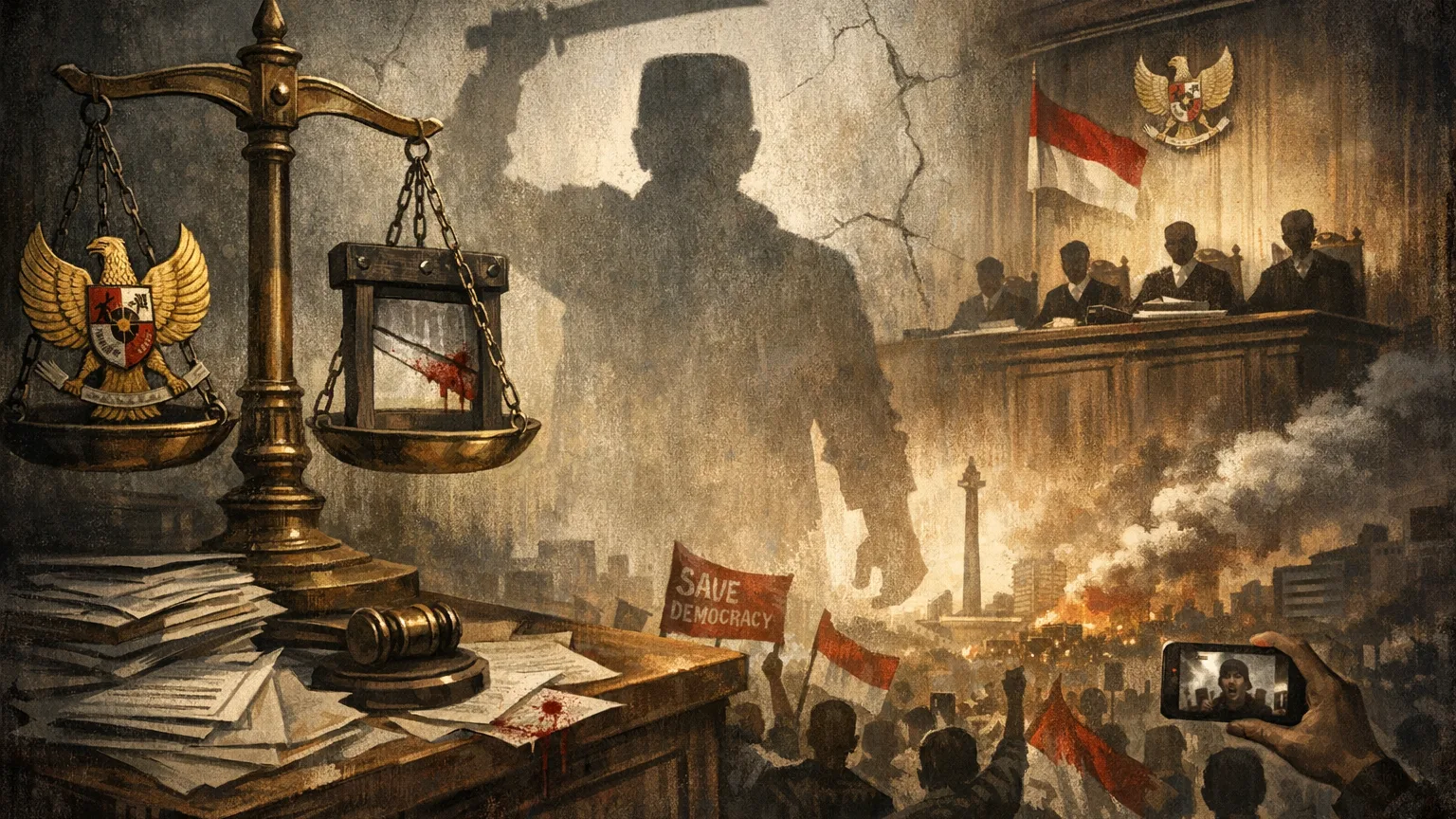
If the media gives in to the temptation of the number of clicks/views and political orders, our democracy is at stake. But if the media remains steadfast, it can becomethe last bastion against the tide of disinformationThe future of Indonesian democracy will be greatly determined by the courage of the media today.
Support
• Indonesian Legal Literacy
Read more comfortably, while supporting literacy.
Join Membership or submit your article for publication.
Membership
Read without ads, focus more, and access premium features.
Submit Article
Submit your writing—we curate and help publish it. If it is published, you have the opportunity to earn points/payouts according to the terms.















Comments
0Share your perspective politely, stay relevant, and focus on the article. Comments appear after moderation.
Join the discussion
Write a clear, polite response that stays on topic.
No comments yet. Be the first to discuss.
Comments will appear after moderation.