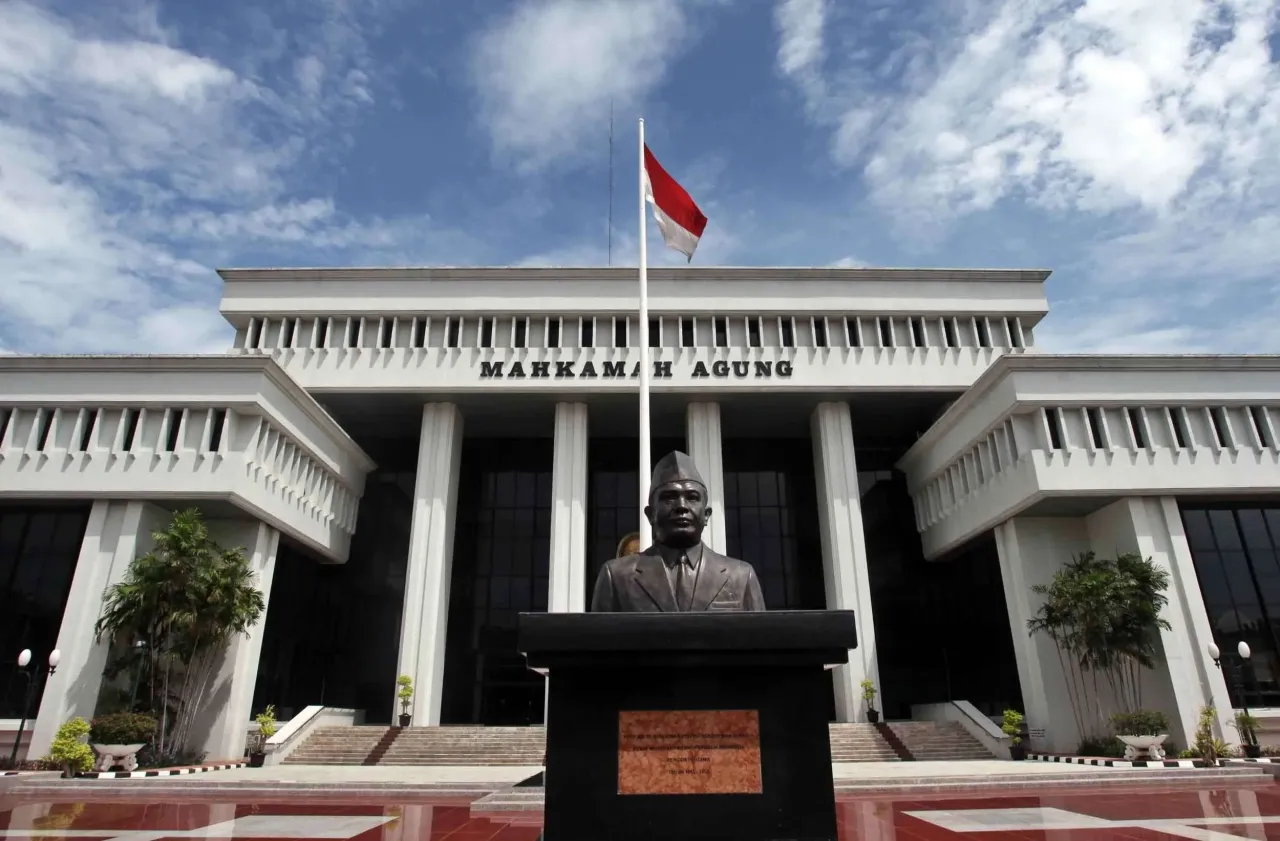
“The Supreme Court is an independent power to administer justice in order to uphold law and justice.”This statement is mandated by Article 24 paragraph (1) of the 1945 Constitution of the Republic of Indonesia. That Indonesia as a country requires an independent judicial institution that is free from the influence of executive and legislative powers. Article 24 paragraph (1) of the Constitution mentions several authorities of the Supreme Court, including adjudicating cassation cases, reviewing regulations under the law, and having other authorities granted by law.The authority to review regulations under the law or what is known as the Material Review Right is the right of the Supreme Court to assess the material content of a regulation under the Law against higher regulations. Sourced from the authority granted by the 1945 Constitution, if there is content in a regulation under the law that is suspected of being in conflict with the law, the examination is carried out by the Supreme Court. Then through the Material Review Right decision.The Supreme Court declares regulations under the law invalid on the grounds that they conflict with higher regulations or that their formation does not meet the applicable requirements. The process and procedures for testing are regulated through article 31A of Law Number 3 of 2009 concerning the Second Amendment to Law Number 14 of 1985 concerning the Supreme Court. The provisions above are then complemented by the Supreme Court by issuing Supreme Court Regulation Number 1 of 2011 concerning Material Review Rights.In practice, there are differences in the testing process by the Supreme Court compared to the testing practice in the Constitutional Court, or the trial of State Administrative cases and the State Administrative Court. The testing process by the Supreme Court is carried out in private, so the applicant does not know for sure the stages and testing process being carried out by the Supreme Court.In the absence of a trial hearing, the parties also cannot provide arguments to strengthen the application, or refute the application, or present experts or witnesses to have their statements heard. Without holding an open trial, the applicant cannot provide arguments to the fullest extent and convince the judge of the importance of the testing application.One of the important aspects that must be considered by the Supreme Court as part of the judicial power is the principle of open court principle, as one of the main principles in procedural law. This means that every stage of testing implementation, from the entry of the case through the registrar at the Supreme Court to the decision given by the judge, must be accessible to the public. So that the public can supervise the entire decision-making flow, thereby preventing judges from abusing their authority.
The Chaos of Judicial Review Rights in the Supreme Court
A comprehensive reform of the Supreme Court's authority in administering Judicial Review Rights
Opinion Note
This opinion article was written by a contributor/columnist. The views expressed are entirely the responsibility of the author and do not necessarily represent the views of the editors.
CONTRIBUTOR PROGRAM
You can become a columnist at Legal Literacy.
Submit your legal opinion/analysis writing. If it is published, you have the opportunity to obtain a payout/honorarium in accordance with the provisions.
Support
• Indonesian Legal Literacy
Read more comfortably, while supporting literacy.
Join Membership or submit your article for publication.
Membership
Read without ads, focus more, and access premium features.
Submit Article
Submit your writing—we curate and help publish it. If it is published, you have the opportunity to earn points/payouts according to the terms.
Related Articles
See more





Popular Articles





Latest News
View all news



Public Space
See All





Pasang Iklan
Write a comment