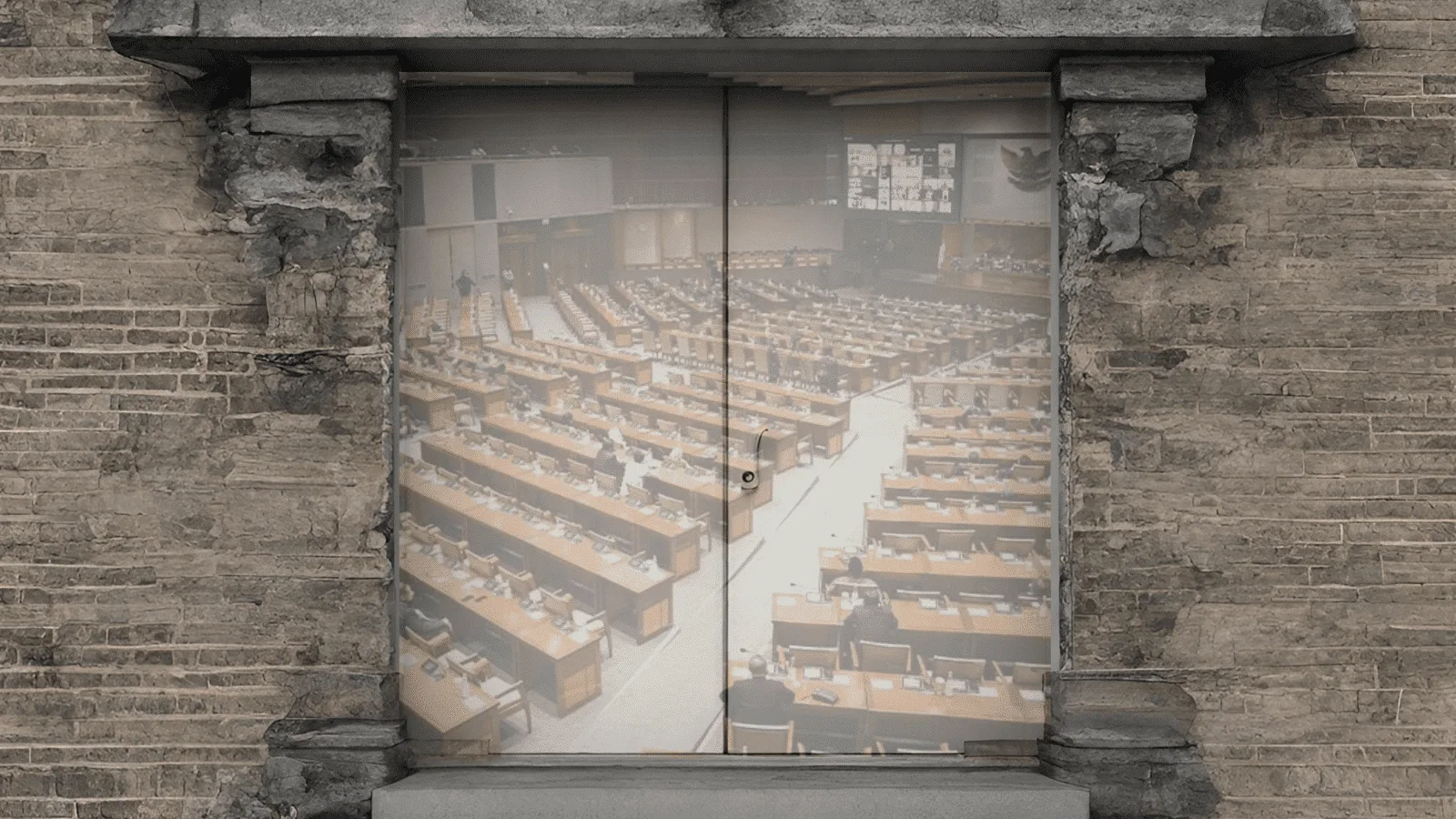
Decision of the Constitutional Court on the Parliamentary Threshold
Verdict Constitutional Court on the Parliamentary Threshold
On February 29, 2024, the Constitutional Court (MK) issued Decision Number 116/PUU-XXI/2023 which states that:
“In Constitutional Court Decision Number 116/PUU-XXI/2023 States that the norm of Article 414 paragraph (1) of Law Number 7 of 2017 concerning General Elections (State Gazette of the Republic of Indonesia of 2017 Number 182, Additional State Gazette of the Republic of Indonesia Number 6109) is constitutional as long as it remains valid for the 2024 DPR Election and conditionally constitutional to be applied to the 2029 DPR Election and subsequent elections as long as changes have been made to the parliamentary threshold norm and the amount of the parliamentary threshold figure or percentage by referring to the requirements that have been determined.”
Main Points of the Constitutional Court Decision:
- States that the norm of Article 414 paragraph (1) of Law Number 7 of 2017 concerning General Elections is constitutional as long as it remains in effect for the 2024 DPR Election
- States that the norm of Article 414 paragraph (1) of Law Number 7 of 2017 concerning General Elections is conditionally constitutional to be applied to the 2029 DPR Election and subsequent elections as long as changes have been made to the parliamentary threshold norm as well as the amount or percentage of the parliamentary threshold, guided by the specified requirements..
- CCdoes not provide concrete figuresfor the parliamentary threshold, and leaves it to the lawmakers to review and decide.
What is the Ideal Parliamentary Threshold to Apply in Indonesia?
Determining the ideal parliamentary threshold in Indonesia is a complex issue with various perspectives. Here are some arguments related to the parliamentary threshold:
Arguments for a parliamentary threshold:
- Strengthening the party system: Thresholds can encourage political parties to merge and consolidate, resulting in a stronger and more stable party system.
- Improving government effectiveness: With fewer parties, the legislative process and decision-making in government are expected to be more effective and efficient.
- Reducing political fragmentation: Too many political parties can lead to political fragmentation and make it difficult to form stable coalitions.
Arguments against the parliamentary threshold:
- Limiting the people's right to vote: Thresholds can limit the people's right to vote by eliminating small parties that represent minority voices.
- Weakening democracy: An overly concentrated party system can weaken democracy and give rise to the dominance of large parties.
- Strengthening oligarchy: Thresholds can hinder the emergence of new parties and strengthen existing political oligarchies.
Perludem Proposes a 1 Percent Parliamentary Threshold
Perludem, an election monitoring organization, proposes a 1 percent parliamentary threshold. This proposal is based on the Taagepera formula which takes into account the size of the electoral district and legislative seats.
Perludem believes that this 1 percent threshold is sufficient to filter out political parties that do not have significant support from voters, without reducing the proportionality of election results.
Simulation of the Application of a 1 Percent Threshold
Perludem conducted a simulation of the application of a 1 percent threshold in previous elections:
- 2009 Election:
- With a 2.5 percent threshold, 9 parties passed to the DPR.
- With a 1 percent threshold, 15 parties passed to the DPR.
- Wasted votes decreased from 19,047,841 to 10,146,823.
- 2014 Election:
- With a 3.5 percent threshold, 10 parties passed to the DPR.
- With a 1 percent threshold, 10 parties passed to the DPR.
- Wasted votes decreased from 2,964,975 to 1,142,067.
- 2019 Election:
- With a threshold of 4 percent, 9 parties passed to the DPR.
- With a threshold of 1 percent, 13 parties passed to the DPR.
- Wasted votes decreased from 13,595,845 to 2,115,159.
This simulation shows that a 1 percent threshold can produce a more representative parliament with the people's vote and minimize wasted votes.
Benefits of a 1 Percent Threshold
The application of a 1 percent threshold is believed to bring benefits, including:
- Simplifying the party system:Minimizing the number of parties in parliament, thereby increasing the effectiveness and efficiency of parliamentary work.
- Strengthening the presidential system:Facilitating the formation of stable and effective coalitions.
- Increasing the accountability of political parties:Encouraging political parties to focus more on programs and performance.
- Representing the people's voice more proportionally:Reducing wasted votes and ensuring the people's voice is represented in parliament.
Ultimately, determining the ideal parliamentary threshold needs to consider various aspects and interests, including:
- People's right to vote: It is important to ensure that the threshold does not limit the people's right to vote and allows for the representation of minority voices.
- Strength and stability of the party system: The ideal party system is one that is strong, stable, and able to represent the various aspirations of society.
- Government effectiveness: An effective and efficient system of government requires a supportive party system.
Conclusion
The implementation of a parliamentary threshold has its own benefits and challenges. It is important to consider the political and social context in each country before deciding to implement this system.
Information source
- Perludem: Ideally the Parliamentary Threshold in Indonesia is 1 Percent:https://nasional.sindonews.com/read/1331451/12/perludem-idealnya-ambang-batas-parlemen-di-indonesia-1-persen-1709222549
- Regarding the Parliamentary Threshold, PDI-P Reminds of the Importance of the Effectiveness of the Presidential System:https://www.kompas.id/baca/polhuk/2024/03/03/ihwal-ambang-batas-parlemen-pdi-p-ingatkan-pentingnya-efektivitas-sistem-presidensial
- Constitutional Court Considers the Figure of 4 Percent Unconstitutional, What is the Ideal Parliamentary Threshold?:https://www.kompas.id/baca/polhuk/2024/03/03/mk-nilai-angka-4-persen-inkonstitusional-berapa-ambang-batas-parlemen-ideal























Write a comment