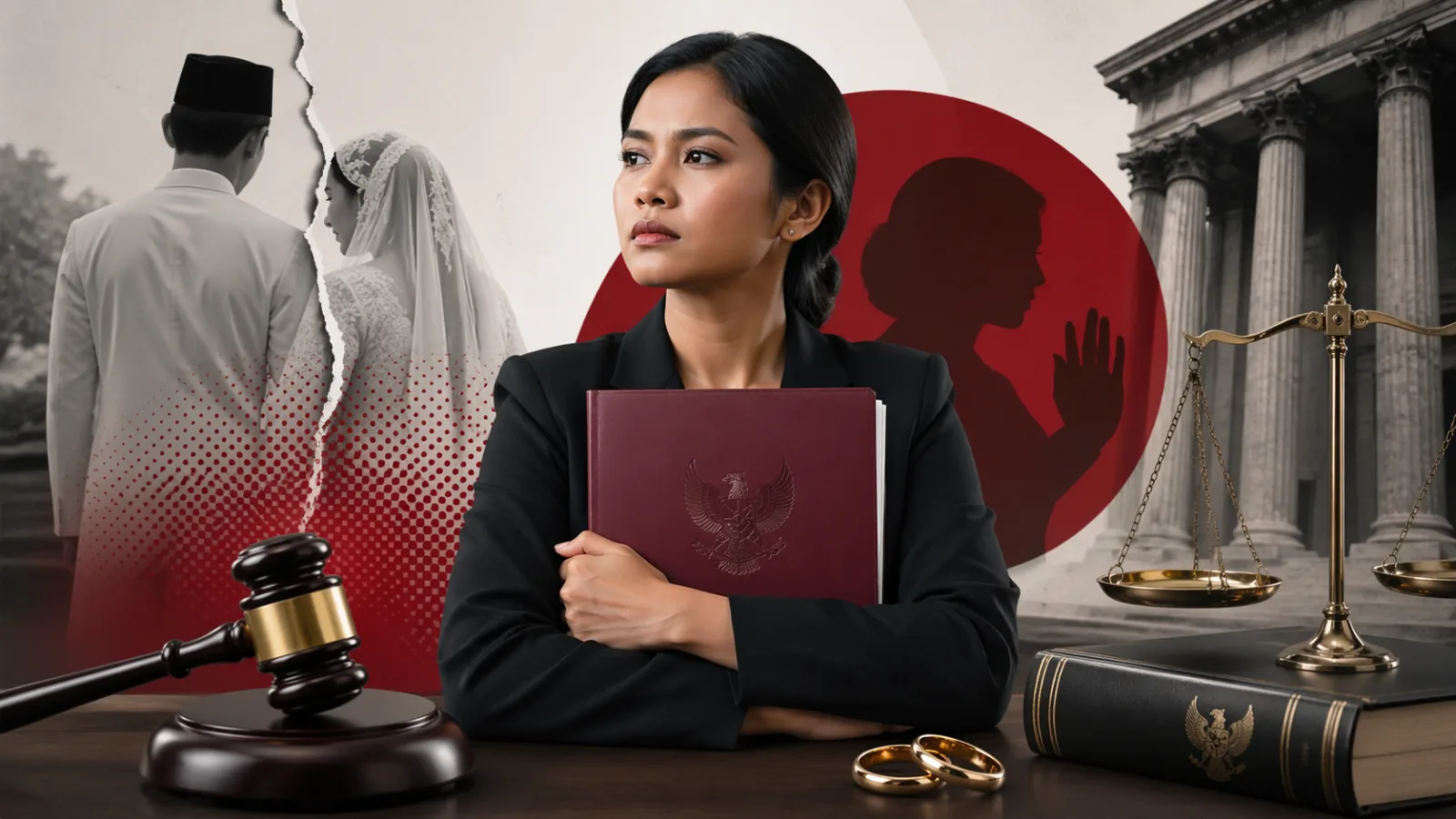
Legal Literacy - In this era of practicality, Nikah Siri has become a topic that sometimes emerges in Indonesian society, whether at family dinner tables or in serious discussions at coffee shops.

For some, Nikah Siri may sound like a quick and easy solution to various marriage problems—from financial constraints to administrative complexities.

But, is Nikah Siri really a solution or an entry point to new problems?

Express Solution or Shortcut to New Problems?

Nikah Siri is often seen as a shortcut for couples who want to get married immediately without the hassle of dealing with official documents. Similar to ordering food at a drive-thru, the process is fast, instant, and satisfies the desire to get married immediately.

But, like fast food, what looks delicious at first may not be so healthy in the long run. When couples choose Nikah Siri, they may not realize they are setting themselves up for bigger problems in the future.

Because suddenly issues related to inheritance, child custody, or other economic rights may arise. Without legal recognition, women in Nikah Siri marriages often lose the protection they should have.

What was initially intended as a solution has instead turned into a ticking time bomb. So, is it true that unregistered marriage is a quick solution? Or is it merely postponing a bigger problem?

Golden Child or a Child 'Married Off Secretly'?

One of the biggest dilemmas in unregistered marriage is the legal status of children born from the marriage.

These children, although born from the love of their parents, often do not receive proper legal recognition. Like golden children who have lost their luster, they grow up with an unclear status, making them vulnerable to various forms of discrimination and legal difficulties.

Some parents may argue that their children are still legitimate religiously, but when it comes to civil rights—such as birth certificates, inheritance rights, and access to education—the state cannot simply rely on documents from local religious officials.

Advertisement
Read without ads.
Join Membership

As a result, these children must face the harsh reality that their basic rights are ignored simply because their parents chose unregistered marriage. In the end, who actually benefits from this situation?

Two Sides of the Same Coin or a Narrow Escape?

Unregistered marriage and polygamy often go hand in hand, like two sides of the same coin. Many men use unregistered marriage as a way to legitimize polygamy without having to bother asking for the first wife's permission.

With the guise of being "religiously valid," they feel they have obtained a license to add wives without the risk of being punished by the state.

However, if we delve deeper, this unregistered marriage is more like a cheat code in a game—it looks fun and profitable at first, but it can lead to a game over, especially for the women involved.

Their rights are often violated, not recognized by law, and they have to live in the shadows of uncertainty.

Nikah Siri as a Weapon of Patriarchy

Unregistered marriage is often praised as a form of protection for women, especially in cases where official marriage is difficult to carry out.

However, let's be honest: often, unregistered marriage is used to trap women in a weaker position. This is where patriarchy comes into play, with the excuse of protecting women, but actually making them even more miserable.

Like a pig in a poke, women who marry in unregistered marriages are often unaware that they are being trapped in a situation that makes them even more powerless.

Without clear legal protection, they can be abandoned at any time, with their rights ignored.

Advertisement
Read without ads.
Join Membership

Isn't this contrary to the initial goal of unregistered marriage as a form of "protection"? Instead of protecting, unregistered marriage actually traps women in uncertainty.

Economic Uncertainty in Nikah Siri

One important aspect of marriage is economic security, something that is often ignored in unregistered marriage. Without legal recognition, women in unregistered marriages often have no rights to marital property, allowances, or even maintenance.

Like playing chess with only pawns—women must be prepared to face high economic risks, without any protection other than sweet promises from their partners.

When an unregistered marriage ends in divorce or the partner leaves, women often have to face the bitter reality that they have nothing.

'Playing it Safe' or Leaving Women Stranded?

The state often washes its hands of unregistered marriages, arguing that it is a personal and religious matter. However, shouldn't the state be present to protect its citizens, especially the most vulnerable?

By allowing unregistered marriages without clear regulations, the state actually increases the chances of women being abandoned, like a guest invited to a party but left alone in the corner of the room. When the state chooses not to act, women who marry in unregistered marriages are trapped in an uncertain situation.

Without legal protection, they are left to face various problems alone, ranging from economic uncertainty to child custody.

Shouldn't the state act to ensure that every citizen, including those who choose unregistered marriages, receives adequate protection?