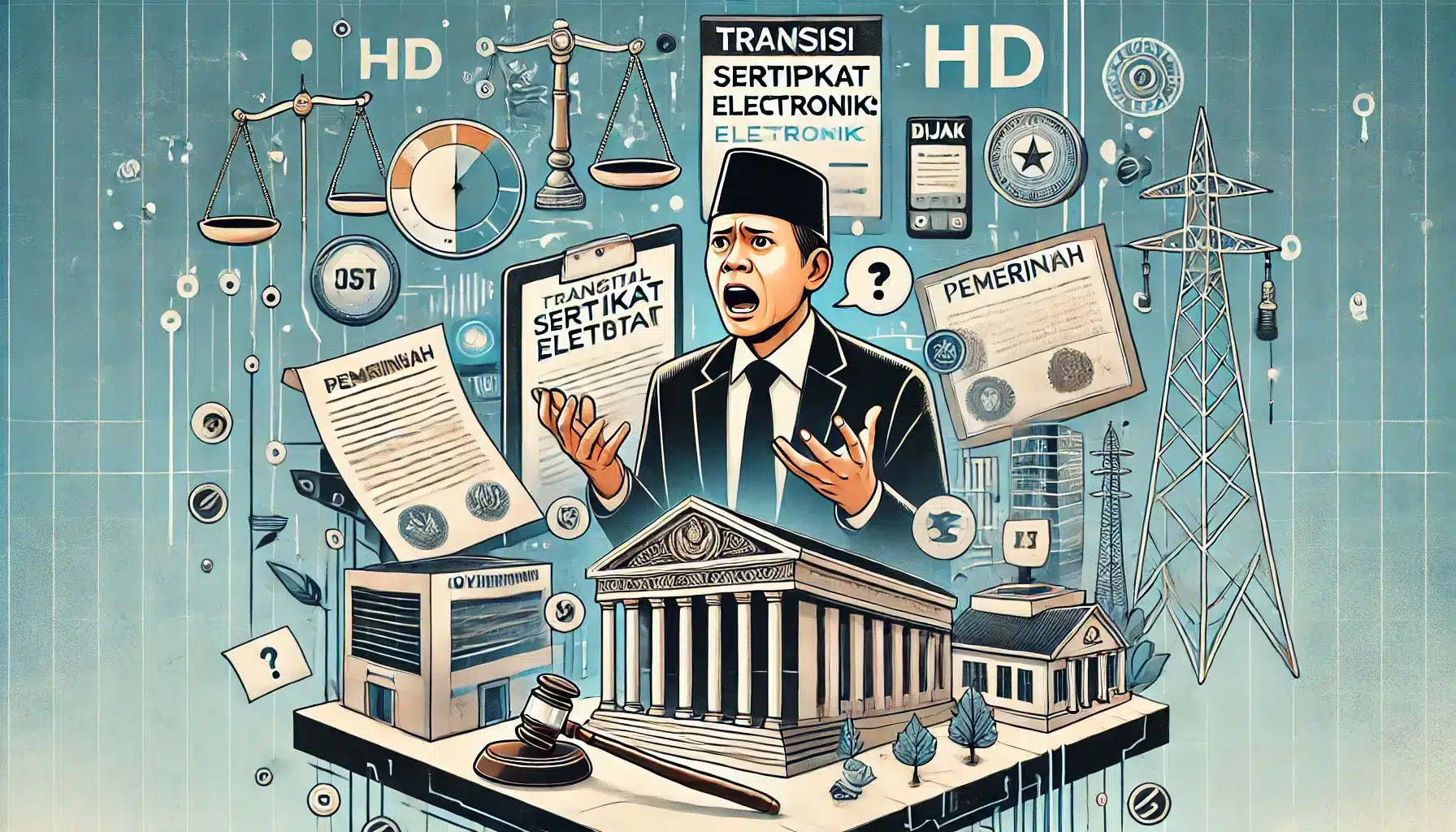
The initial target of this electronic certificate policy is to be applied first to state or government assets. However, it has recently been discovered that several cities and regencies have carried out electronic certification for assets owned by individuals or legal entities. It needs to be ensured that this implementation is carried out with full caution and thorough preparation so as not to cause difficulties for the people who are the subject of the policy.
The public must also understand that for now, there are two provisions regarding applications for land rights registration for the first time and maintenance of land registration data (such as buying and selling, grants, etc.). First, if the land certificate has not been issued electronically, the land book and analog certificate will be stamped "no longer valid" and issued in the form of an electronic land title certificate. Second, if the land certificate is already in electronic form, then for that edition it will be declared invalid and a new edition of the electronic certificate will be issued.


Notaries, PPATs, Banks, or land rights holders also need to understand the Recording Sheet. This sheet is separate from the electronic land certificate sheet and is used as an information sheet regarding notes that occur on the land title certificate. For example, a recording sheet for a lease agreement, a sale and purchase binding agreement, recording of mortgage rights, etc. The Land Office is expected to carry out massive socialization so that the public knows the types and products that will be owned after the media transfer from analog certificates to electronic certificates.
The Land Office must also provide the public with an understanding of the guidelines for reading data and information contained in the electronic land certificate. The data listed on the certificate is very limited, considering that it is only one sheet, compared to the previous analog certificate which was in the form of a book or stitched sheets. A good understanding of how to read electronic certificates will help the public feel more comfortable and confident in the security and accuracy of the recorded data.
The transition process from analog certificates to electronic certificates will go through a data validation stage to ensure the accuracy of electronic measurement letters and electronic land books. The activities carried out by the land office are then divided into two. First, certificates that have been validated and can be transferred into electronic land certificates. Second, certificates that require boundary arrangement, which means that measurements and reviews of existing boundaries at the location must be carried out by the land office. This is important to socialize well and correctly, because not all people understand the consequences that occur that their land must go through a boundary arrangement process. Clarity regarding the time and costs arising from the boundary arrangement must also be provided.






















Comments
0Share your perspective politely, stay relevant, and focus on the article. Comments appear after moderation.
Join the discussion
Write a clear, polite response that stays on topic.
No comments yet. Be the first to discuss.
Comments will appear after moderation.