Legal Literacy - Indonesian society is once again being debated with the release of the film “VINA: Before 7 Days” in theaters. This film highlights the murder case of Vina and her boyfriend Eky in Cirebon on August 27, 2016, which was initially suspected to be a single accident. This case, which has resurfaced after eight years, highlights the slow process law and the recent arrest of one of the perpetrators, Pegi Setiawan, which has sparked controversy. The police have released several suspects, but there is controversy regarding the alleged wrongful arrest. The public is urging fair and procedural law enforcement for this case, which has not yet reached its statute of limitations.
Stalled Justice in the “Vina Cirebon” Case
The public is again being debated with the release of the film VINA “Before 7 Days” in Indonesian Cinemas. The presence of the film has created pros/cons in law enforcement regarding the Vina case that occurred approximately 8 years ago in Cirebon, West Java. The deaths of Vina and her boyfriend Eky occurred on August 27, 2016, with the initial suspicion that the deaths were due to a single accident, but based on further investigation, the deaths of Vina and Eky were not caused by a single accident, but both were tragically murdered by a gang of motorcycle thugs.
Currently, the Vina case is viral on social media due to the lengthy time it has taken law enforcement to bring the perpetrators, especially the masterminds of the murder, to trial. The police released 3 people with DPO (wanted person) status, namely Andi, Deni and Pegi, along with 8 people who had been found guilty by the Court in 2017.
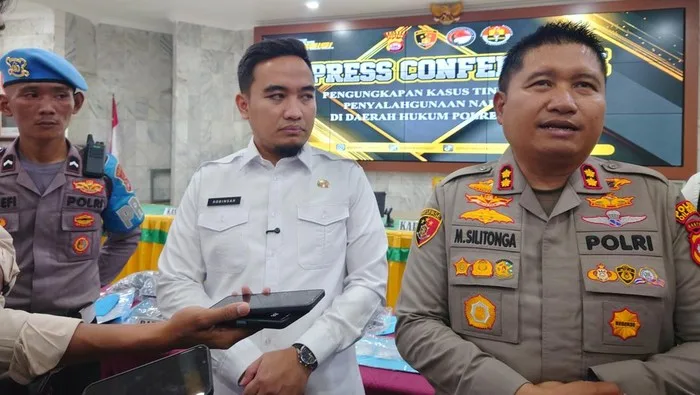
A glimmer of hope in the Vina case began to emerge when the police managed to arrest Pegi Setiawan alias Perong on May 21, 2024, but this instead caused pros/cons in the community who said that Pegi Setiawan was only a victim of wrongful arrest and was being sacrificed because of the public's perception that one of the perpetrators being hunted was the child of an official. Public perception is also focused on the police press conference which removed 2 names, namely Andi and Deni, from the wanted list (DPO). According to the author, the emergence of the Vina case in the midst of society must be responded to logically and with legal reasons. There are 2 things that need to be seen, first regarding the statute of limitations of the case and second regarding evidence.
Case Expiration
Basically, “every case has a time limit for filing a claim (omnes actiones in mundo infra certa tempora habent limitationem)”. The law enforcement process in the Vina case can be said to have taken a long time, namely 8 years.
In the context of Indonesian criminal law, crimes punishable by death or life imprisonment, including murder, have a statute of limitations of 18 years as stipulated in Article 78 of the Criminal Code. Despite the inclusion of the statute of limitations clause, Indonesian Criminal Code is not as progressive as South Korean criminal law, which has abolished the statute of limitations for murder, as stated in the Criminal Procedure Act (Act No.341 of September 23, 1954). However, the Vina case has not yet reached the statute of limitations, so the public's demand for a fair investigation into the Vina case is a homework assignment for law enforcement that must be fulfilled.
It should be emphasized that the investigation into the Vina case must be carried out based on careful legal procedures and not based on the pressure of opinion circulating on social media. Every operational procedure of law enforcement, both at the investigation, inquiry, prosecution, and examination before the court stages, is regulated in Indonesian criminal procedure law. At the police level, the time limit for resolving cases is determined based on the criteria of the level of difficulty: 120 days for very difficult cases, 90 days for difficult cases, 60 days for medium cases, and 30 days for easy cases. The time limit for resolving cases is calculated from the issuance of the Investigation Order as regulated in the National Police Chief Regulation No. 12 of 2009 concerning Supervision and Control of Criminal Case Handling within the Police.
At the prosecutor's office level, handling a case takes a maximum of 20 days and can be extended for a maximum of 30 days based on Article 25 of the Criminal Procedure Code. At the District Court level, the settlement of criminal cases is completed within a maximum of 5 months based on SEMA No. 2 of 2014 concerning Case Settlement in the First Instance Court and Appeal.
All law enforcement procedures must be respected, including the police's efforts to name Pegi Setiawan as a suspect for being involved in and violating Article 340 jo 55 paragraph (1) sub-1 of the Criminal Code concerning Premeditated Murder and violations of Article 81 of Law No. 35 of 2014 concerning Child Protection. As long as the police's efforts pay attention to the principles of protecting the rights of suspects as the principle of presumption of innocence, then what the police have done so far must be appreciated as a form of law enforcement.
Concerning Evidence
The role of evidence in the legal process is very important. According to Prof. Eddy Hiariej, the process of proving and demonstrating contains the intent and effort to state the truth of an event so that the truth of the event can be accepted rationally. Before responding to the police's evidentiary mechanism regarding Pegi Setiawan's involvement, the author is interested in highlighting a video circulating on various media platforms regarding Vina's friend named Linda who experienced possession by the spirit of the late Vina. The incident was considered to uncover the real cause of Vina and Eky's deaths, until Linda underwent examination at the Cirebon Police Station.
The question is whether the testimony of a person who is unconscious or possessed has evidentiary value. It needs to be emphasized that the testimony that can be recognized in the criminal evidence system is only the testimony of witnesses, expert testimony, and the testimony of the defendant as the structure of evidence based on Article 184 of the Criminal Procedure Code. Even if Linda's testimony when possessed by Vina's spirit is used as witness testimony, it will raise the question of whether Linda's testimony meets the requirements of testimony?
Witness in the terminology of Article 1 number 26 of the Criminal Procedure Code is “a person who provides information for the benefit of investigation, prosecution and adjudication regarding a criminal case that he hears himself, sees himself and experiences himself”.
Meanwhile, witness testimony in Article 1 number 27 of the Criminal Procedure Code is “one of the pieces of evidence in a criminal case in the form of information from a witness regarding a criminal event that he heard himself, saw himself and experienced himself by mentioning the reasons for his knowledge”. However, the construction of the concept of testimony has undergone changes since the Constitutional Court Decision No. 65/PUU-VIII/2010 which provides an extension that “a witness does not lie in whether he sees, hears, or experiences a criminal event himself, but rather in the relevance of his testimony to the criminal case being processed”.
Thus, Linda's testimony has evidentiary value and meets the requirements of testimony if the information provided has relevance to the deaths of Vina and Eky. The relevance referred to here is the relationship between the substance of the information provided by Linda in a conscious and logical state (not in a state of possession) based on the truth of the event.
The most highlighted thing next is the determination of Pegi Setiawan as a suspect in the Vina Cirebon Case. Not a few people assume that the police's efforts are a practice of wrongful arrest, even Pegi is considered a scapegoat sacrificed to cover up the involvement of children of high-ranking officials/state officials. These views certainly need to be given a comprehensive understanding considering that this is related to the image of the police in the eyes of the Indonesian people.
A person can be named as a suspect based on initial evidence (Article 1 number 14 of the Criminal Procedure Code). Based on the Constitutional Court Decision No. 21/PUU-XII/2014, the initial evidence must be based on at least 2 pieces of evidence contained in Article 184 of Law No. 8/1981 concerning the Criminal Procedure Code. In addition to this obligation, the determination of a suspect based on 2 pieces of evidence must also be preceded by an examination of the prospective suspect as considered in the Constitutional Court Decision No. 21/PUU-XII/2014.
Pegi Setawan was named a suspect due to the discovery of sufficient preliminary evidence, namely two pieces of evidence. The first piece of evidence is the witness testimony in court decision Number: 4/Pid.B/2017/PN Cbn. The second piece of evidence is documents such as the Vehicle Registration Certificate (STNK), Birth Certificate, Report Card, Diploma, Family Card, Population Biodata, photo, KIP (Smart Indonesia Card), ID card, cellphone, as circumstantial evidence. After being named a suspect, on Tuesday, May 21, 2024, the police made an attempt to arrest Pegi in Bandung, West Java. Interestingly, the process of naming Pegi as a suspect and arresting him was not preceded by an examination of the prospective suspect. On the other hand, the police removed the two names Andi and Deni from the DPO (Wanted List) due to a misidentification and because, upon investigation by the police, sufficient preliminary evidence against Andi and Deni was not found.
Pre-Trial “Challenge”
The public's perception that the police wrongly arrested Pegi is incorrect. What should be highlighted is the police's efforts in naming Pegi Setiawan as a suspect and making an arrest without examining the prospective suspect. This examination can be done by first requesting information about the involvement and truth of the events that occurred. Therefore, the legal remedy that can be taken is only through a pre-trial mechanism, in order to prevent actions from occurring. Ad fire Prejudice (unreasonable presumption) from the police.
Comment (0)
Write a comment