

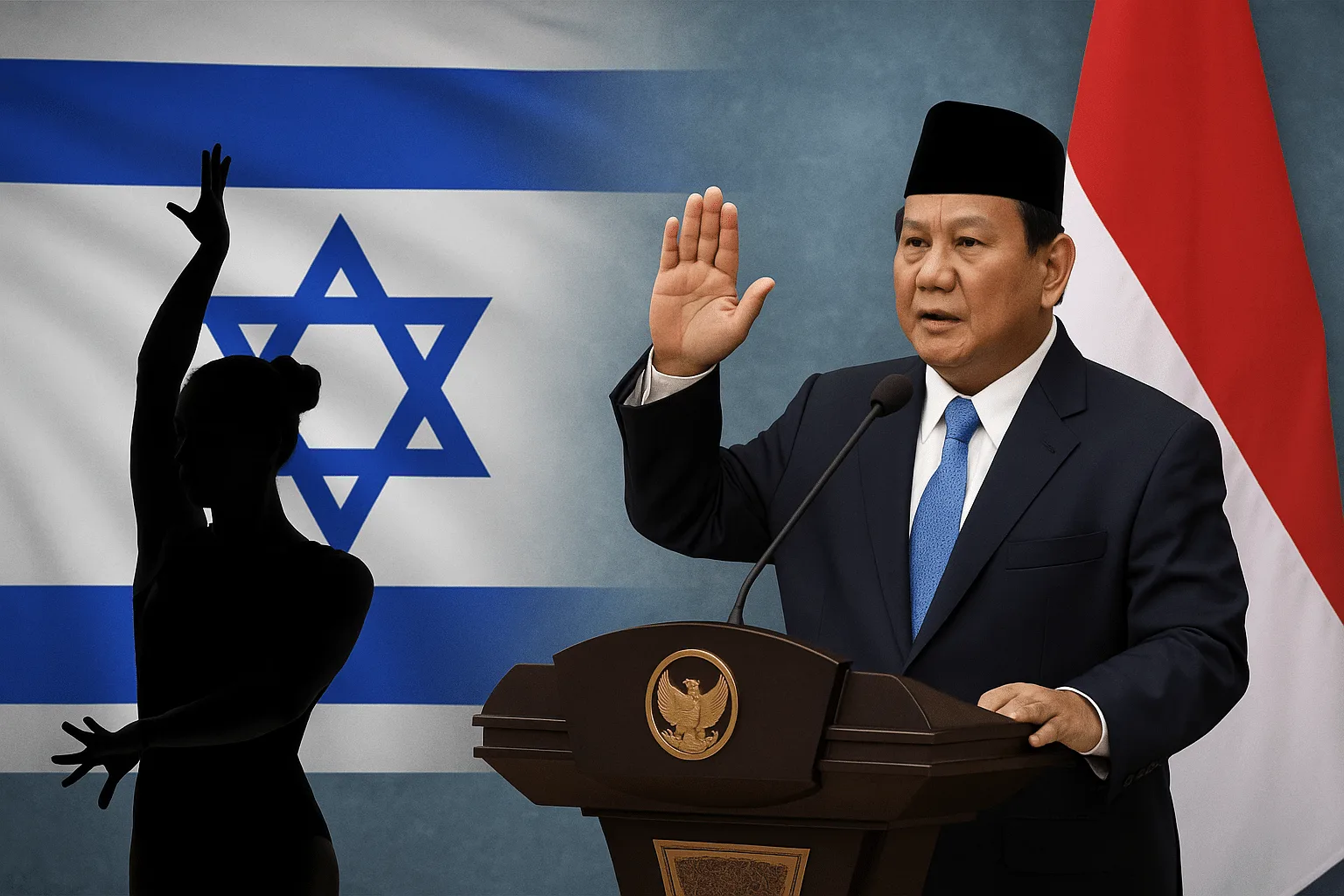
Legal Literacy - The impeachment discourse against Vice President Gibran Rakabuming Raka emerged from the follow-up to a letter sent by the TNI (Indonesian National Armed Forces) Retired Soldiers Forum. It's not just about the law; this issue touches the core of national leadership integrity, fairness in the contest for power, and concerns about the strengthening of dynastic politics. This polemic has become increasingly complex since the Constitutional Court changed the age limit for presidential and vice-presidential candidates, which is linked to the family relationship between the applicant and one of the constitutional judges.
In this context, impeachment is not merely understood as a legal procedure but also as an expression of political and moral dissatisfaction. This writing attempts to systematically elaborate on the legal, political, and ethical aspects of the discourse so that the public can see this issue clearly and comprehensively.


Constitutional Basis for Impeachment
The Indonesian Constitution explicitly regulates the mechanism for impeaching the president and vice president in Article 7A and 7B of the 1945 Constitution. This process can only be carried out if there is an alleged serious legal violation, such as corruption, treason against the state, or disgraceful acts. The stages of impeachment involve the DPR (House of Representatives), the Constitutional Court, and the final decision rests with the MPR (People's Consultative Assembly) with the support of two-thirds of the members present.
Prof. Jimly Asshiddiqie reminds us that impeachment is not only related to legal aspects but also reflects political morality and the balance of power between institutions. To date, no president or vice president has been formally impeached since the constitutional amendment. This indicates that impeachment is an extraordinary mechanism, only relevant in truly urgent circumstances.
Legal Dimensions in the Impeachment Proposal
Normatively, the proposal to impeach Gibran can indeed be submitted. However, the crucial question is: is there a proven concrete serious legal violation? Prof. Saldi Isra emphasized the importance of strong and objective evidence, not just opinions or political pressure. The Constitutional Court is given a maximum of 90 days to assess the DPR's proposal before the MPR makes a final decision. Prof. Mahfud MD is of the view that this process, although based on law, is highly dependent on the political configuration in the DPR and MPR. He asserts that impeachment is a "political decision within a legal framework," which combines juridical dimensions and power dynamics.
Political Aspects of Impeachment
Politically, Gibran's impeachment began with a letter from the TNI Retired Soldiers Forum. However, with the government coalition controlling around 470 seats in the DPR, the chances of success appear slim. This is where the MPR potentially becomes a field of compromise between factions in meeting the two-thirds vote threshold. In the context of Southeast Asia, impeachment often shifts from law enforcement to an instrument of political delegitimization. The Philippines' experience with the case of Vice President Sara Duterte serves as a mirror that impeachment is not only a legal tool but also a political bargaining chip. Therefore, this step must be carefully considered. It could open up a new legitimacy crisis, especially if the public views it more as a power maneuver than ethical enforcement.
Ethics of Democracy in the Dynamics of Impeachment
Democracy does not only rely on law but also on shared moral standards. In Gibran's case, the debate surrounding alleged dynastic politics, conflicts of interest in the Constitutional Court, and the controversial nomination process, become a major test of democratic ethics. Constitutional Court Decision Number 90/PUU-XXI/2023 became a turning point that some consider to have tarnished the independence of the judicial institution. In a presidential system, leaders are required to maintain neutrality and uphold democratic procedures. Civil society has an important role to play in ensuring that processes such as impeachment are not misused but also not ignored when public ethics are compromised. Prof. Denny Indrayana reminds us that due process of law must be maintained, with institutional integrity as its main pillar.
Maintaining the Dignity of Democracy
Impeachment is not just a legal instrument but also a reflection of political maturity and the quality of public ethics. When this process is rolled out, all elements of the nation, both political elites, civil society, and state institutions, need to ensure that it does not turn into a short-term political commodity. The rule of law and the principle of checks and balances must be the main foundation. In situations like this, it is better for the nation to be cautious, objective, and wise. Maintaining the dignity of the constitution means safeguarding the future of Indonesian democracy.
References
- Marzuki, M. L. (2010). Pemakzulan presiden/wakil presiden menurut Undang-Undang Dasar 1945. Jurnal Konstitusi, 7(1), 17–29. https://download.garuda.kemdikbud.go.id/article.php?article=1616610&title=Pemakzulan+PresidenWakil+Presiden+Menurut+Undang-Undang+Dasar+1945&val=1035
- Irfan Kamil & Ardito Ramadhan. (2025, 11 Juni). Mahfud sebut usul pemakzulan Gibran punya argumentasi kuat. Kompas.com. https://nasional.kompas.com/read/2025/06/11/15180891/mahfud-sebut-usul-pemakzulan-gibran-punya-argumentasi-kuat
- Tempo.co. (2025, 13 Juni). Soal seruan pemakzulan Gibran, Jimly: hanya ekspresi kemarahan [Artikel]. Tempo.co. https://www.tempo.co/politik/soal-seruan-pemakzulan-gibran-jimly-hanya-ekspresi-kemarahan-1663051
















Comments
0Share your perspective politely, stay relevant, and focus on the article. Comments appear after moderation.
Join the discussion
Write a clear, polite response that stays on topic.
No comments yet. Be the first to discuss.
Comments will appear after moderation.