

The birth of the new Criminal Procedure Code (KUHAP) on November 18, 2025, is essentially a grand ambition to break free from the shackles of colonial heritage. Philosophically, this new KUHAP is claimed to be more progressive because it seeks to adapt formal law to the times and the values of restorative justice. However, behind this spirit of reform, there are well-founded concerns from academics and legal practitioners. The main problem does not lie in its technical advancements, but rather in the regulatory loopholes that could become fertile ground for corruption and abuse of power.
Investigation Monopoly and the Danger of Power Concentration
One crucial point that is highlighted is the strengthening of the National Police Investigator's position as the "Main Investigator." In Article 6 paragraph (2) of the new KUHAP, it is emphasized that the National Police holds control over Civil Servant Investigators (PPNS) and other Specific Investigators. This dominance is further clarified in Articles 7 and 8, where all investigation series, including coercive measures such as arrests and detentions, must be coordinated and carried out under the orders of the National Police Investigator.


Theoretically, this integration aims to create uniformity in legal procedures. However, socio-legally, the centralization of power without equivalent checks and balances is a perfect recipe for corruption. When one institution has a full monopoly to determine the "fate" of a case file from another investigator, a space for behind-the-scenes negotiations arises. The potential for extortion to expedite or delay the transfer of case files (P-21) from PPNS to the Public Prosecutor becomes a real risk.
This condition creates a structure that is vulnerable to "trading in influence." If a main investigator has absolute authority to stop or continue a case based on their discretionary rights, then political and economic interests can easily intervene in the legal process. The police institution, which has been struggling with internal integrity issues, is given a greater burden of power, which, if not managed with high transparency, will only expand the space for individuals to commodify cases.
Coercive Measures Loopholes and Dark Spaces Without Court Permission
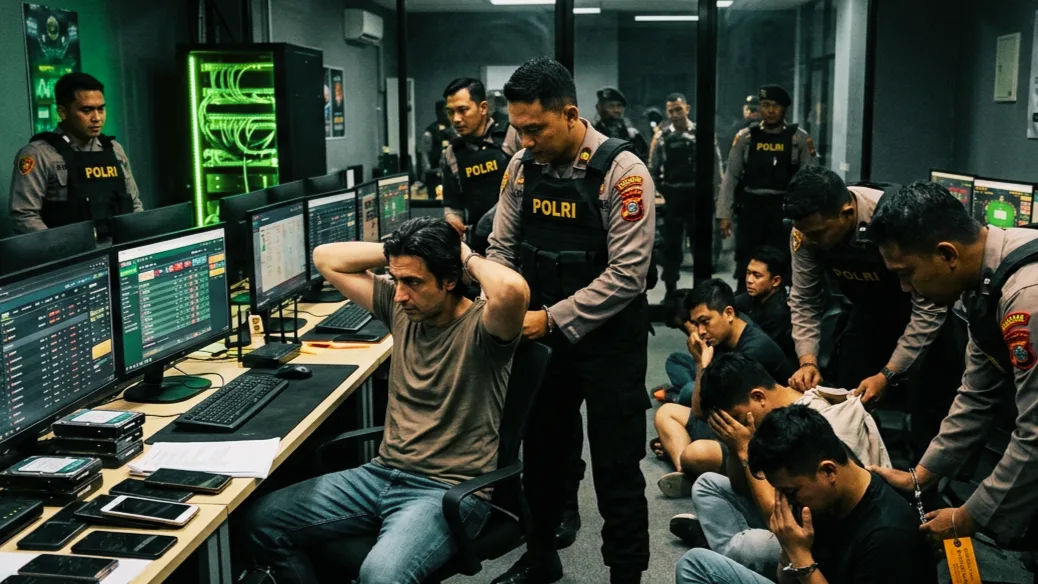
The second problem that is no less complicated is found in Articles 93 to 98 of the new KUHAP. This rule allows investigators, on the orders of investigators, to make arrests and detentions without first obtaining permission from the local district court. This is actually a replication of the weaknesses of the old KUHAP that failed to be corrected.
In the context of human rights and corruption prevention, the absence of an obligation to immediately bring the suspect to trial after arrest creates a legal "dark space." It is in this dark space that illegal transactions often occur. Investigators have full power to determine whether someone will "stay" in a cell or be sent home. This uncertainty is often exploited by individuals to extort suspects or their families with promises of suspension of detention or manipulation of articles so that the threat of punishment becomes lighter.
The practice of "peaceful" or bribery negotiations in the early stages of investigation is the most damaging form of corruption because it kills justice even before the trial process begins. If the new Criminal Procedure Code still provides such broad discretion without strict vertical supervision from the judiciary (judicial scrutiny) from the first minute of coercive measures, then the hope of eliminating the culture of "case brokers" in our judicial system will remain a pipe dream.
Crisis of Supervision and Political Intervention
Furthermore, this investigation monopoly opens the door for more systematic political intervention. In our state structure, the police force is under the executive branch. When the law gives such dominant sole authority to the police to coordinate all types of investigations (including special criminal acts that may involve bureaucratic officials), there is a risk that the legal process will be used as a political bargaining chip.
Corruption does not always take the form of cash; it can also be in the form of political protection for certain actors. With the obligation of Civil Servant Investigators to obey the orders of the main investigator, corruption cases in the forestry, mining, or taxation sectors handled by Civil Servant Investigators could be extinguished if they come into contact with the interests of greater power. This is where the irony of the new Criminal Procedure Code lies: it wants to look modern, but structurally it actually facilitates the concentration of power that is the root of systemic corruption.
In the end, the new Criminal Procedure Code is indeed a legislative achievement, but it is not a holy book that is free from flaws. If the articles regarding the coordination of investigations and coercive measures are not immediately accompanied by implementing regulations that guarantee transparency, then we are only moving old corrupt practices into a new legal container.
The government and law enforcement officials must realize that excessive discretion without supervision is the main enemy of justice. To mitigate this potential for corruption, it is necessary to strengthen the role of the public prosecutor as the controller of the case (dominus litis) from the early stages, as well as increase the role of the supervisory judge or independent supervisory body that can test the validity of an arrest in real-time. Without this, the new Criminal Procedure Code will only become an instrument of legality for arbitrariness, not a guarantee for the protection of citizens' rights. Justice must not be sacrificed for the sake of monopolistic law enforcement bureaucratic efficiency.



















Comments
0Share your perspective politely, stay relevant, and focus on the article. Comments appear after moderation.
Join the discussion
Write a clear, polite response that stays on topic.
No comments yet. Be the first to discuss.
Comments will appear after moderation.