
Criminal Risk
From a legal perspective, the act of riding or sitting on a sea turtle needs to be assessed based on the elements of action, consequences, and culpability of the perpetrator. Article 21 paragraph (2) letter a of the Conservation Law as amended by Law 32/2024 prohibits the act of hunting, capturing, injuring, killing, storing, possessing, maintaining, transporting, and/or trading protected animals while alive.
If the act is proven to fulfill the prohibited elements, the perpetrator can face criminal threats under Article 40A paragraph (1) letter d of Law 32/2024. The punishment is no longer limited to five years in prison and a fine of Rp100 million like the old regime, but rather imprisonment for a minimum of three years and a maximum of 15 years, as well as a fine of at least Rp200 million and a maximum of Rp5 billion.


However, law enforcement must still be carried out proportionally. Video virality does not automatically replace the evidentiary process. Conservation officers and authorities still need to assess whether the action actually caused disturbance, injury, severe stress, or other forms of threats to protected animals.
If the perpetrator is still classified as a child, the criminal liability mechanism refers to Law Number 11/2012 on the Juvenile Criminal Justice System. A child in conflict with the law is a child aged 12 years but not yet 18 years who is suspected of committing a criminal offense. For children under 12 years old, the handling is not directed at punishment, but rather at returning to parents / guardians or coaching programs in accordance with applicable regulations.
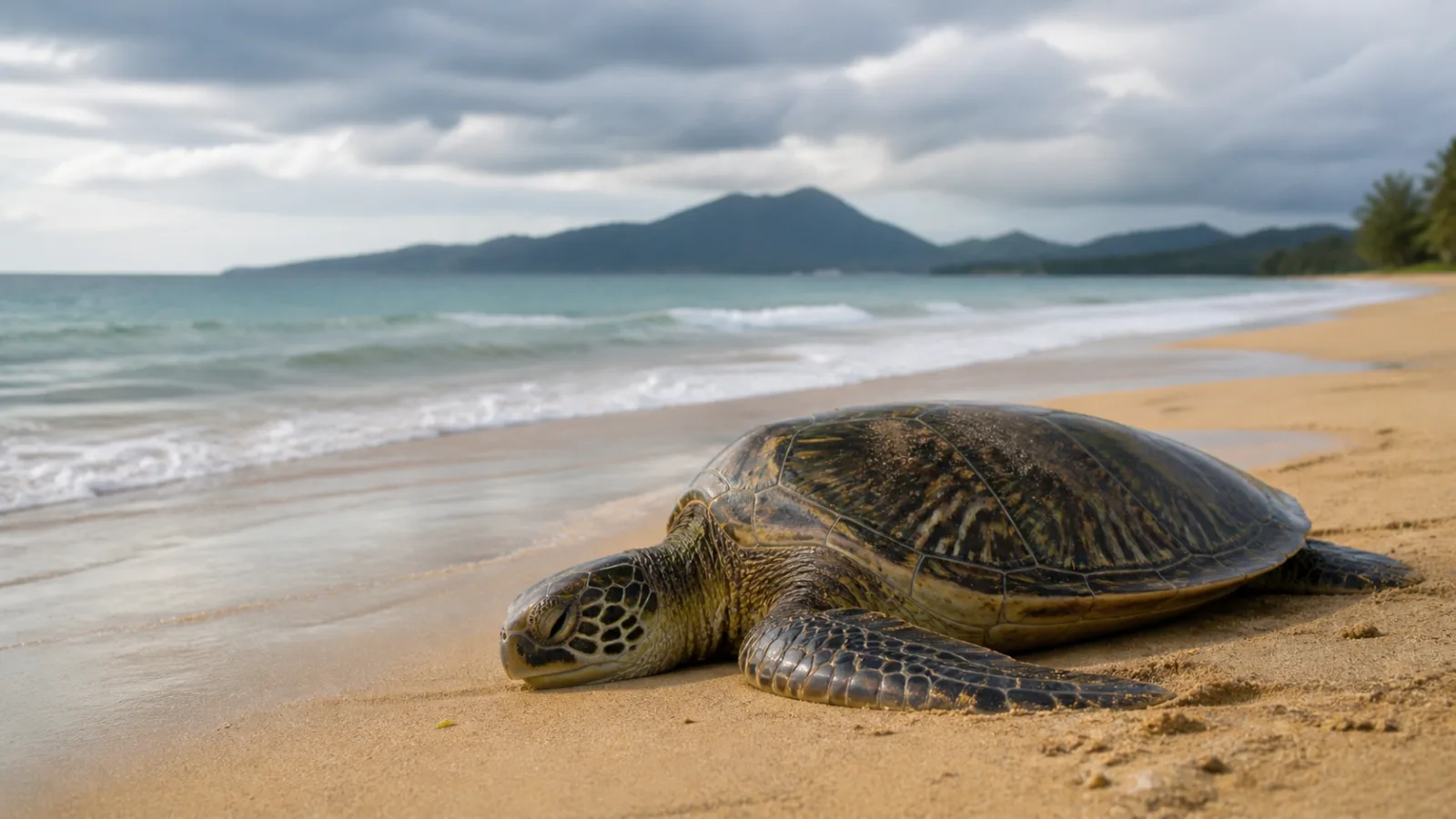
This event serves as a reminder that tourism should not just be oriented towards thrills and content. Nature tourism demands basic knowledge, discipline, and respect for the ecosystem. Sea turtles that come to the beach are not to be touched, ridden, or made a spectacle of, but should be given space to return to their habitat undisturbed.
Protecting wildlife is not just the job of the government or conservation officers. Communities, tourists, destination managers and content creators also have the same responsibility. Respecting sea turtles means respecting marine life and the sustainability of ecosystems that are an important part of Indonesia's environment.




















Comments
0Share your perspective politely, stay relevant, and focus on the article. Comments appear after moderation.
Join the discussion
Write a clear, polite response that stays on topic.
No comments yet. Be the first to discuss.
Comments will appear after moderation.