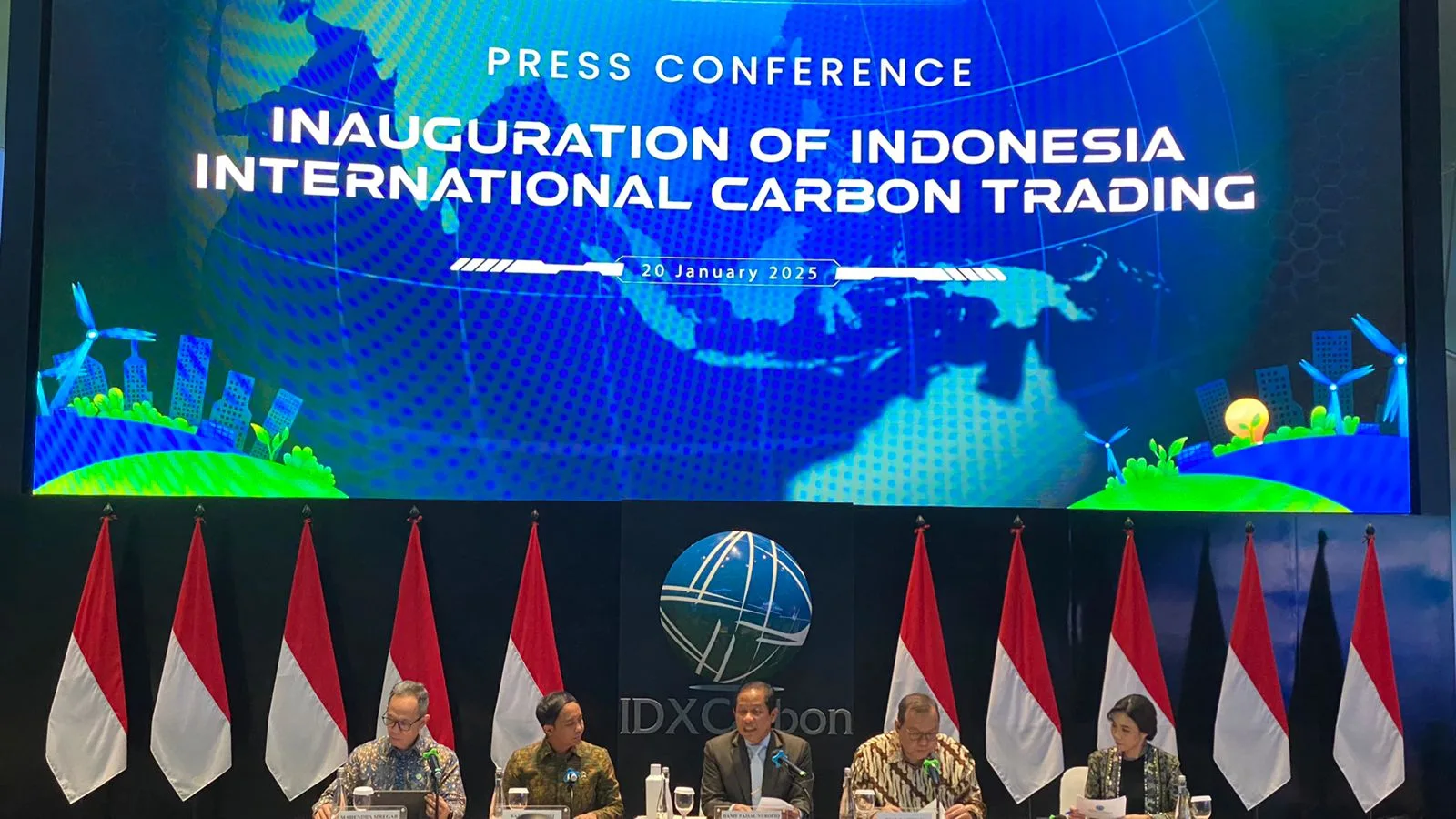
Legal Literacy - Carbon is now no longer seen merely as a natural element, but has been commodified and traded massively like financial instruments on the global exchange. Tons of emissions are calculated, priced, and transacted between nations and corporations. However, placing carbon solely as an economic commodity risks obscuring its fundamental essence.
Carbon and the carrying capacity of nature are in fact an inseparable part of citizens' constitutional right to a good and healthy environment, as mandated explicitly in Article 28H paragraph (1) of the 1945 Constitution. Therefore, the discourse on carbon regulation should not be reduced to merely a matter of registration administration, profit-loss calculation, and corporate trading.


Dissecting the Threat of Legalized Carbon Extraction
The government has issued Presidential Regulation Number 110 of 2025 concerning the Implementation of Carbon Economic Value (NEK) Instruments. This policy, which replaces Presidential Regulation Number 98 of 2021, appears to be a neat step. The state is beginning to build a solid regulatory fence, namely a standardized Monitoring, Reporting, and Verification (MRV) system, mandatory registration to the National Registry System (SRN), and strictly regulated Internationally Transferred Mitigation Outcome (ITMO).
However, behind the scenes, there is a conceptual loophole. Instead of fundamentally strengthening Indonesia's carbon sovereignty, this regulation is vulnerable to becoming a tool that merely formalizes the carbon extraction mechanism in a more legal and orderly guise. This phenomenon can be conceptualized as legalized carbon extraction.
In practice, the state does regulate the course of administration, but substantively the emission reduction units are still exported to foreign countries or corporations. Local communities at the site level remain in a weak bargaining position, while the state risks losing leverage over the achievement of long-term Nationally Determined Contribution (NDC) because its emission reductions change hands. This means that the exploitation of living space and the commodification of natural resources still occur. It's just that this time it is legalized, institutionalized, and neatly recorded by the state.

















Comments
0Share your perspective politely, stay relevant, and focus on the article. Comments appear after moderation.
Join the discussion
Write a clear, polite response that stays on topic.
No comments yet. Be the first to discuss.
Comments will appear after moderation.