Legal Literacy - Understand the role of positive fictitious decisions and negative decisions in Indonesian government administration.
Overview of Fictitious Decisions
Fictitious decisions are closely related to the issuance of state administrative decisions in the administration of government.
Essentially, a fictitious decision is the government's silence regarding a request submitted by a particular party for a state administrative decision.
A fictitious decision is a "pseudo" state administrative decision. We cannot see it with the naked eye, but we can understand its existence through the interpretation of the government's attitude in the decision application.
Through a journal article entitled Positive Fictitious Cases and Their Legal Problems, Enrico Simanjuntak argues that fictitious decisions exist based on the principle of lex silentio, which is a tacit authorization granted by the government in the submission of permits. This principle is applied by the authorities of the European Union region.
Many business actors struggle with licensing in carrying out their business activities. Sometimes, licensing becomes an obstacle and collectively this obstacle has the potential to hold back economic growth, especially in certain regions. With this decision, the problem can be overcome.
Countries in the European Union apply fictitious decisions as an effort to simplify administrative procedures. The decision is an important guarantee for business actors and the public in economic activities, which ultimately encourages the rate of economic growth at the regional level.
In Indonesia, we can see the regulation of fictitious decisions through 2 regulations. First, Law Number 30 of 2014 concerning Government Administration ("Government Administration Law"). Second, Law Number 5 of 1986 concerning State Administrative Courts ("PTUN Law") which has been amended by Law 9/2004 and the second amendment by Law 51/2009.
These two regulations divide fictitious decisions into 2 forms, namely positive fictitious and negative fictitious.
Positive Fictitious Decisions
Positive fictitious is a decision that automatically arises based on an application that is not responded to by an official after the time limit specified by the statutory regulations.
The positive fictitious arrangement is contained in Article 53 paragraphs (1), (2), and (3) of the Government Administration Law which reads as follows.
(1) The time limit for the obligation to stipulate and/or carry out Decisions and/or Actions in accordance with the provisions of statutory regulations.
(2) If the provisions of statutory regulations do not specify a time limit for the obligation as referred to in paragraph (1), the Government Agency and/or Official is obliged to stipulate and/or carry out Decisions and/or Actions within a maximum of 10 (ten) working days after the application is received in full by the Government Agency and/or Official.
(3) If within the time limit as referred to in paragraph (2), the Government Agency and/or Official does not stipulate and/or carry out Decisions and/or Actions, then the application is deemed legally granted.
The emphasis of positive fiction is in paragraph (3) even though this provision does not explicitly state the term. Here, positive fiction becomes the tacit approval of state administrative officials in issuing a state administrative decision.
Although in pseudo form, positive fictitious is still a state administrative decision issued based on government administrative procedures. It cannot just appear. It must first be requested by an interested party.
What makes positive fictitious different from state administrative decisions in general is verification of its issuance.
Decisions that are not included in positive fictitious are issued based on active confirmation from state administrative officials. This confirmation is also given within a period of time that is in accordance with statutory regulations.
Meanwhile, positive fiction is issued based on a court decision requested by the interested party. The application is submitted because the state administrative official authorized to issue it does not provide active confirmation after the specified period.
We can see this through the provisions of Article 53 paragraphs (4), (5), and (6) of the Law on Government Administration, which reads as follows.
(4) The applicant submits an application to the Court to obtain a decision on acceptance of the application as referred to in paragraph (3).
(5) The Court is obliged to decide on the application as referred to in paragraph (4) no later than 21 (twenty-one) working days from the date the application is submitted.
(6) Government Agencies and/or Officials are obliged to stipulate a Decree to implement the Court's decision as referred to in paragraph (5) no later than 5 (five) working days from the date the Court's decision is stipulated.
According to the above provisions, positive fiction will be issued by the authorized state administrative official. This is no different from the final result of the decision issuance procedure that relies on the authority of the state administrative official.
In contrast to decisions in general, which only depend on the authority of officials, positive fiction can only be issued after a court decision (in this case, the State Administrative Court - PTUN) directs officials to issue it. The decision itself can only arise after an application. As a result, positive fiction involves a more complex procedure.
Following the enactment of Government Regulation Number 2 of 2022 concerning Job Creation ("Perppu Cipta Kerja"), Article 53 of the Law on Government Administration has changed. Here, there are changes that affect applications for obtaining a decision stipulation.
The first change is the time limit for stipulation by officials for decision applications if it is not regulated in a special regulation. This time limit has changed from 10 working days to only 5 working days.
The second change, and this is the most important, is the absence of submitting an application to issue a decision on the issuance of a decree. This change is very significant because it eliminates the authority of the PTUN, which was able to accept applications and order officials to provide stipulations as stipulated before the change.
As a result, with the enactment of the Perppu Cipta Kerja, positive fiction can immediately appear after the absence of approval within a period of 5 working days from the authorized administrative official, and without the need to go through the application mechanism to the PTUN.
However, the Perppu Cipta Kerja stipulates that the issuance of positive fiction, which no longer needs to go through an application, must now be submitted with a separate procedure. This procedure is regulated in a presidential regulation. This means that, although the authority of the PTUN has disappeared, the interested party still needs to wait for the stipulation given by the state.
The stipulation procedure regulated in the Job Creation Perppu raises questions. First, what authority is authorized to process the stipulation on positive fictitious decisions? Second, what procedures can interested parties take to submit the processing of the stipulation? These questions cannot be answered because the presidential regulation that serves as the legal basis has not been issued.
Negative Fictitious Decisions
Negative fictitious decision has the same essence as positive fictitious. This fictitious decision is issued based on the absence of active confirmation for the decision application given by the administrative official after passing the specified period.
The difference between positive fictitious and negative fictitious is the nature of the silence issued by state administrative officials on decision applications. In positive fictitious decisions, officials tacitly approve the application. In negative fictitious decisions, officials tacitly reject the application.
We can see the existence of negative fictitious through Article 3 of the State Administrative Court Law which reads as follows.
(1) If a State Administrative Body or Official does not issue a decision, while it is its obligation, then this is equated with a State Administrative Decision.
(2) If a State Administrative Body or Official does not issue the requested decision, while the period as determined by the relevant laws and regulations has passed, then the State Administrative Body or Official is deemed to have refused to issue the decision in question.
(3) In the event that the relevant laws and regulations do not specify a period as referred to in paragraph (2), then after a period of four months from the receipt of the application, the State Administrative Body or Official concerned is deemed to have issued a rejection decision.
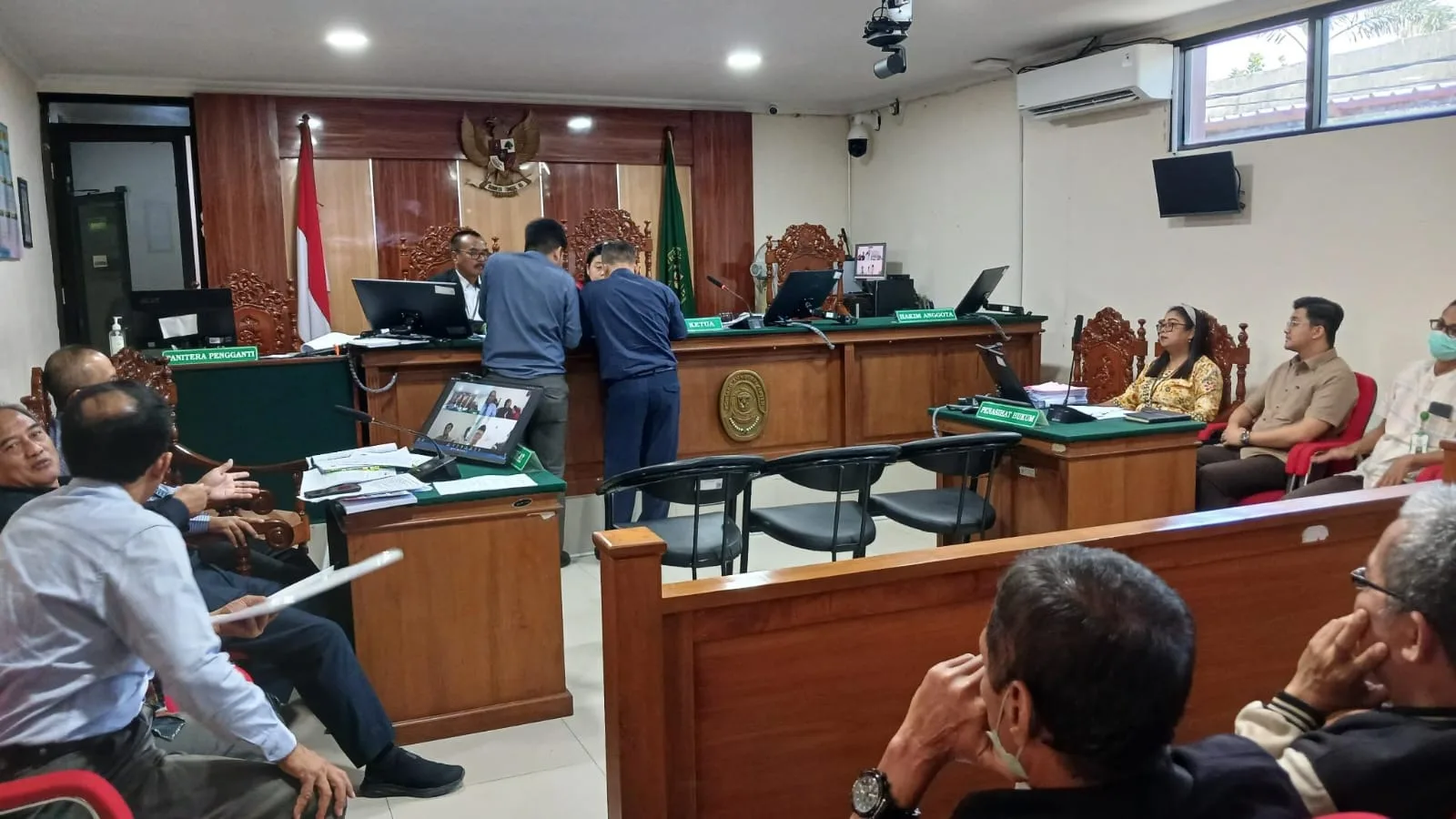
The existence of negative fictitious also involves the State Administrative Court (PTUN) just like positive fictitious. However, in administrative justice involving the PTUN, negative fictitious becomes the object of a lawsuit. This is different from positive fictitious which, before the enactment of the Job Creation Perppu, became the object of a request.
Because it is the object of a lawsuit, interested parties need to refer to the state administrative court procedure contained in the State Administrative Court Law and its amendments. Of course, first, the party must also refer to the Law on Government Administration regarding priority administrative efforts before filing a lawsuit with the PTUN.
Apart from the nature of the official's silence, the mechanism for issuing negative fictitious is the same as issuing positive fictitious. Negative fictitious can only arise after a certain period as regulated in Article 3 of the State Administrative Court Law.
Comments (0)
Write a comment