Legal Literacy- Human rights (HAM) are inherent rights that are vested in every individual from birth, which cannot be revoked or reduced by the state under any circumstances [1]. Among the various rights, there is a special category called
non-derogable rights, which are absolute rights that cannot be restricted, suspended, or reduced even in a state of emergency.
This principle has a strong foundation in various international human rights legal instruments, such as
Universal Declaration of Human Rights(UDHR) 1948 and
International Covenant on Civil and Political Rights(ICCPR) 1966. Specifically, Article 4 of the ICCPR affirms that fundamental rights—such as the right to life, the right to be free from torture, and freedom of religion—may not be derogated from even in a public emergency that threatens the existence of the nation [2].
As a state party to the ICCPR, Indonesia has ratified the covenant through Law Number 12 of 2005. At the highest level, recognition of
non-derogable rightsis explicitly reflected in Article 28I paragraph (1) of the 1945 Constitution:
“The right to life, the right not to be tortured, the right to freedom of thought and conscience, the right to religion, the right not to be enslaved, the right to be recognized as a person before the law, and the right not to be prosecuted on the basis of retroactive law are human rights that cannot be reduced under any circumstances.” [3]
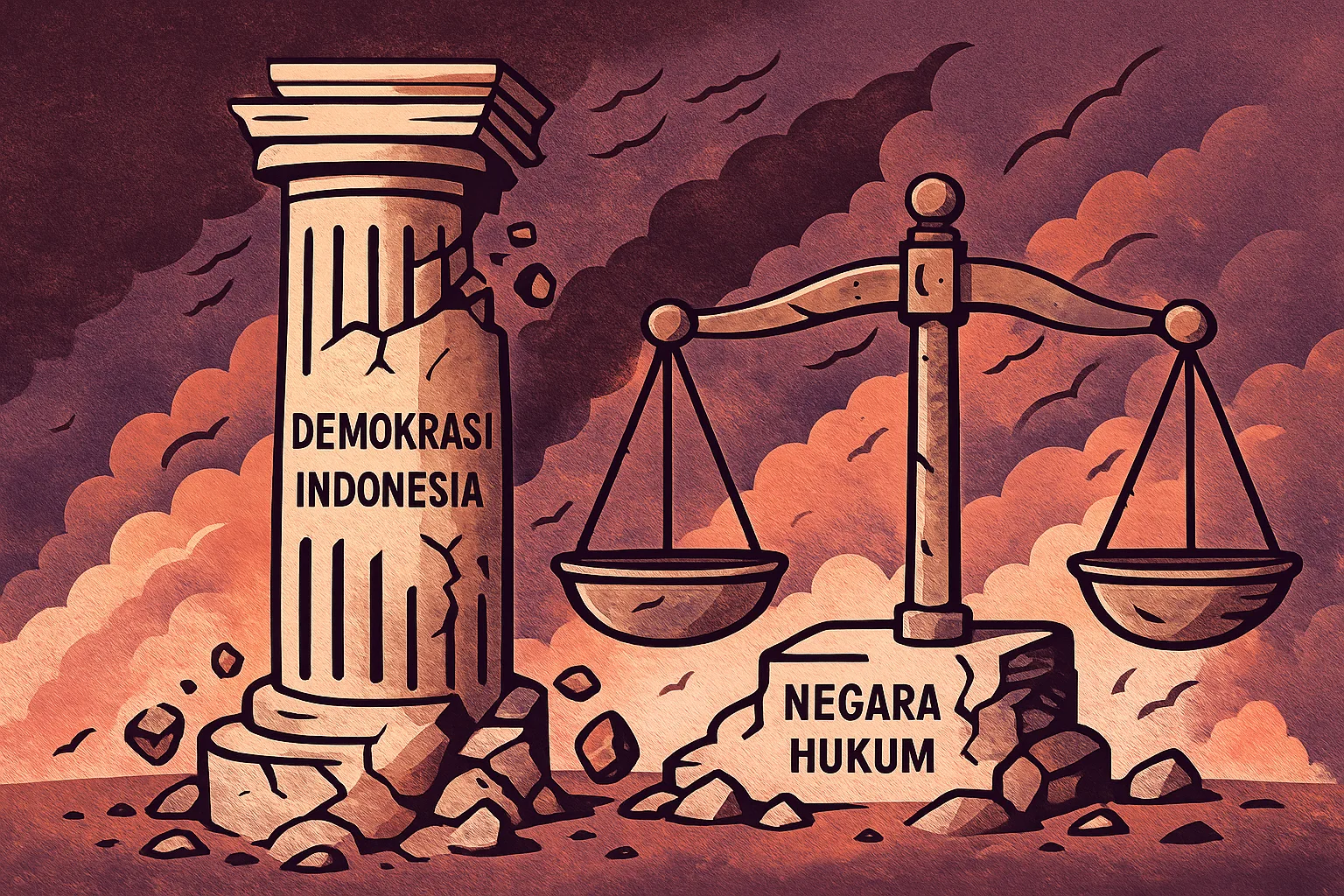
This constitutional guarantee demonstrates the state's formal commitment to placing absolute rights as an integral part of its national legal system [4].
Analysis: Legal Guarantees of Non-Derogable Rights in Indonesia
Constitutional Basis: The Strength of Article 28I of the 1945 Constitution
The principle
non-derogable rightsin Indonesia has a very strong legal foundation. Article 28I paragraph (1) of the 1945 Constitution explicitly mentions which rights cannot be reduced under any circumstances [6]. This provision places absolute rights at the highest hierarchy as a constitutional norm (
constitutional supremacy). This means that no laws or state policies can override them, even in emergency situations.
Harmonization with International Law: The Role of the ICCPR
Indonesia's commitment is strengthened through the ratification of the ICCPR with Law Number 12 of 2005. This ratification obliges the state to align its national regulations with international human rights standards. In practice, the ICCPR strengthens the position of Article 28I of the 1945 Constitution as the juridical basis for the protection of absolute rights and becomes an important reference in the mechanism of
judicial reviewin the Constitutional Court [7].
Global Best Practices: Learning from Germany and South Africa
In comparison, several countries demonstrate
best practicein protecting absolute rights. Germany, through its Basic Constitution (
Grundgesetz), makes human dignity an "eternal clause" (
eternal clause) that cannot be amended [8]. Meanwhile, South Africa regulates
non-derogable rightsexplicitly in the
Bill of Rightsof the 1996 Constitution, which prohibits the suspension of the right to freedom from torture and slavery even during a state of emergency [9].


























Comment (0)
Write a comment