
The Adminduk Law and its 'Haphazard' Settlement
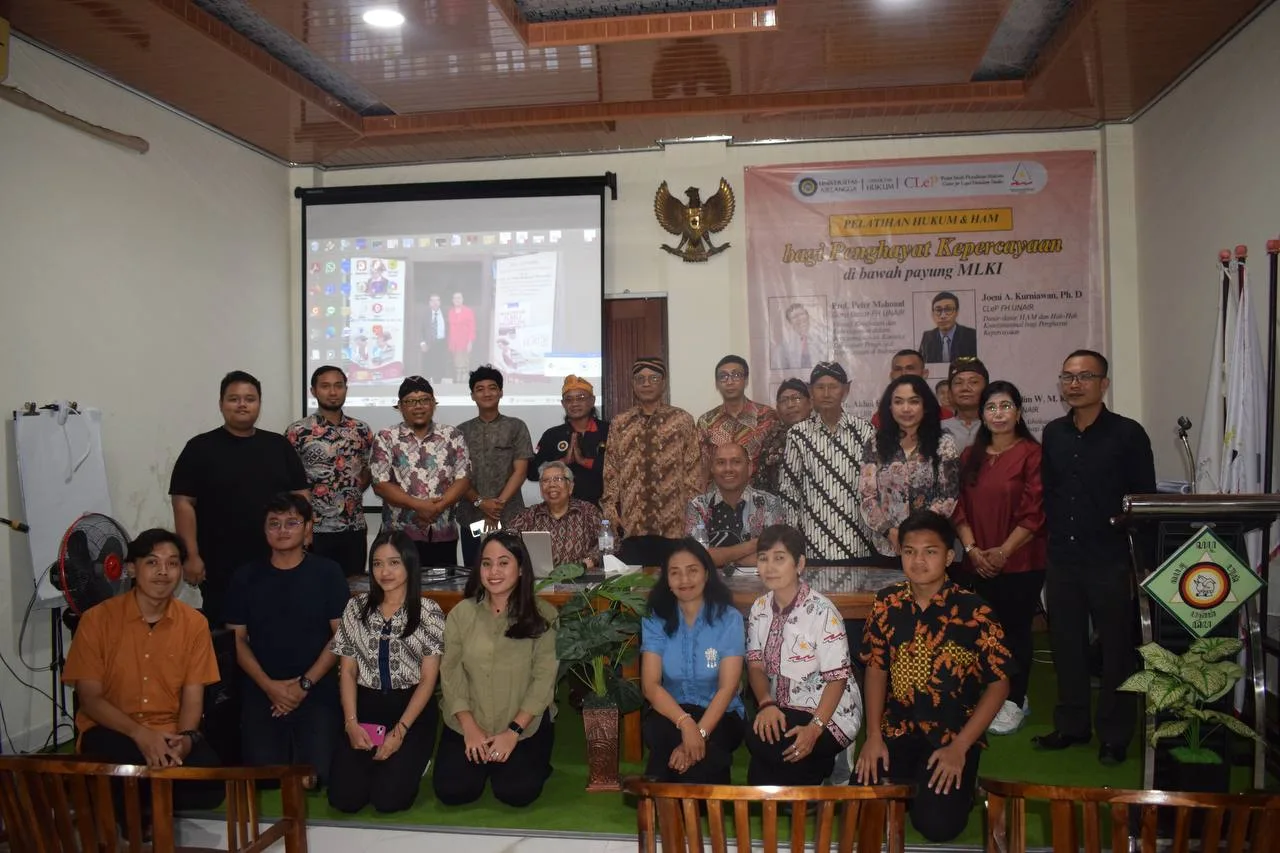
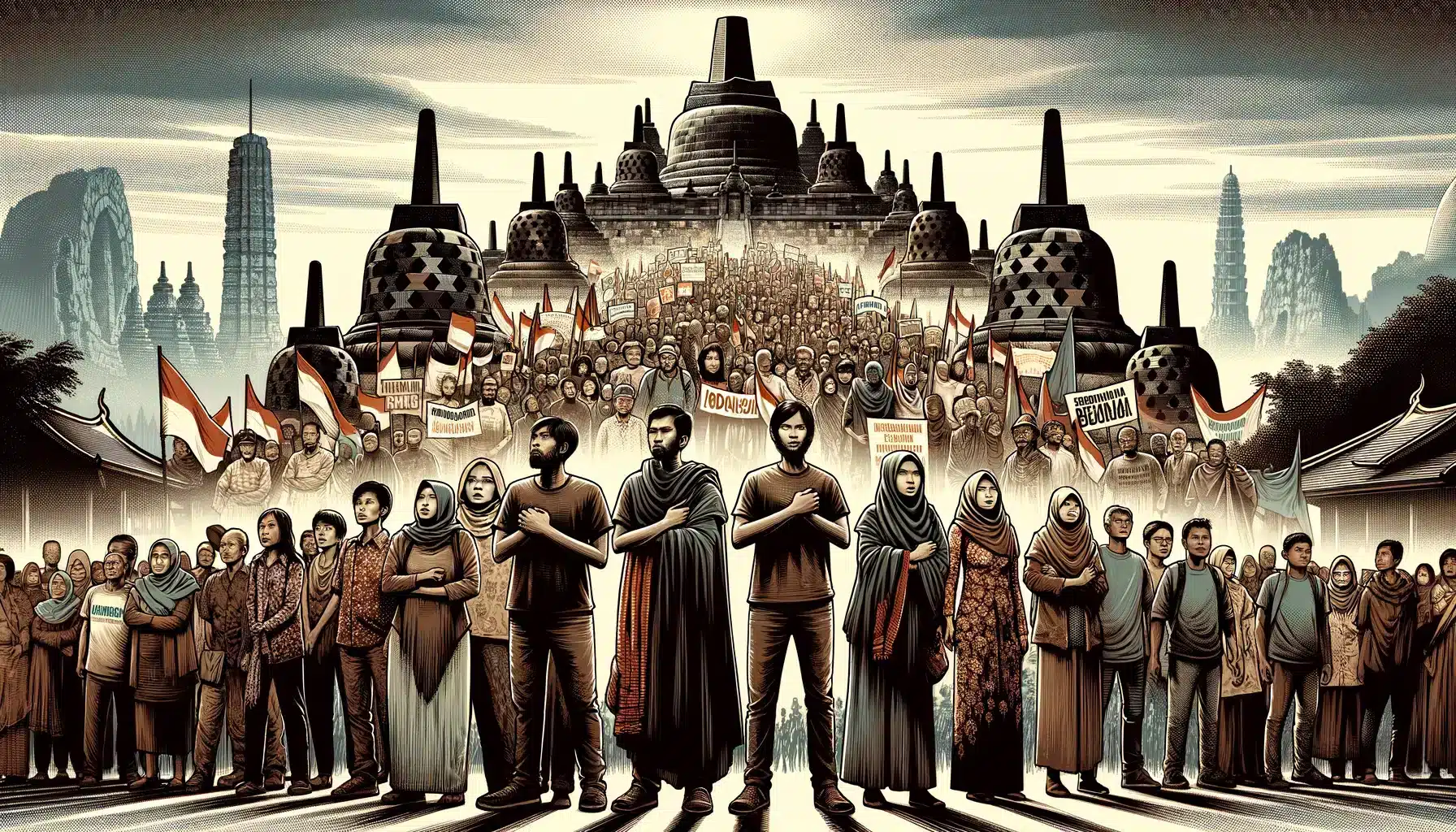
Spiritual bodies/streams that adhere to beliefs outside of the 'religions practiced in Indonesia' are known as Penghayat Kepercayaan. As explained in the previous section, Penghayat Kepercayaan faces systemic discrimination through policies that exclude the interests of Penghayat Kepercayaan. In addition to the existence of Law No. 1/PNPS/1965, the existence of Law No. 24/2013 on the Amendment to Law No. 23/2006 on Population Administration ("Civil Registration Law") contributes to administrative discrimination.
Article 64 paragraphs (1) and (5) of the Civil Registration Law require the religion column to be filled in the Identity Card (KTP). For religions that have not been 'recognized' as religions in laws and regulations or indigenous faiths, this column is left blank. This is a discriminatory policy because the Civil Registration Law justifies the separation of belief groups into two. First, legitimate religions, which are 'recognized' religions. Second, invalid religion, which is a religion that is 'not recognized'.


The emptying of the religion column cannot be equated with recognition. Recognition occurs when adherents have the right to write their beliefs in the religion column, for example by clearly stating the name of the belief 'marapu' or 'kejawen', not just the emptying of the [1] column. If a person is given the option to leave their religion column blank in addition to the option to write the name of their belief, then there has been state recognition and substantive religious freedom. If that scenario has not been achieved, then the state is not recognizing but giving a false rejection of the recognition efforts of Penghayat Kepercayaan [2].
In response to the issue of the Civil Registration Law, Constitutional Court issued Decision No. 97/PUU-XIV/2016 which allowed the inclusion of 'Penghayat Kepercayaan' in the religion column. However, the problem is not immediately solved because its implementation is still hampered. Reducing the name of beliefs to 'Penghayat Kepercayaan' is still discriminatory. It seems to divide beliefs into two groups, namely the 'recognized' groups (Islam, Christianity, Catholicism, Hinduism, Buddhism and Confucianism) and the Penghayat Kepercayaan group (beliefs other than those 'recognized'). The existence of this decision is evidence that the state is still reluctant to give explicit recognition. Therefore, recognition is given in the minimum sense, just to show a pseudo-recognition that still segregates Penghayat Kepercayaan from the majority of beliefs.
Through systemic segregation, Penghayat Kepercayaan become a marginalized group. With the fact that Penghayat Kepercayaan is a minority whose existence is not fully recognized, Penghayat Kepercayaan becomes vulnerable to discrimination both systemically, administratively, and socially. This is because conservative societies have a tendency to discriminate against members of subcultures, namely minorities that are inherently vulnerable to marginalization.

















Comments
0Share your perspective politely, stay relevant, and focus on the article. Comments appear after moderation.
Join the discussion
Write a clear, polite response that stays on topic.
No comments yet. Be the first to discuss.
Comments will appear after moderation.